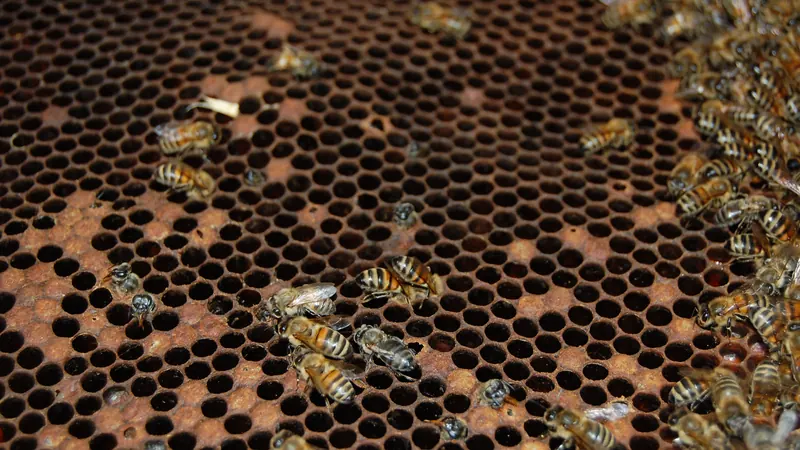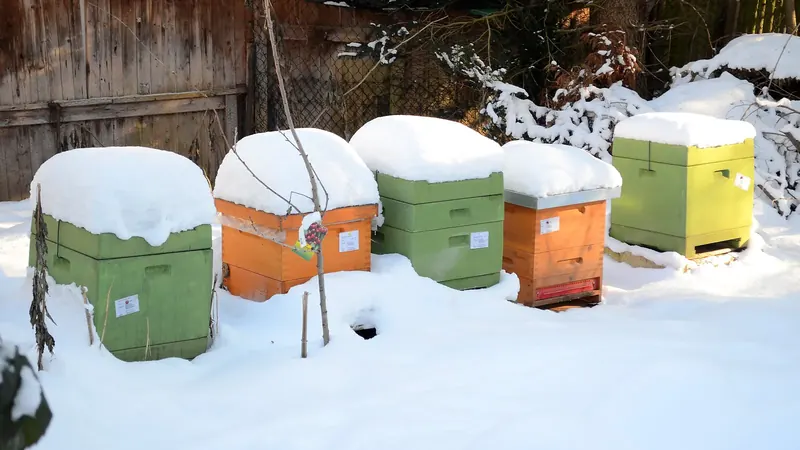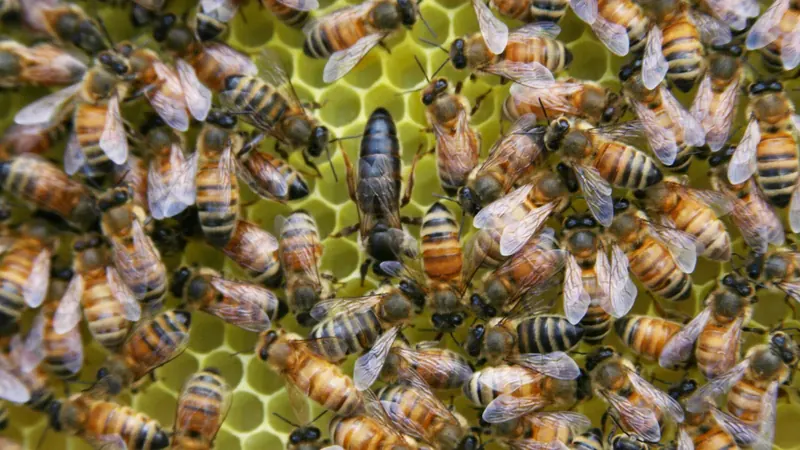
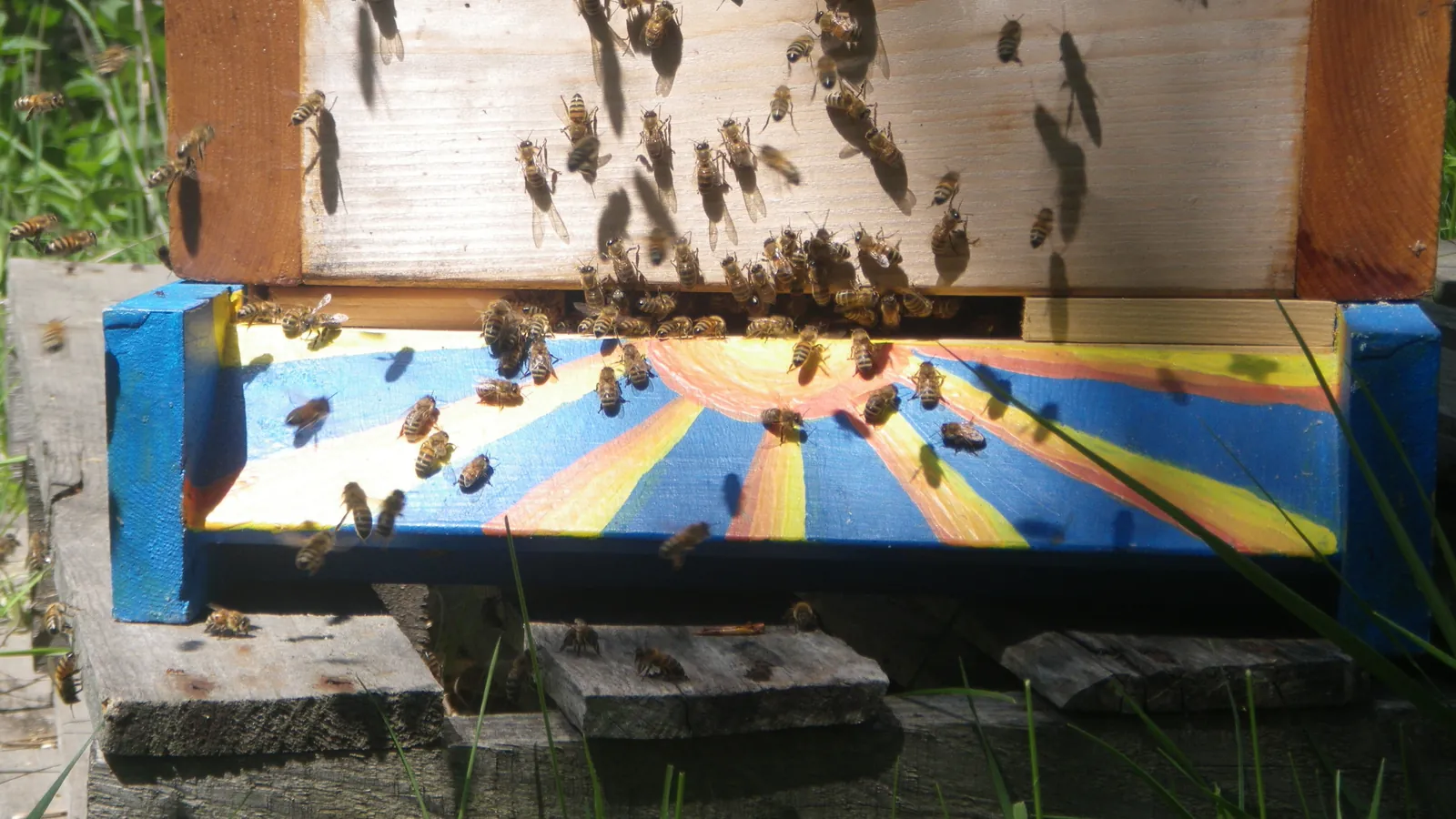
A colony that went into winter strong suddenly covers three seams in spring: the entrance and front wall are streaked brown, bees with swollen abdomens crawl across the landing board. That is classic nosema. But the disease also has a second, "silent" form that leaves no stains and quietly eats away at a colony all year round. Let's look at what causes it, how to find it and what actually helps.
Two pathogens: Nosema apis and Nosema ceranae
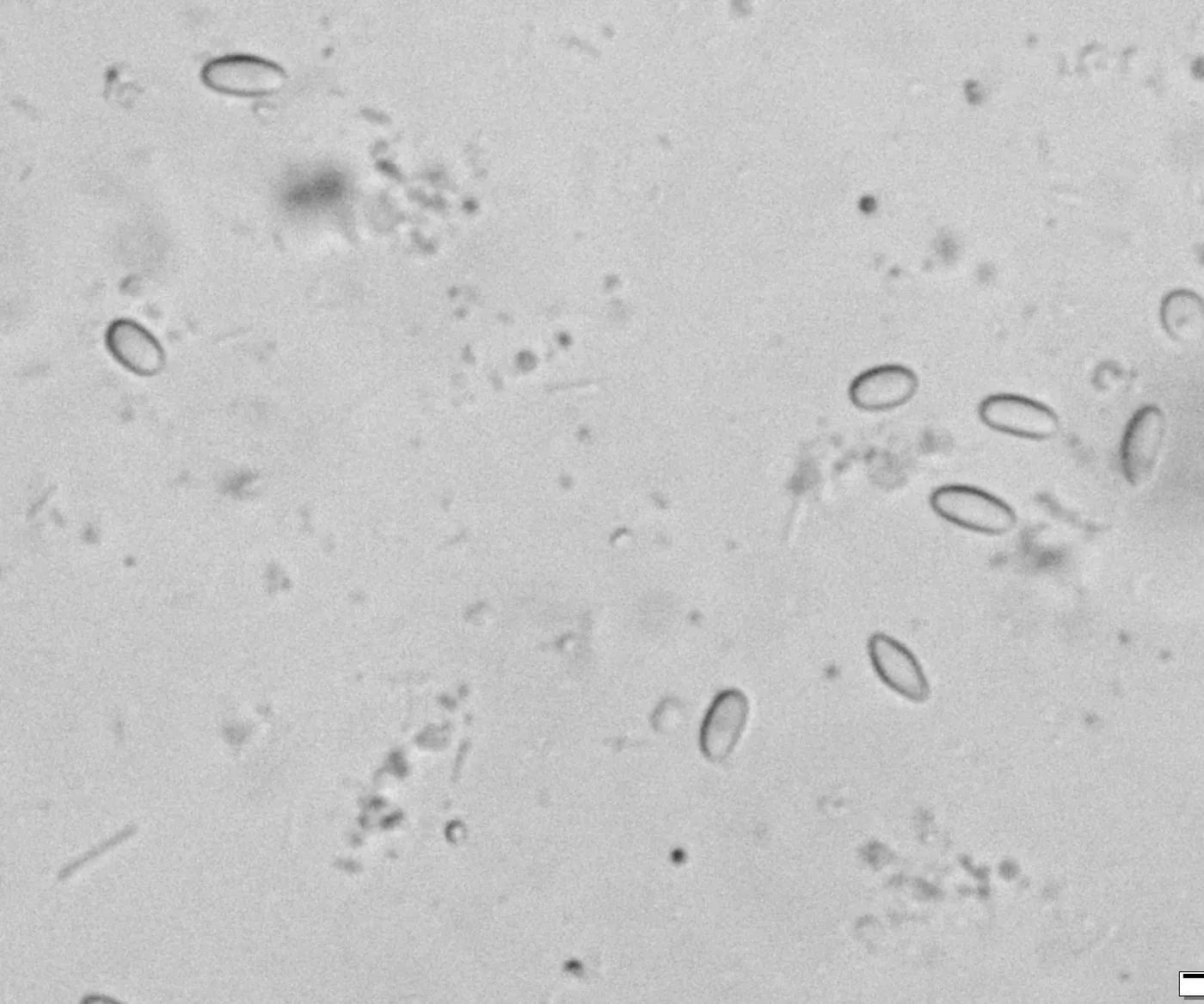
Nosema is neither a bacterium nor a virus but a microsporidian: a single-celled parasite related to fungi. It lives inside the cells lining the bee's midgut, where food is digested, multiplies until the cell bursts, and emerges as spores: oval capsules about 4–6 µm long, several times smaller than a pollen grain. A spore swallowed with food fires a polar tube into a gut cell and infects it. Within a couple of weeks a single bee can carry tens of millions of spores.
Honey bees host two species. Nosema apis was described in the early 20th century. Nosema ceranae came from the Asian honey bee Apis cerana, was found in Europe in the mid-2000s and has since displaced the "old" nosema in many regions. Since 2020 the scientific literature has placed both species in the genus Vairimorpha, but beekeepers still say "nosema", and so will we.
| Nosema apis | Nosema ceranae | |
|---|---|---|
| Season | Peaks in late winter and spring, almost disappears in summer | Year-round, does not fade in summer |
| Dysentery | Yes, the classic brown stains on the entrance and frames | Usually none |
| What you see | Crawling bees, swollen abdomens, poor spring build-up | "Silent death": the colony loses its foragers while honey and brood remain |
| Cold | Spores tolerate frost well | Spores are more sensitive to cold but cope better with heat |
| Telling them apart | Spore shape under a microscope is unreliable; only a laboratory PCR test distinguishes them | |
How bees get infected and why winter matters
Spores leave the bee in its faeces. During the season, while bees defecate in flight, this hardly matters. Trouble starts when a sick bee is forced to defecate inside the nest: young bees clean the soiled comb, become infected, and within a few weeks most of the colony carries spores. The other route is a shared water source, feed, tools and combs moved from a sick colony.
Winter is the most vulnerable time. Over five or six months without a cleansing flight the hindgut stores everything undigested, and the more indigestible residue the food contains, the sooner it fills up. That is why nosema almost always comes hand in hand with a poor winter:
- Honeydew and heather honey contain lots of mineral salts and indigestible matter, and the gut fills long before spring. See the article on wintering bees for choosing winter stores.
- Damp: condensation dripping from the ceiling and mould on the combs; bees get restless and eat more, and spores survive longer in moisture.
- A long winter without a cleansing flight and a warm, stuffy wintering shed.
- Disturbance: mice, tits, knocking, strong smells, anything that stirs the cluster and makes it eat.
- A worn-out colony with an old queen that failed to raise proper winter bees in autumn.
The first dysentery in a hive sets off a chain reaction: stains on the comb → infected cleaners → more sick bees → more dysentery. By the first flight such a colony may have lost half its bees, and the survivors pass spores to the first spring brood through the food they give it.
Signs of the disease
With classic nosema caused by Nosema apis the diagnosis is almost visible from the apiary gate:
- Dysentery stains. Brown streaks and spots on the entrance, landing board and front wall, and on the top bars and combs once you open the hive. A sour smell.
- Crawling bees. Unable to fly, wings trembling, they crawl away from the hive and die on the snow.
- Swollen abdomen. Gentle pressure releases liquid faeces; the bee is sluggish, often with wings held apart.
- Poor spring build-up. After the cleansing flight the colony does not grow, there is little brood, and the queen often dies or is superseded: nosema infects her too.
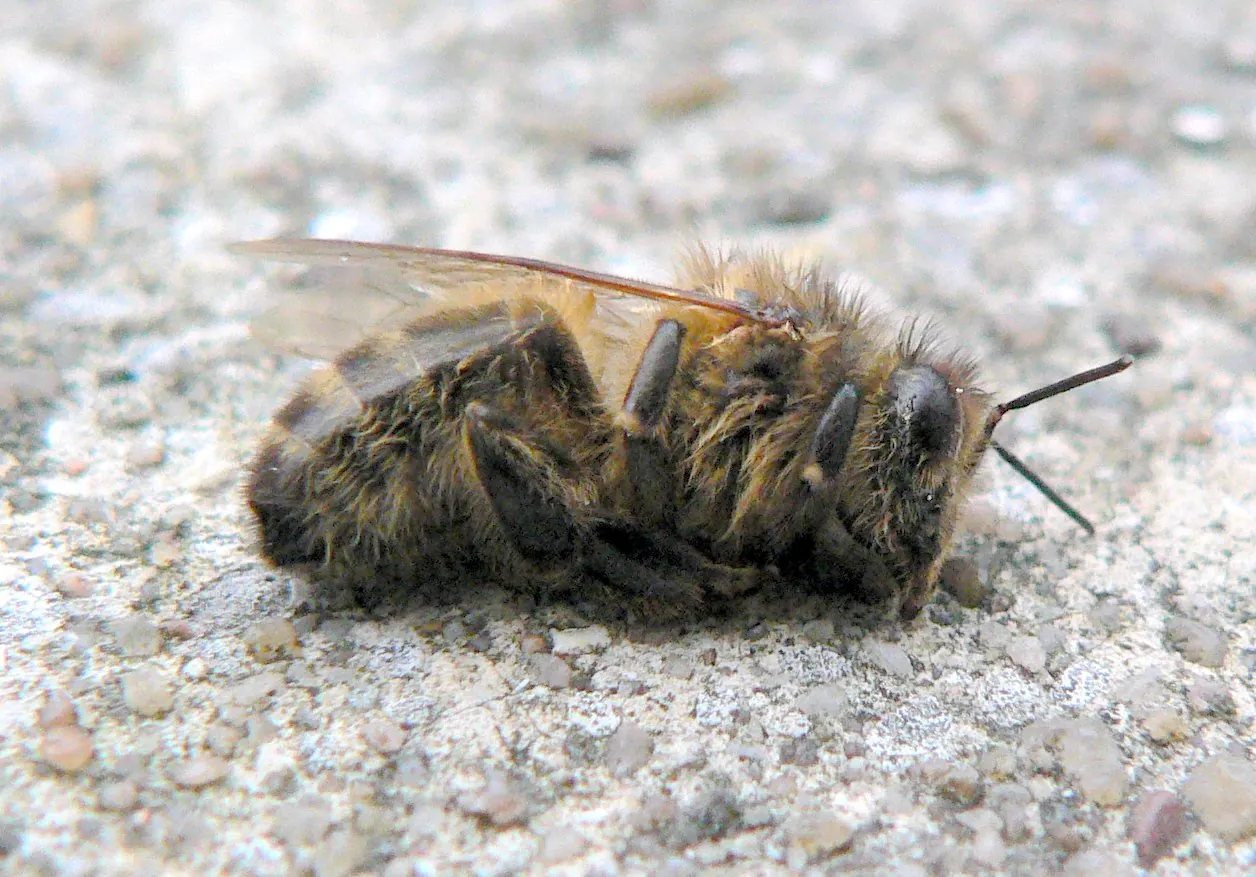
Nosema ceranae behaves differently. There is usually no dysentery and the bees look clean, but they live noticeably shorter lives: the parasite raises their energy demand and hunger. Foragers fail to return from the field and the colony "melts away" with a hive full of stores and brood. It is easy to mistake for queen loss, poisoning or the aftermath of varroa. The only way to know is to look at the gut.
Diagnosis: from the entrance to the microscope
Dysentery at the entrance is not a diagnosis: bees get dysentery without nosema, on honeydew or in a damp hive, and nosema without dysentery is increasingly common. There are three levels of checking.
The bee's gut
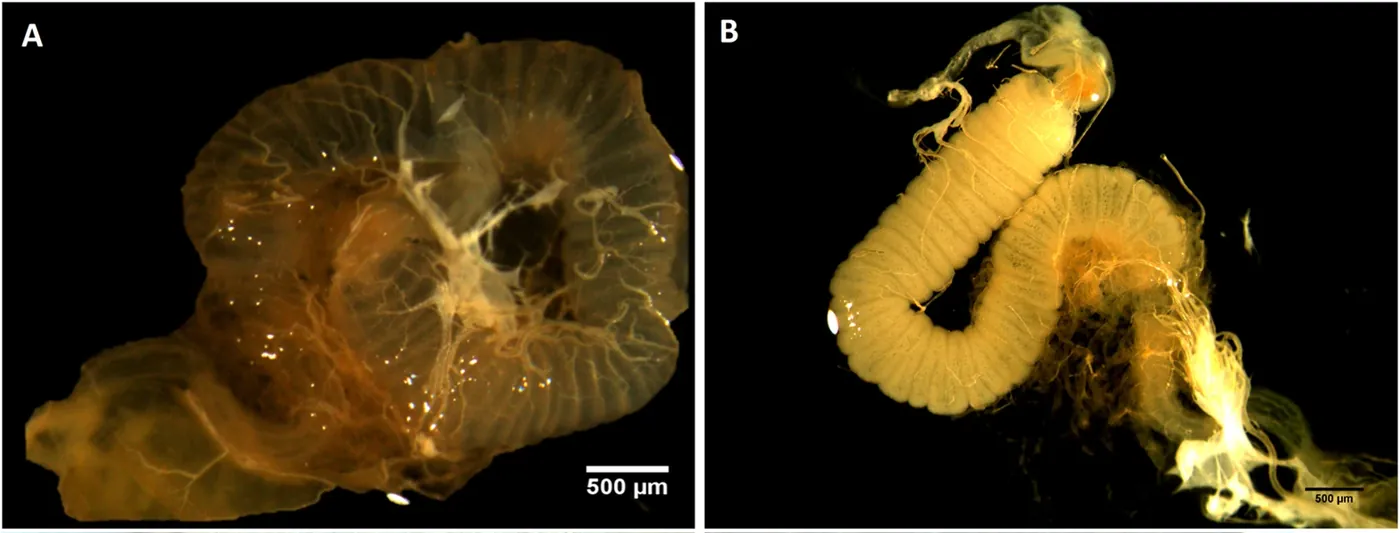
The quickest home test. Take a live bee from the entrance or a fresh one from the winter die-off, hold it by the thorax, grip the sting together with the last abdominal segment with tweezers and pull slowly: the whole gut follows the sting out.
- In a healthy bee the midgut is pinkish-brown or pale yellow, firm, with clear transverse constrictions, like a segmented cord.
- In a sick bee it is whitish or milky grey, swollen and flabby, the constrictions are smoothed out or missing, and the gut tears under light pressure.
Microscope
A student microscope with 400× magnification is enough. Grind the abdomens of 20–30 bees in a mortar with a few millilitres of water and put a drop of the suspension on a slide under a cover slip. Nosema spores look like identical oval, glossy "rice grains" with a thick wall and a sharp outline; their uniform size and shape set them apart from pollen, yeasts and air bubbles. You cannot tell apis from ceranae by shape: ceranae spores are slightly smaller, but the difference is within normal variation, so only a laboratory PCR test can do it.
Veterinary laboratory
For a definitive answer send a sample to your district or regional veterinary laboratory: 30–50 live bees from the entrance or the top of the nest (or the same number of fresh dead bees) from each suspect colony. Pack them in a paper bag or small cardboard box labelled with the hive number, never in plastic, where bees rot quickly, and deliver them the same or the next day. The laboratory will report the level of infection. According to various sources, the line between "watch" and "act" is around a million spores per bee, but the decision is made together with a veterinarian.

Healthy or sick colony: compare the signs
| Sign | Healthy colony | Nosema |
|---|---|---|
| Entrance and front wall | Clean, dry | Brown streaks and spots, sour smell |
| Cleansing flight | Vigorous, bees return | Sluggish, crawling bees, deaths on the snow |
| Abdomen | Normal, mobile | Swollen, faeces released under pressure |
| Winter die-off | Dry, intact bees, moderate | Heavy, damp, matted, mouldy |
| Top bars and combs | Clean | Dysentery stains, especially near the entrance and in the nest centre |
| Midgut | Pinkish-brown with constrictions | Whitish, swollen, no constrictions |
| Build-up in April–May | Brood expands quickly | Stalls, queen often superseded |
| Spores at 400× | Few or none | Dozens to hundreds per field of view |
Prevention: a disease of poor wintering
Almost every colony carries a little nosema; it becomes a disease where bees are weakened and forced to soil the nest. So the main prevention is good wintering, not "treating for nosema".
- Strong colonies into winter: 7–9 seams of bees, a young queen, winter bees free of mites; unite weak ones in August–September.
- Good stores: light floral honey or processed syrup; remove honeydew and heather honey from the nest.
- Dry and quiet: a warm ceiling, ventilation, protection from mice and tits, no needless inspections.
- Clean combs: cull dark and soiled combs every year; in spring keep the nest on light-coloured drawn comb.
- An early cleansing flight: bring colonies out of the shed at the first opportunity; outdoors, clear snow from the entrances and lay dark sheeting so bees do not land on snow.
- Disinfected equipment: wash and scorch hive tools, gloves and cages; never give frames or hives from sick colonies to healthy ones without treatment.
Acetic acid for combs
Combs from a sick colony cannot simply be dried and stored: spores survive a year or more. The proven method is vapour of concentrated (glacial) acetic acid. Stack the frames in boxes, close the stack, place a cloth or cotton wool soaked in acid on top and leave it for several days above freezing; the amount per box is given in reference books for your hive type. Then air the combs for at least two weeks until the smell is gone. The acid corrodes metal (frame wire, queen excluders) and burns skin and airways, so work in gloves, goggles and a respirator. Hives are scorched with a blowtorch and washed with a hot alkaline solution.
Treatment: what works and what does not
An honest word about drugs. For decades the only specific remedy was the antibiotic fumagillin. It suppresses the parasite's multiplication in gut cells but does not kill spores, so the disease often returns after a course, and with Nosema ceranae several studies found the effect to be even shorter. In the European Union fumagillin is not authorised for bees and its use is prohibited: no maximum residue limit in honey has been set for it. In Belarus and Russia it was used historically and appears in older manuals; today both countries have a number of registered veterinary products for nosema, and they must be chosen as prescribed by a veterinarian and strictly according to the label, respecting the withdrawal period before the honey flow.
Supportive measures that really help
Most colonies with light to moderate infection recover without drugs if they get what they lacked in winter: a cleansing flight, warmth and good food. In summer, when bees defecate outside the hive every day, Nosema apis almost disappears by itself.
- An early cleansing flight comes first. Bring colonies out of the shed, open the entrances, and on a warm hour you can lift the roof so the sun warms the crown board and rouses the bees.
- A warm, compact nest. Reduce to the seams the bees fill tightly, insulate, narrow the entrance: a warm colony spends less energy and raises brood faster.
- Clean feed. Replace soiled and honeydew frames with light honey frames from your reserve, or feed warm thick syrup in small portions.
- Probiotics, acids, herbal additives. There are many products on sale, from syrups with lactic acid bacteria to wormwood infusions. The evidence for them is weak; they usually do no harm, but they do not replace a cleansing flight, feed and a clean hive.
- A young queen. An infected queen often fades by June on her own; replace her at the first opportunity.
Transferring the colony to a clean hive
With moderate to heavy infection the most effective step is to move the colony off its soiled combs on a warm day after the cleansing flight.
- Prepare a clean hive. A disinfected box, light combs with honey from healthy colonies, two or three frames of foundation.
- Size the nest to the colony. As many frames as seams of bees, plus one; honey at the sides, clean combs for brood in the centre.
- Move the bees. Shake the bees with the queen into the new hive; frames with good, unstained sealed brood can go across, soiled ones cannot.
- Remove the old. Soiled combs go for rendering, the hive for disinfection; burn or bury the dead bees rather than shaking them out by the entrance.
- Insulate and feed. Narrow the entrance, give warm syrup or a honey frame, and after 7–10 days check the brood and the gut of a few bees.
When a colony is better destroyed
Pity is a poor adviser here. A colony on two or three seams, with heavy dysentery, crawling bees and no brood by mid-April has almost no chance of recovering and will be a source of spores for the whole apiary until summer. It cannot be united with a healthy colony: you would infect both. Such a colony is killed, its combs rendered and the hive disinfected. One lost colony is cheaper than a sick apiary. The same uncompromising approach applies to contagious brood diseases, covered in the article on foulbrood.
Nosema, mites and the calendar
Nosema rarely comes alone. Varroa mites feeding on the fat body weaken immunity and shorten the life of winter bees, and such a colony suffers nosema more severely. So the autumn mite check from the article on varroa is nosema prevention too. Feed, a dry hive and a strong colony are described in the article on wintering, and the beekeeping calendar gives the timing: testing dead bees in February, an early cleansing flight in March, inspection and transfer in April, comb replacement in May–June.
Nosema is only visible by comparison: this colony flew worse than that one, this one's winter die-off is damp while that one's is dry. Record the state of every colony in spring in the inspection journal of the Beehive app: strength, cleanliness of the entrance and frames, quality of the first flight, test result. Within a year or two the notes will show which colonies and hives regularly come out of winter with dysentery, and that points to the cause, a damp corner of the apiary, a honeydew flow, old combs, more precisely than any single sample.