Winter is the longest and quietest season in the apiary: five or six months in which the colony lives without foraging, on the stores you helped it put away. Yet winter success is decided in August and September, not January. Here is how the winter cluster works, what to do in autumn, and how to tell what is going on inside a hive without lifting the lid.
The winter cluster: a living stove
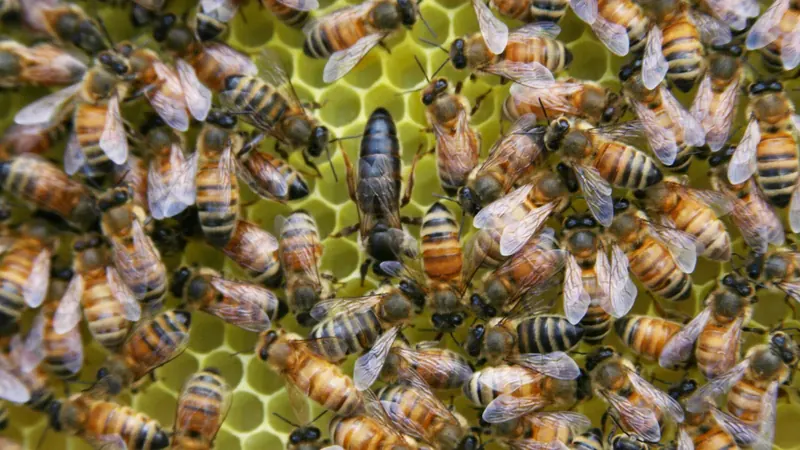
When the air around the nest drops to roughly 14 °C (57 °F), the bees draw together into a tight ball — the cluster. It sits on the combs, spanning several seams between frames, and changes size with the weather: it contracts in hard frost and loosens in a thaw.
The cluster has two layers. The mantle is several rows of tightly packed bees on the outside, held at about 8–10 °C: any colder and a bee falls into chill coma and drops. The core is the looser centre, where bees move about, feed and generate heat by shivering their flight muscles without moving their wings. With no brood, the centre is usually 20–30 °C; once the queen starts laying in late winter, the core is raised to 34–35 °C.
Bees in the mantle and core swap places constantly, so no one is stuck on cold duty for long. The colony does not heat the whole hive, only the cluster. Every bit of heat comes from honey, so every degree of frost is paid for in stores.
How the cluster moves through its stores
In autumn the cluster forms low on the combs, on cells freshly vacated by brood, and over the winter creeps slowly upward and slightly back towards the stores. It moves up through warm honey easily, but almost never sideways across a cold, empty frame. Hence the golden rule of winter setup: honey must sit above and beside the cluster.
Winter bees: a different generation
A summer worker lives five to six weeks and wears herself out. Bees raised in late summer and early autumn are built differently: they hardly nurse brood, do not forage and instead store reserves in their bodies. They have a large fat body and high levels of vitellogenin, a protein that is both a nutrient reserve and a shield against oxidative stress. These "diutinus" bees live six to eight months and in spring feed the first new generations.
That leads to a conclusion that surprises many beginners: spring is made in August and September. How many bees the queen lays in those weeks, and how healthy they grow up, determines how many bees reach the first cleansing flight. A dearth, a failing queen or high mite levels in that window mean a weak colony in April.
How much food a colony needs
For an average colony wintered outdoors in a cold temperate climate, the usual guideline is 20–25 kg (45–55 lb) of honey; in a wintering shed, about 15–18 kg. That is not what the bees will eat by March but what they need until the first spring flow: consumption jumps in April as brood rearing expands, and some honey always remains in combs the cluster never reaches.
In midwinter a strong colony uses about 1 kg a month, or 30–35 g a day. Most food goes at the start and especially at the end of winter, when brood appears.
Good and risky winter stores
Quality matters as much as quantity. Bees cannot fly out in winter, so everything they cannot digest accumulates in the hindgut until spring.
| Stores | For winter | Why |
|---|---|---|
| Light floral honey (lime, willowherb, clover, mixed meadow) | Good | Little indigestible matter, slow to granulate |
| Sugar syrup, processed and capped by the bees | Good | Almost no residue; a safe substitute for doubtful honey |
| Honeydew honey | Dangerous | Rich in minerals and dextrins — overloads the gut, causes dysentery |
| Oilseed rape, mustard, sunflower | Risky | Granulates fast in the comb; bees need water to use it, and there is none in winter |
| Heather | Risky | Thick, jelly-like, high in protein and minerals |
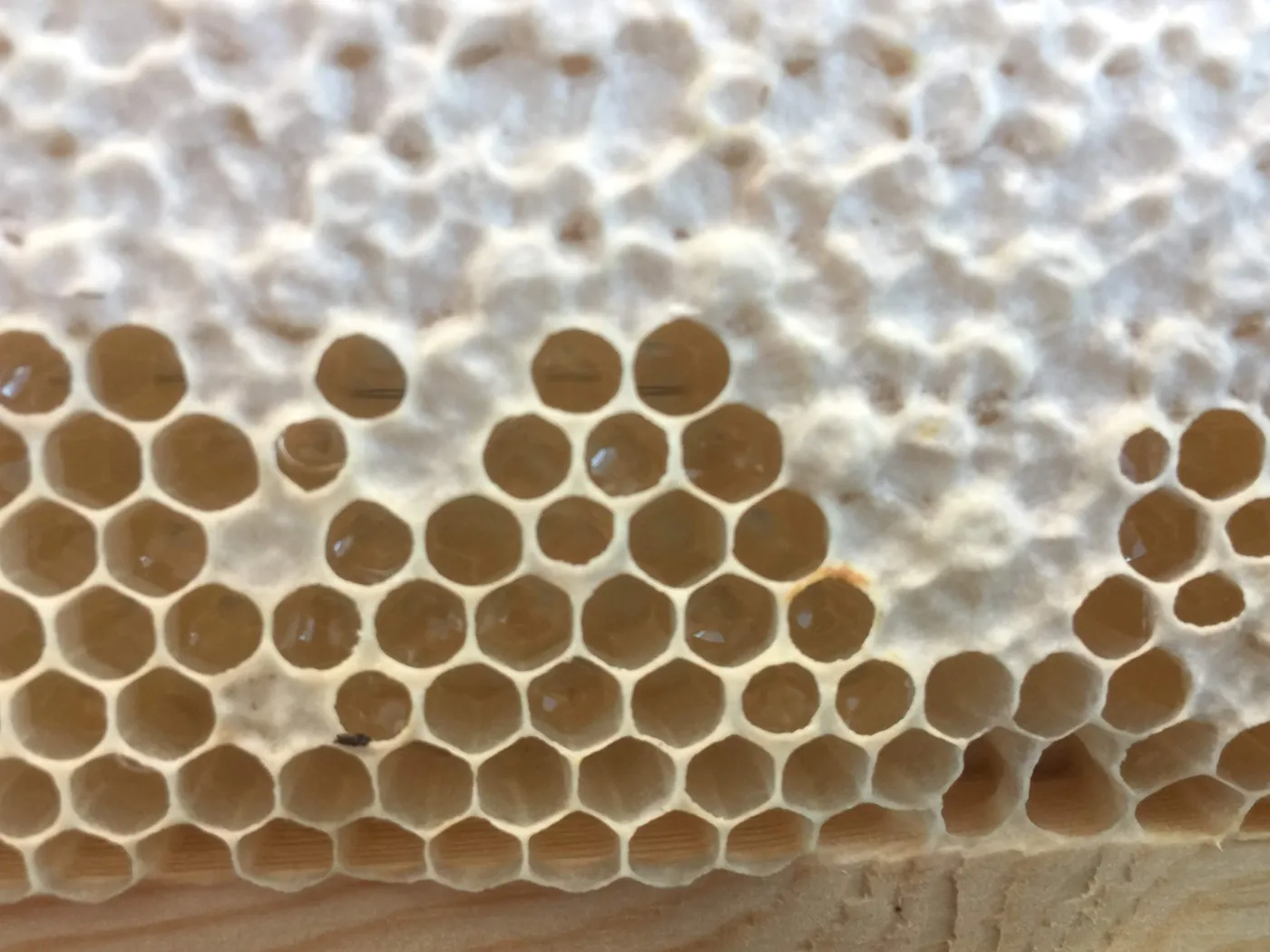
In a cold temperate climate, syrup feeding should be finished by late August to mid-September. The bees need time to process and cap the syrup while it is still warm, without wearing out the young winter bees on the job. For winter stores, beekeepers usually feed heavy syrup, roughly 3:2 or 2:1 sugar to water by weight.
Colony strength and nest setup
It is bees that winter, not boxes or honey. A good colony goes into winter covering 7–9 seams (2–2.5 kg of bees), with a young queen, low mite levels and plenty of bee bread. A colony on 3–4 seams cannot hold the cluster temperature in a hard frost, burns more food per bee and builds up slowly in spring.
Combine rather than hope
Weak colonies and nucs are best combined early, in late August or September, while bees are still flying. Keep the better queen and unite the colonies over a sheet of newspaper: within a day the bees chew through it and get used to each other's scent. Two weak colonies almost always winter worse than one strong one.
Setting up the winter nest
- Leave as many frames as the bees cover, plus one or two.
- Make sure every frame over the cluster has at least 2–3 kg of honey (a band 8–10 cm deep along the top).
- Put dark, brood-reared combs in the centre: bees prefer to cluster on them and they are warmer.
- Remove empty drawn comb and frames with little honey so the cluster does not settle on bare comb.
- Keep frames of bee bread close to the centre: they will be needed for the first spring brood.
Ventilation, insulation and location
Bees die in winter less from cold than from damp. Every kilogram of honey eaten turns into 0.6–0.7 litres of water, breathed out as vapour. If it condenses on the crown board and drips onto the cluster, while the outer combs go mouldy, the colony has a hard winter.
- Ventilation. Leave the bottom entrance open to suit colony strength; many beekeepers also give a small upper entrance or gap under the cover so moist air can escape. Open mesh floors are often partly closed with an insert for winter.
- Top insulation. A cold ceiling is the main source of drips. An insulation board or quilt over the frames keeps the ceiling warm, so moisture condenses on the walls instead of above the cluster.
- Side insulation matters more for thin-walled hives and weak colonies. A strong colony in a multi-box hive winters well without it.
Outdoors or in a wintering shed
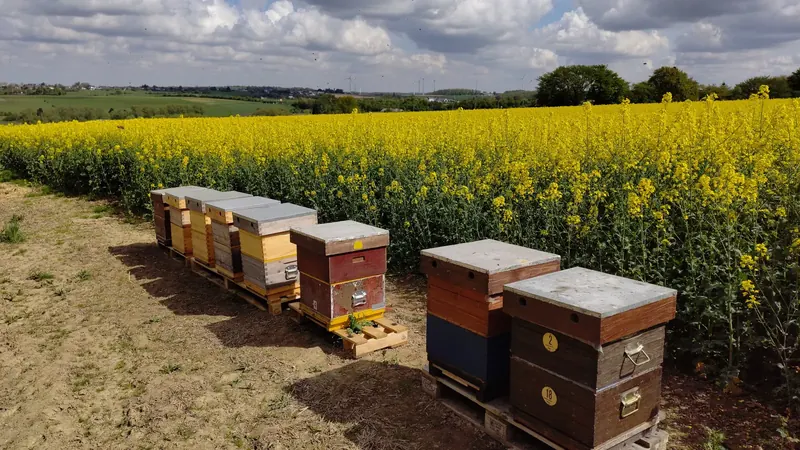
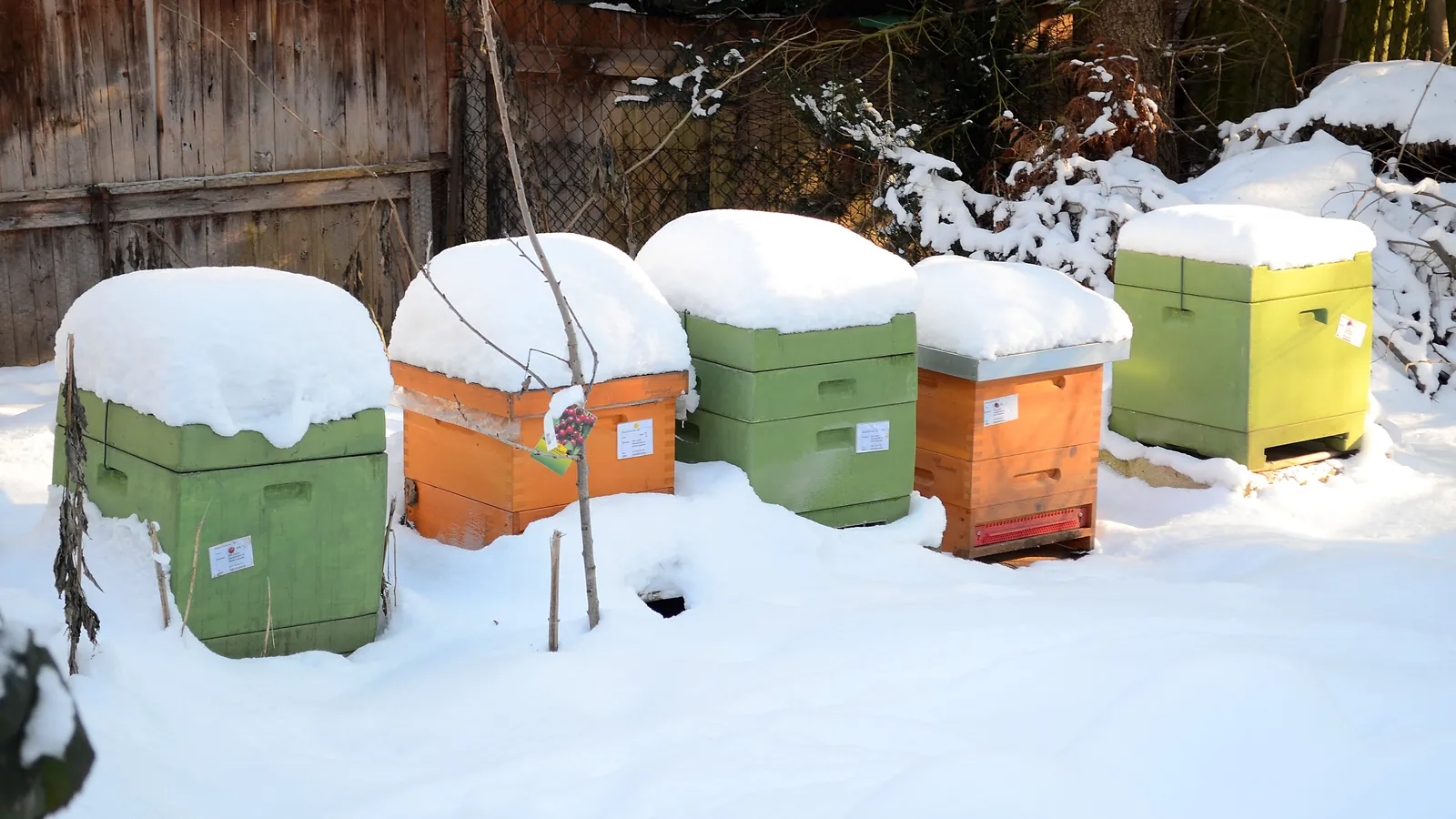
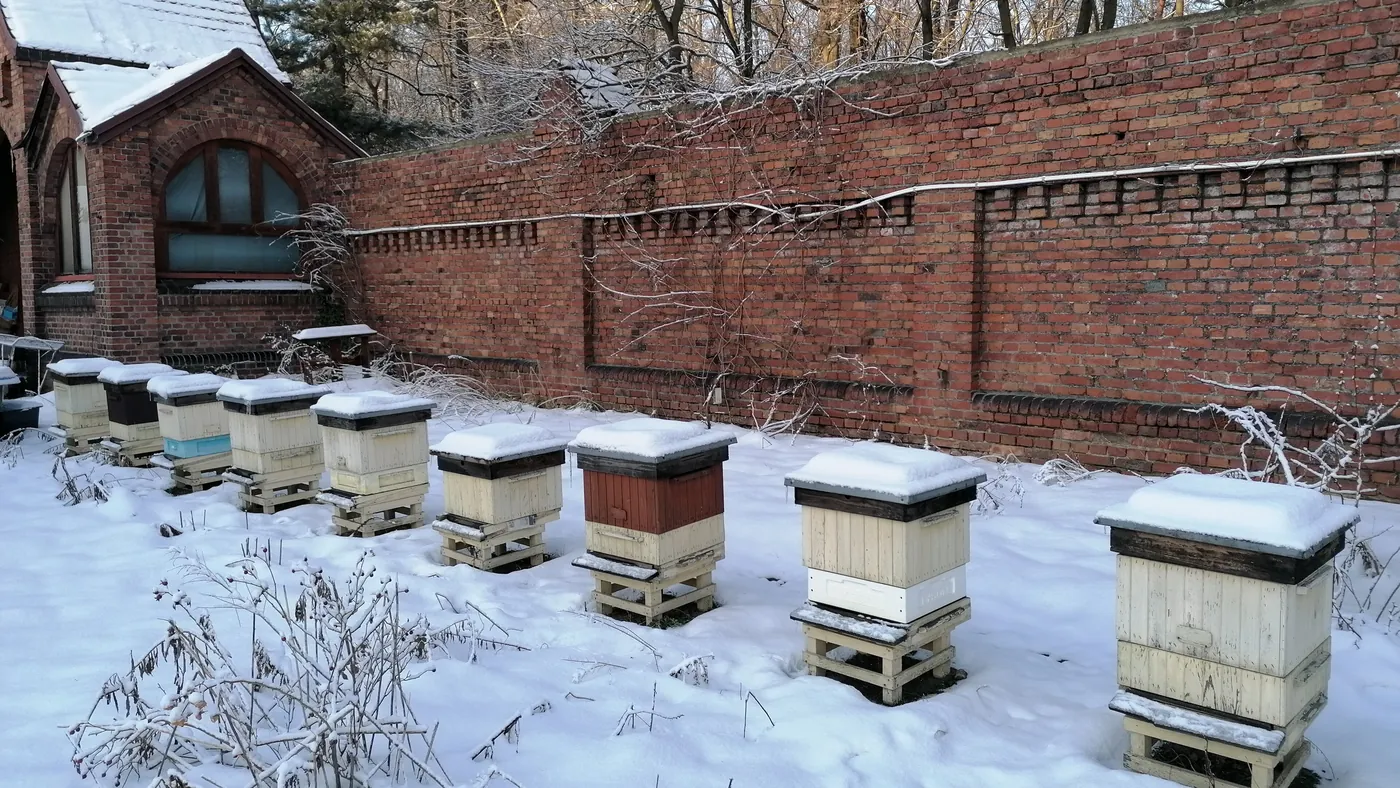
Wintering outdoors is the norm in most of the temperate zone. Hives stand on stands in a sheltered spot, entrances facing south or south-east. The bees can fly in every mild spell but use more food.
In a wintering shed or cellar, colonies use less food and wear less, but the building must be right: dark, quiet, around 0 to +4 °C, relative humidity 75–85 % and good ventilation. A warm or damp shed is more dangerous than frost: bees become restless, eat more and develop dysentery.
Checking colonies without opening
Opening a hive in winter is a mistake: the lost heat and broken cluster cost too much. But you can learn a lot from the outside.
Listening
Put your ear, a stethoscope or a length of hose against the hive wall or entrance and tap gently. A steady, soft hum that quickly dies down is normal. A loud, agitated roar that goes on and on can mean hunger, queenlessness or damp. A dry rustle like dead leaves is a warning sign: too few bees, or a colony starving. Silence means trouble.
Dead bees on the floor
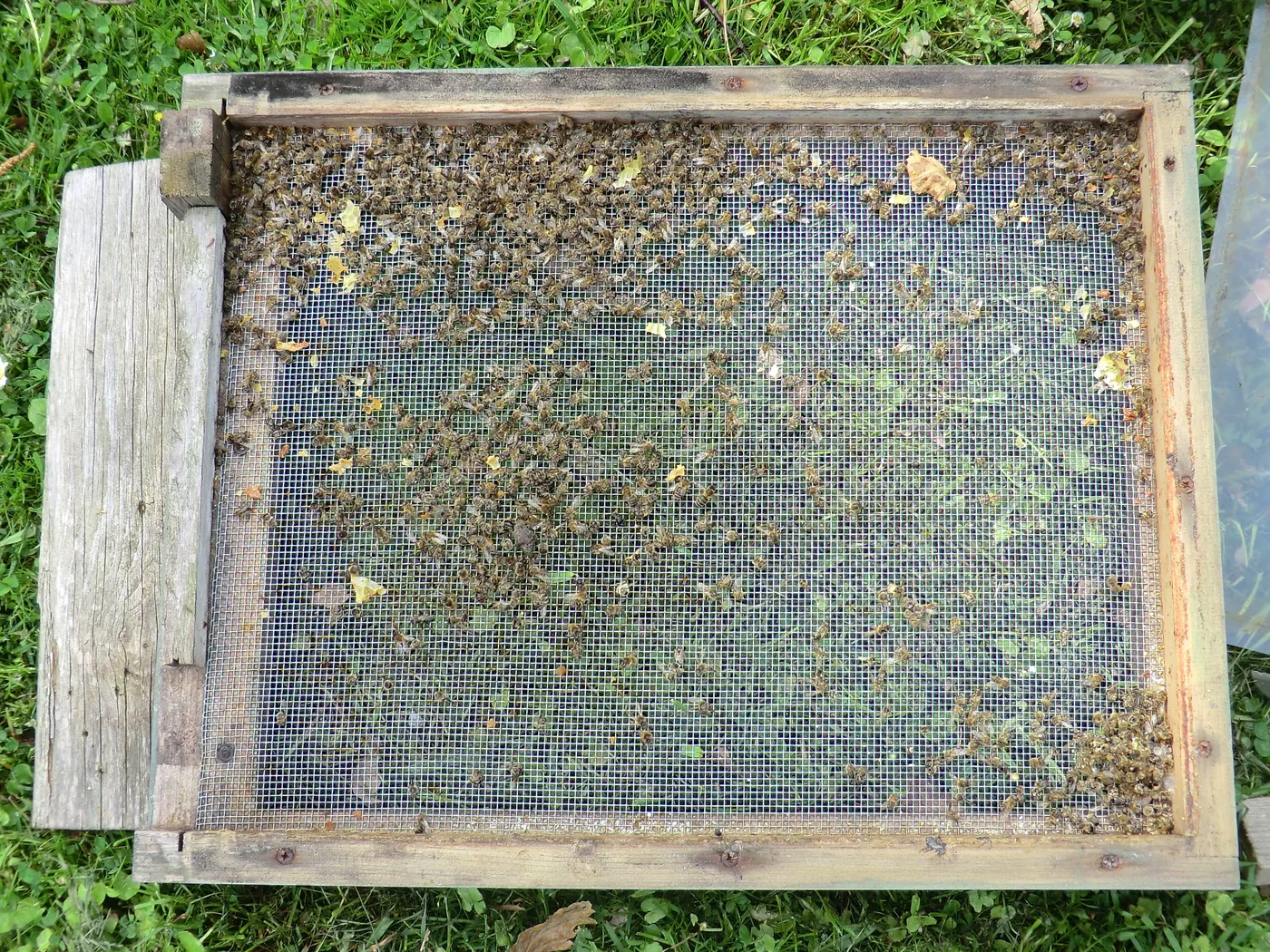
A few dead bees are normal: old bees die in winter too. With a mesh floor or removable tray you can pull out the debris and look. Dry, whole bees in moderate numbers are fine. Heaps of dead bees, wet or mouldy bees, headless or chewed bees (mice), or a soiled tray and walls all call for a closer look.
Hive weight
Weighing is the most objective method. Compare the autumn weight with midwinter and you know exactly how much food is left. A scale kept permanently under a hive shows not only stores but also daily consumption: in a quiet winter the weight falls smoothly, by 30–40 g a day.
- Steady decline — a normal winter.
- Sharp rise in consumption in midwinter — the colony is disturbed: damp, mice, disease or a lost queen.
- Consumption stops and the weight is flat for weeks — the colony has most likely died.
- Less than 5–6 kg left by February — get fondant ready.
Warning signs and what to do
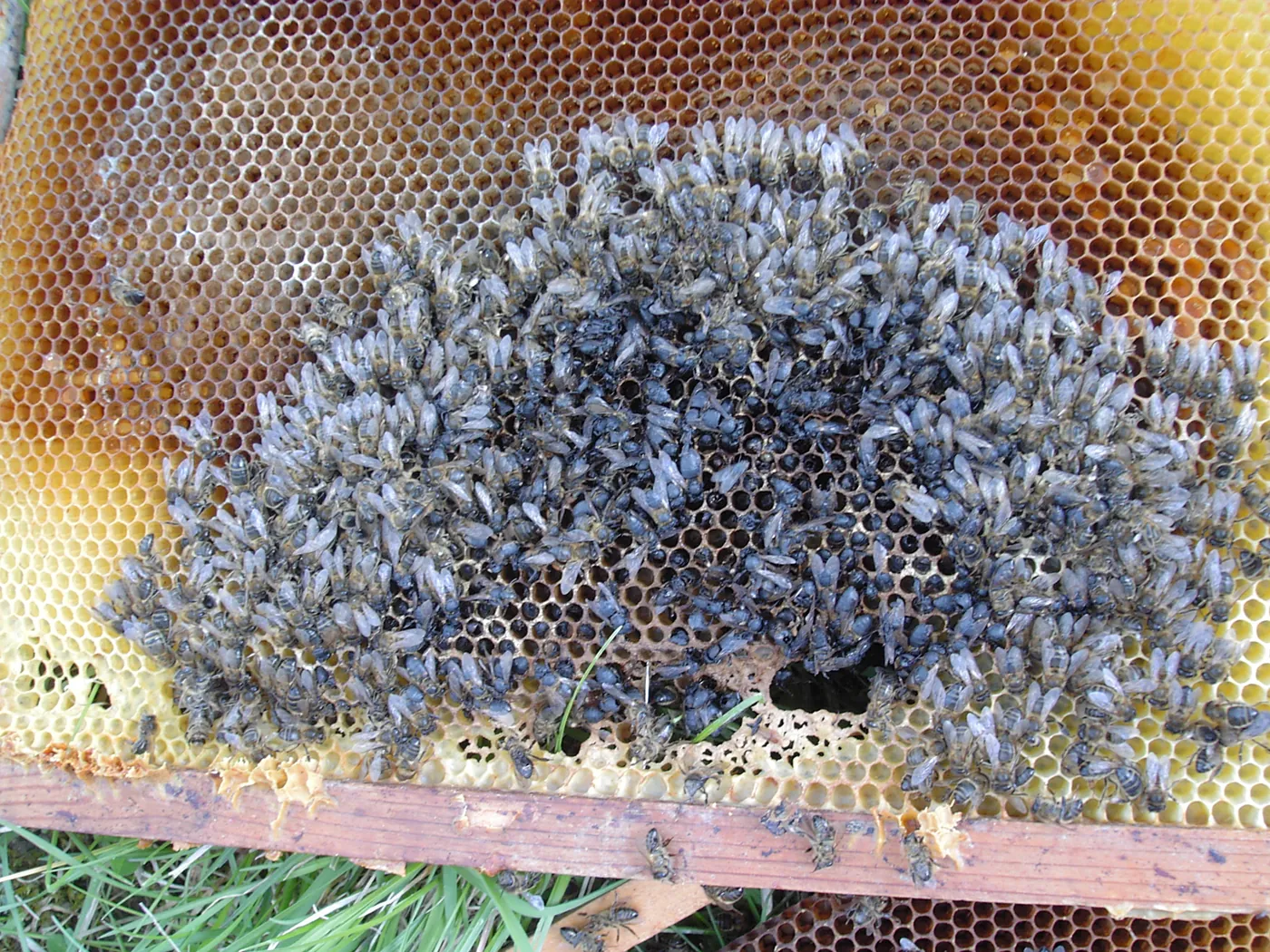
- Starvation. A dry rustle when you listen, a light hive, bees head-first in cells. If the colony is still alive, put fondant or a honey frame right over the cluster.
- Dysentery and nosema. Brown streaks on the entrance, walls and frames, restlessness, more dead bees. Causes include honeydew or granulating stores, damp and a warm shed; nosema infection often adds to it. In spring, move the colony to a clean dry hive, let it fly and send a sample of dead bees to a lab.
- Queenlessness. A prolonged agitated "howl" when you tap, plus higher food use. Little can be done in winter; in spring the colony is united with a queenright one.
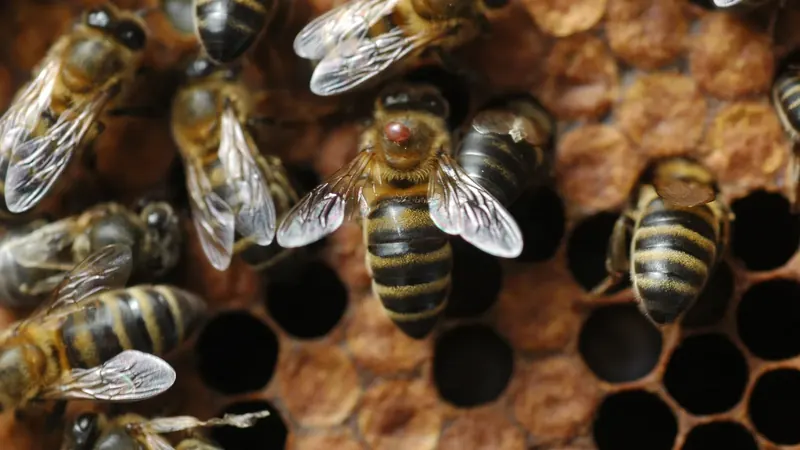
- Varroa. Heavy die-off early in winter, mites on the tray, bees with deformed wings and, by spring, an empty hive full of honey with a handful of bees. This is the result of weak summer and autumn treatment — read more in our article on varroa.
Spring: cleansing flight and first check
The first cleansing flight is the beekeeper's favourite day. In a cold temperate climate it usually comes in late March or April, on a sunny, windless day at 10–12 °C in the shade. Thousands of bees pour out, empty their guts and return — so don't hang white laundry near the apiary that day.
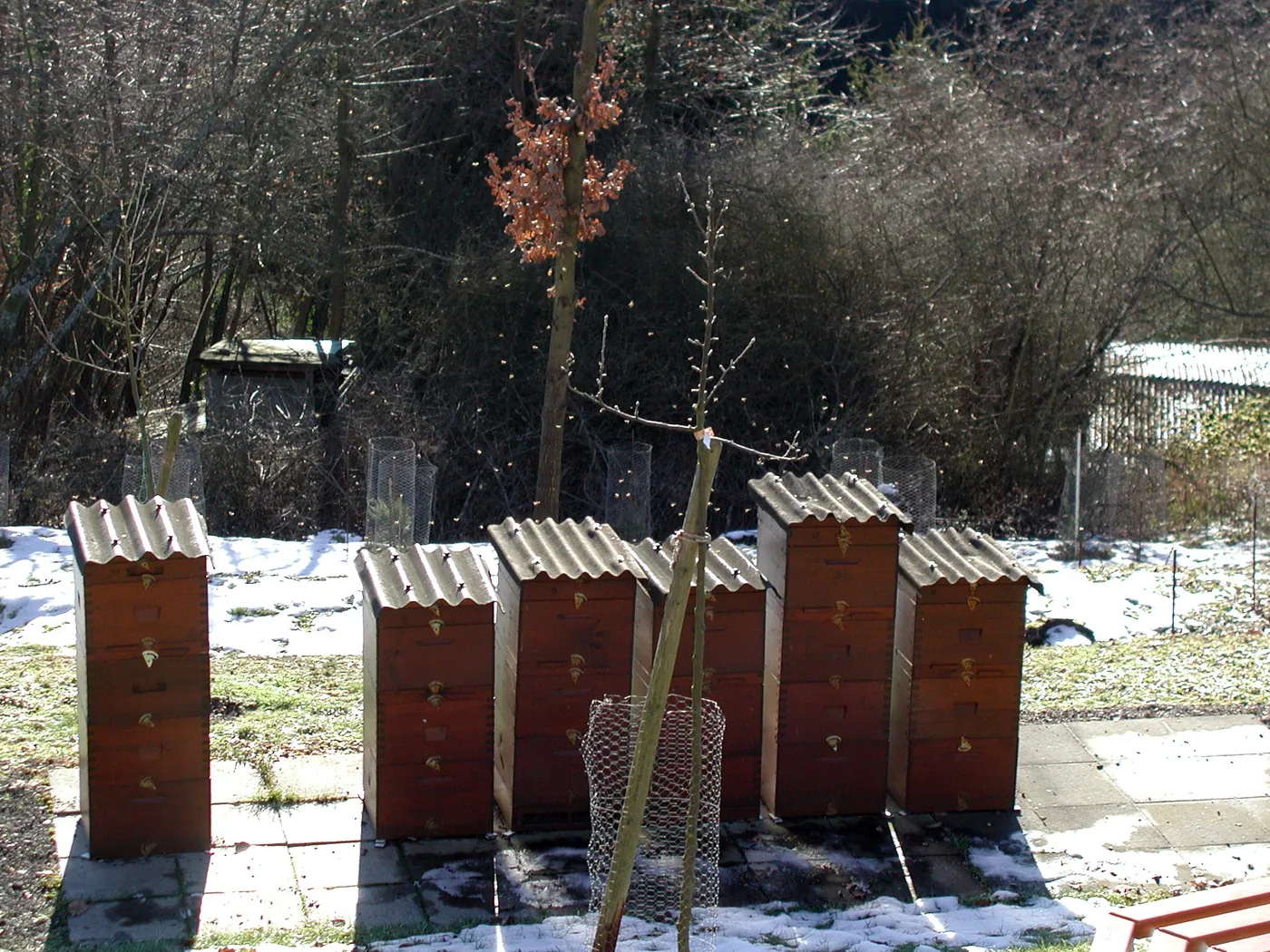
Watching the flight is your first inspection. A busy, lively flight means the colony is fine. A sluggish one, with bees crawling on the landing board and dysentery streaks, signals problems. A hive nobody leaves while the rest of the apiary is flying needs checking at once.
The first inspection
- Wait for a warm day. At least 14–15 °C in the shade, no wind; work quickly and do not leave the nest open.
- Judge the strength. How many seams the bees cover, and whether there are dysentery spots on the frames.
- Find brood. Eggs and capped brood show the queen is present and laying.
- Check the stores. At least 6–8 kg of honey should remain near the cluster until the first flow.
- Clean and reduce. Change the floor or clear out the dead bees, remove mouldy combs, reduce the nest to the colony's size and insulate.
Record the results for each hive — on paper or in a beekeeping journal app: strength, brood, remaining stores. By autumn these notes show which colonies winter best and which to raise queens from. What comes next in the season is covered in the beekeeping calendar.