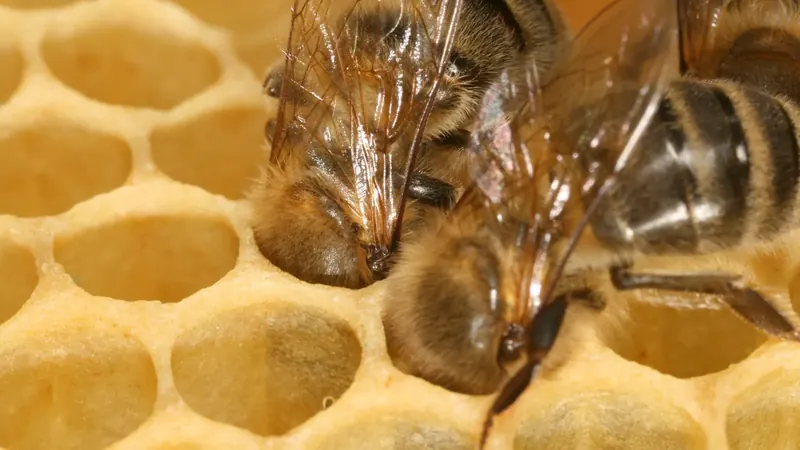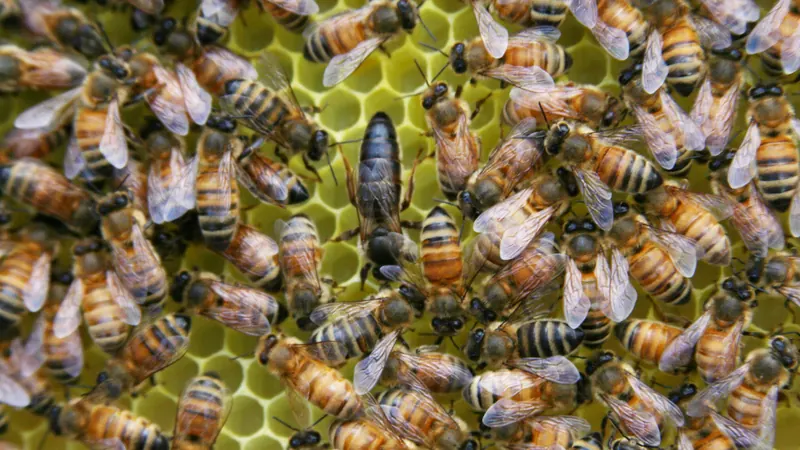
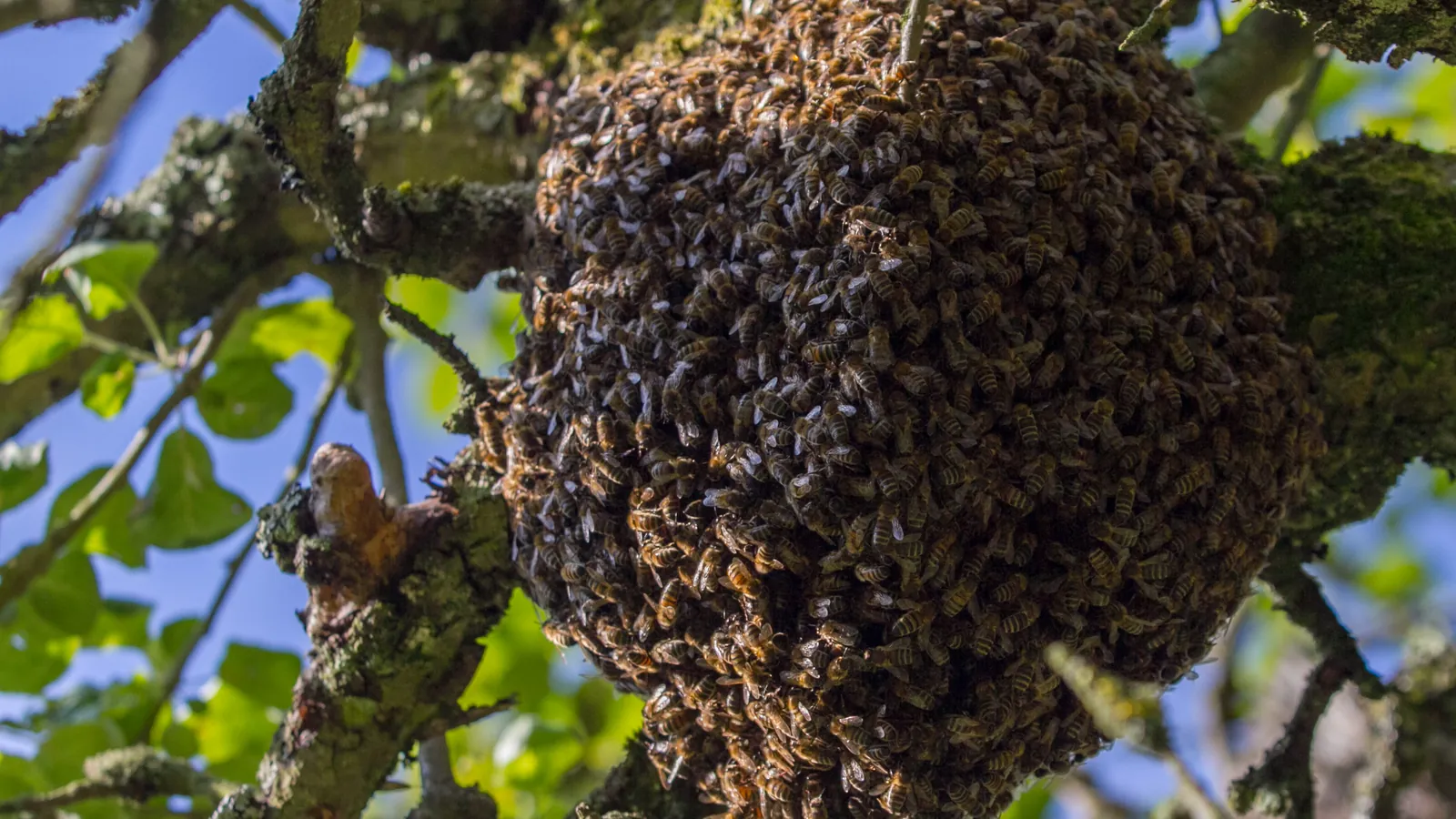
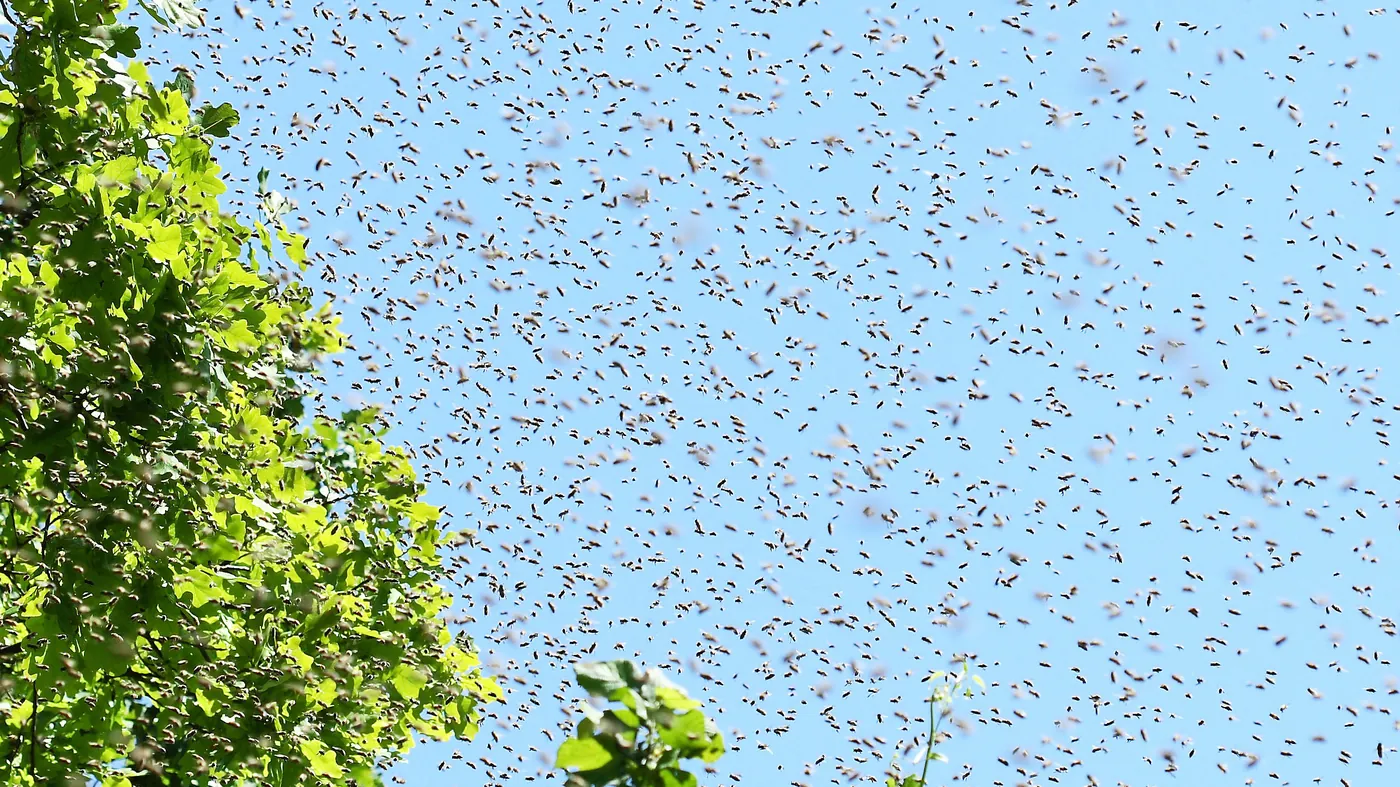
A swarm roaring over the apiary is one of the most beautiful sights in beekeeping — and one of the most expensive losses. Half or more of the colony's bees leave with the old queen, and what stays behind won't rebuild its strength before the main flow is over. The good news: swarming is predictable. It runs on a fixed schedule, and the warning signs show up a week in advance.
Why bees swarm
Swarming is not a disease or a whim. It is how a honey bee colony reproduces. A single bee cannot live on her own: the colony reproduces as a whole, like one organism (more on that in our article on how a honey bee colony works). The old queen leaves with part of the workforce to find a new home, while the brood, stores and queen cells stay behind to produce new queens.
Every colony has the instinct, but it is switched on by particular conditions:
- Congestion. Every comb is full of brood and stores, the queen has nowhere to lay, and bees cover even the hive walls.
- Too many young nurse bees. There is little open brood but plenty of brood food — the nurses have nobody to feed. This is probably the main trigger.
- Not enough work. No foundation to draw and no strong flow, so young bees sit idle.
- An ageing queen. A queen in her second or third season produces less queen pheromone, and in a crowded nest it spreads poorly through the colony. The bees sense her less and start rearing queens.
- Heat and poor ventilation. A hive in full sun, a narrow entrance and dark walls all push towards swarming.
- Genetics. Swarminess depends strongly on the strain: some colonies swarm almost every year, others work calmly in the same conditions.
In temperate parts of the Northern Hemisphere the swarming season usually runs from late May through June and can stretch into early July; after an early warm spring everything moves a week or two earlier. To see where swarming sits in the whole season, check our month-by-month beekeeping calendar.
A swarm in May is worth a load of hay; a swarm in June is worth a silver spoon; but a swarm in July is not worth a fly.
— traditional English beekeeping rhyme
How swarming unfolds, day by day
The swarming process follows the queen's development: 3 days as an egg, about 5 as a larva, the cell is capped on day 8–9 and the new queen emerges on day 16. All of swarm control arithmetic follows from that.
- 1–2 weeks beforeQueen cupsBees build small wax cups along the comb edges. Empty cups appear in almost any colony and are not alarming on their own.
- Day 0Eggs in the cupsThe queen lays in the cups. This is the point of no return: the colony has decided to swarm. Workers feed the queen less, she lays less and slims down so she can fly.
- Days 3–8Charged queen cellsLarvae hatch and float in royal jelly. The cells lengthen, and you can see a white larva on a bed of jelly inside.
- Days 8–9The prime swarm leavesAs soon as the first cells are capped, on a warm sunny day — usually between 10 am and 2–3 pm — the prime swarm leaves with the old, mated queen. Bad weather can hold it back for a few days.
- Day ~16Queens pipingThe first virgin queen emerges and "toots" — a long piping sound. Queens still held in their cells answer by "quacking". You can hear it with your ear against the hive, no equipment needed.
- Days 16–20Casts7–9 days after the prime swarm a second swarm — a cast with a virgin queen — may leave, and sometimes a third. Casts are smaller and can carry several virgins at once.
Signs a colony is preparing to swarm
A colony in swarming mode changes visibly if you know what to look for. Only one sign is reliable — eggs or larvae in queen cups and charged queen cells. The rest simply tell you it's time to open the hive.
- Eggs or larvae in jelly have appeared in the cups along the comb edges.
- There is noticeably less open brood: the queen is laying less and empty cells fill with nectar.
- The bees have stopped drawing foundation; many idle bees hang in festoons between the frames.
- Flight is weaker than in neighbouring colonies of the same strength — the bees are "loafing" before they leave.
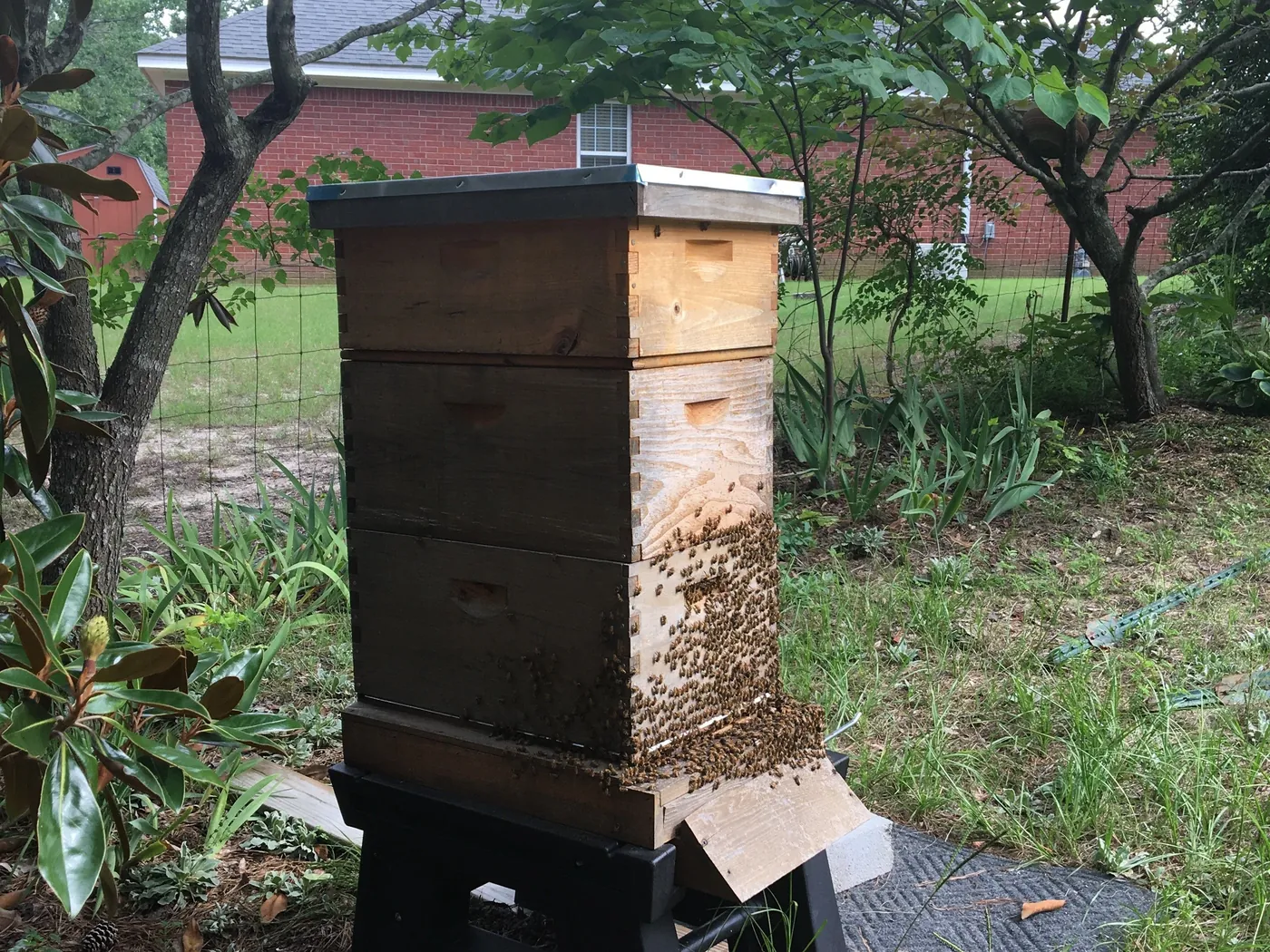
- A "beard" of bees hangs at the entrance and on the front of the hive.
- After the prime swarm, you hear queens tooting and quacking through the hive wall — a cast is coming.
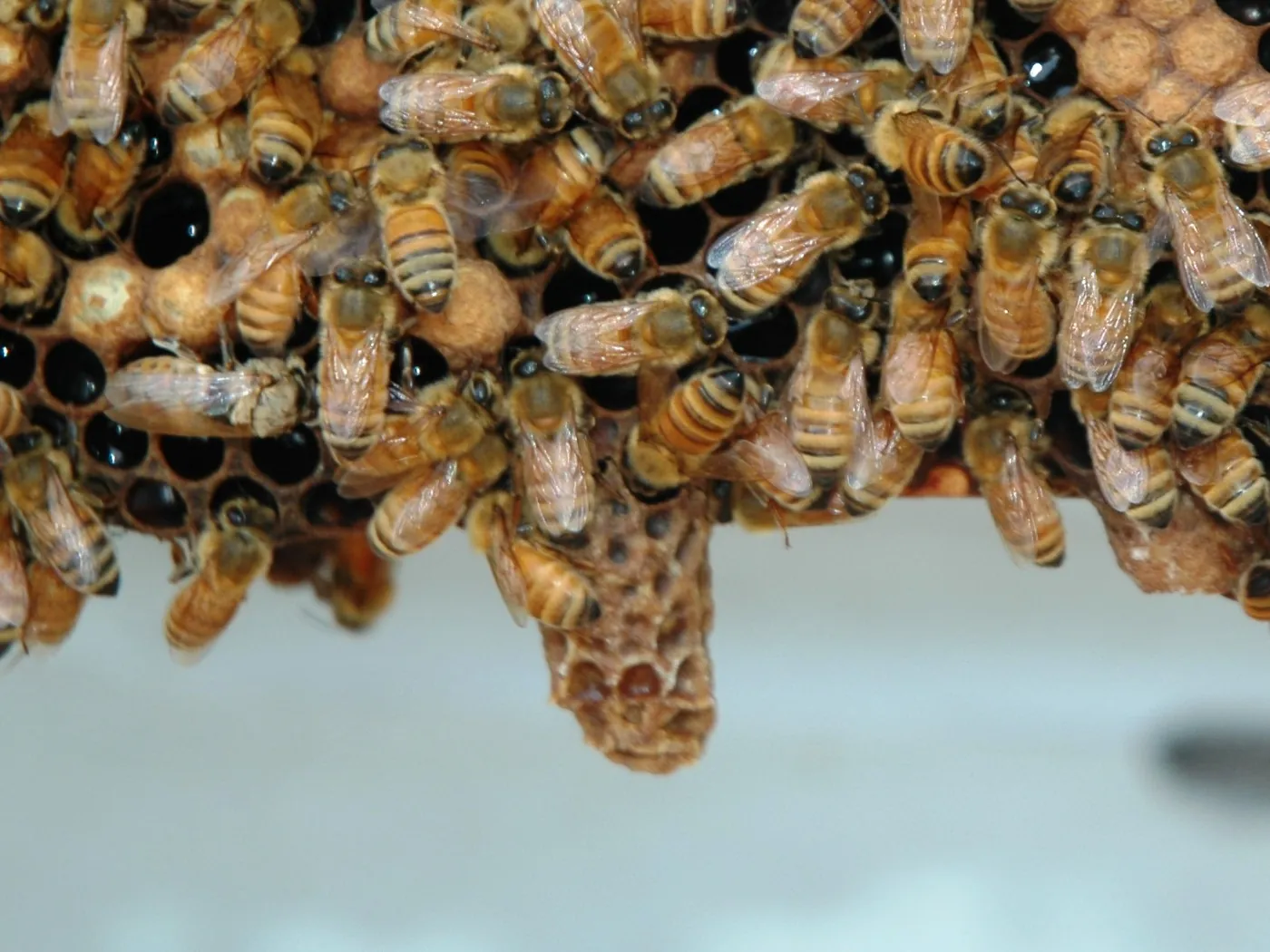
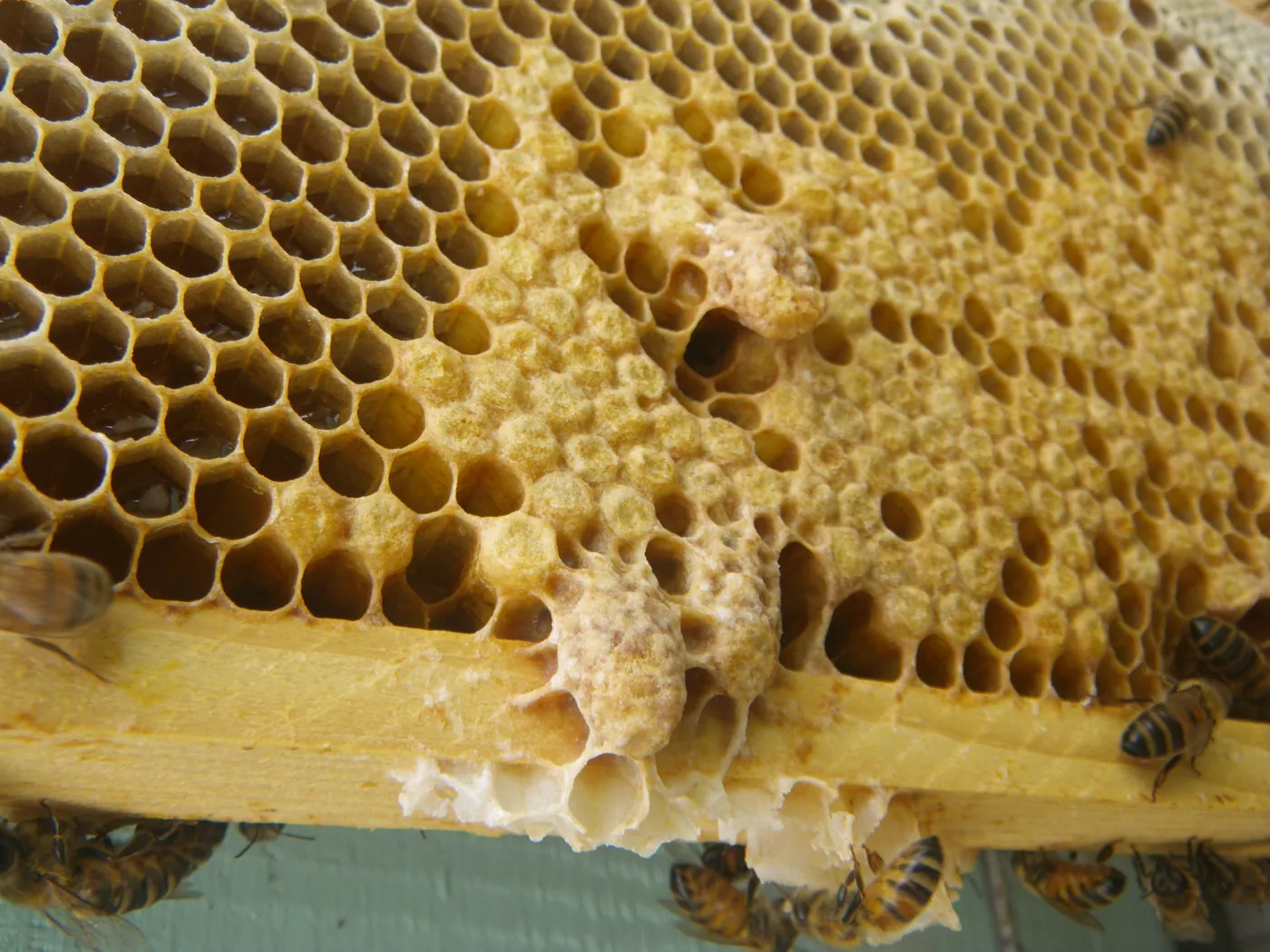
Swarm, emergency and supersedure cells
Queen cells don't always mean swarming. Bees also raise queens in two other cases: when the queen is lost (emergency cells) and when they want to replace a failing mother without swarming (supersedure). Mixing them up is risky: destroy supersedure or emergency cells and you may leave the colony queenless.
| Type | Where and how many | What's happening in the colony |
|---|---|---|
| Swarm cells | Along the bottom bar and side edges of combs; usually many — 5 to 20 or more, of different ages | Queen present, eggs present; the colony is strong and crowded |
| Emergency cells | On the comb face among brood, built out of ordinary worker cells; the worker cell is visible at the base | No queen (lost or removed), no fresh eggs |
| Supersedure cells | Mid-comb, usually 1–3, all the same age | The old queen is still there and laying but failing; the colony isn't preparing to leave |
How to catch and hive a swarm
A swarm usually clusters a few dozen metres from the apiary — on a branch, a bush, a post — and hangs there from half an hour to a day or more while the scouts choose a new home. You have time, but don't waste it.
You'll need a swarm box (a light box or skep with mesh for ventilation), a veil, a water sprayer, and if necessary a ladder and secateurs. You hardly need a smoker: swarming bees have filled their honey stomachs and are usually gentle.
- Get the box underneath. Hold it as close under the cluster as you can and give the branch a sharp shake — most of the bees will drop in. If you can cut the branch without harming the tree, cut it with the swarm on it.
- Check that the queen is in. Set the box down near the cluster site. If bees from the branch march inside and fan at the edge with raised abdomens, the queen is with them. If the swarm gathers back on the branch, the queen stayed there — repeat.
- Keep it cool. Put the closed box in the shade or a cool, dark cellar until evening. The swarm settles and the bees start producing wax.
- Hive it in the evening. Prepare a hive with foundation and some drawn comb; many beekeepers add one frame of open brood to "anchor" the swarm. Shake the bees onto the frames or onto a board in front of the entrance — they'll walk in on their own.
- Feed. If there's no flow, give syrup for the first few days — the swarm has comb to build.

Swarm control methods
The best swarm control is not letting the swarming impulse start. Once there are larvae in the queen cells, most gentle methods stop working — you need to split the colony.
| Method | Pros | Cons |
|---|---|---|
| Timely expansion — second brood box, super, drawn comb | Simple, relieves congestion, strength goes into honey | Won't stop swarming once it has started |
| Foundation and a drone/building frame | Keeps young bees busy, renews comb | Needs a flow or feeding |
| Taking capped brood to weaker colonies | Evens out the apiary, relieves the strong colony | Weakens the donor; risk of spreading disease |
| Nucs and splits | Reliable, more colonies, spare queens | Less honey from the main colony, more work |
| Young queens (requeen every 1–2 years) | Young queens head swarms noticeably less often | Cost of rearing or buying queens |
| Demaree method | The colony stays whole and strong for the flow | Labour-intensive, heavy boxes, must recheck after 7–9 days |
| Artificial swarm (split) | Mimics swarming and works even with queen cells present | Done too late, the colony is weaker for the main flow |
| Ventilation, shade, queen-excluding entrance guards | Cheap, reduces overheating; the guard keeps the queen in | Supporting measures only; the guard just buys time |
A word on cutting out queen cells. It's the most obvious method and the least reliable: the bees simply build new ones, and a single missed cell undoes all the work. On its own it only delays the swarm by a week.
The Demaree method step by step
The technique was described by American beekeeper George Demaree in the late 19th century. The idea is to separate the queen from the young nurse bees and brood within one hive. It suits multi-box hives and strong colonies that don't yet have charged queen cells.
- Find the queen. In the bottom box put the frame with the queen and a little open brood (no queen cells); fill the rest with drawn comb and foundation.
- Add a queen excluder, and above it a super or box of empty comb as a "buffer".
- All the brood goes up. Put the remaining brood frames in the top box. The nurses follow it up, leaving the queen plenty of room below.
- Check the top after 7–9 days. The bees will raise emergency cells on the open brood up there — destroy them all or use them for a nuc. A virgin queen missed in the top box is a common cause of failure.
- After 3 weeks all the brood in the top box has emerged and the comb fills with honey — the top box becomes a super. If the swarming impulse persists, repeat.
If the swarm has already left
First, collect the swarm as described above. Then turn to the parent colony: it still has queen cells and, left alone, may well throw one or two casts.
- Keep one good queen cell. Within a few days of the prime swarm, inspect the colony, keep one large capped cell (some keep two as insurance, but that raises the risk of a cast) and remove the rest.
- Hear queens piping? A cast will leave within days. You can collect it and hive it separately, or remove the extra virgins and unite it back with the parent colony.
- Leave the colony alone for 2–3 weeks. The young queen needs to take her orientation and mating flights; eggs appear about 2–3 weeks after she emerges. If there are still no eggs after that, add a test frame with eggs.
- Use the broodless window. A fresh swarm, and the parent colony after the new queen emerges, have no capped brood for a while — a convenient moment for mite treatment (see our article on varroa). Use products strictly according to the label and your country's rules.
How not to miss a swarm
During swarming season, inspect strong colonies every 7 days — 9 at most. The logic is simple: 8–9 days pass between an egg in a queen cup and the prime swarm. Inspect less often and you risk finding the cells after the swarm has gone.
- Is there room to lay and store nectar — time to add a box?
- Are the queen cups empty, or do they hold eggs and larvae?
- How much open brood compared with the last inspection?
- In a multi-box hive, a quick check without a full inspection: tilt up the top brood box and look at the bottom bars of its frames, where swarm cells are most often built.
- Write down what you saw — without notes the dates quickly get muddled.
Between inspections, hive scales help: when a swarm leaves, the hive loses 2–4 kg within minutes — a drop that's hard to mistake for anything else. The Beehive app sends you a notification so you can collect the swarm while it's still hanging near the apiary.