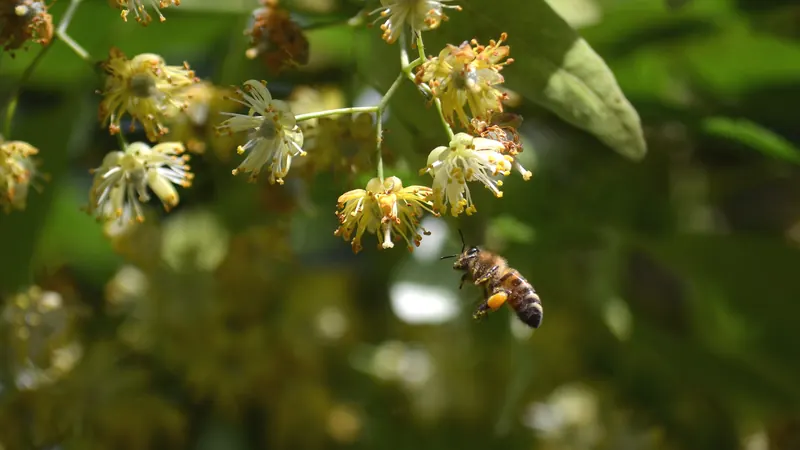
A forager finds a stand of lime trees two kilometres from the apiary, returns to the dark hive and, within minutes, tells her sisters exactly where to fly. No words: just a dance, a scent and a vibration. Bee language is one of the most sophisticated communication systems in the animal world, and a beekeeper who understands even the basics sees and hears the apiary differently.
Karl von Frisch cracks the code
Beekeepers had noticed bees "dancing" on the comb as early as the 18th and 19th centuries. The meaning of those movements was decoded by the Austrian zoologist Karl von Frisch. From the 1910s he worked with bees: he proved they see colour, then spent decades training marked foragers to sugar-syrup feeders and watching them dance in a glass observation hive.
In the 1940s von Frisch set out his key finding: the form and direction of a dance carry precise information about the distance and direction to a food source. His book The Dance Language and Orientation of Bees (1965) summed up half a century of work.
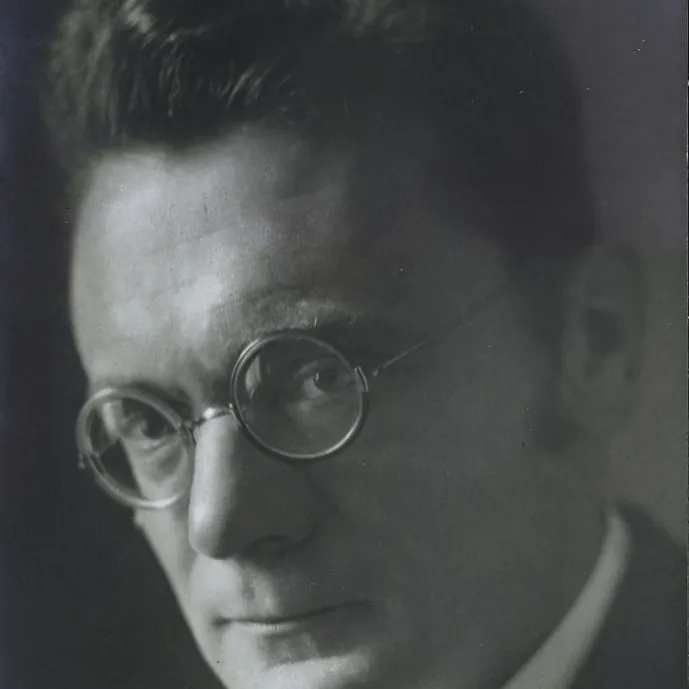
In 1973 von Frisch shared the Nobel Prize in Physiology or Medicine with Konrad Lorenz and Nikolaas Tinbergen for discoveries concerning the organisation and elicitation of individual and social behaviour patterns. It is one of very few Nobel Prizes built on watching ordinary honey bees.
The life of bees is like a magic well: the more you draw from it, the more there is to draw.
— Karl von Frisch
The round dance and the waggle dance
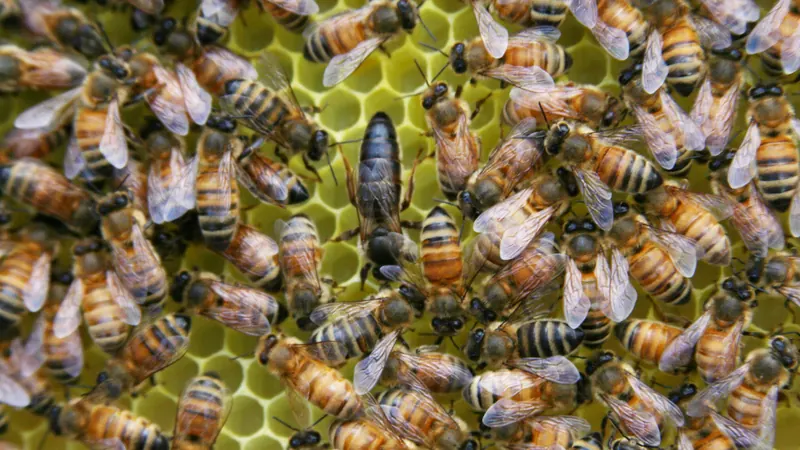
Back from a rich nectar source, a forager unloads to receiver bees and starts dancing on the comb, usually close to the entrance on the "dance floor". Follower bees gather round her, touching her with their antennae, picking up the movements and the scent of the flowers and tasting the nectar she brought.
A bee performs the round dance when food is close, within a few dozen metres: she runs in a small circle, reversing direction now and then. The message is roughly "there's food nearby, search by scent". Many researchers now regard the round dance as simply a very short waggle dance.
The waggle dance (or figure-of-eight dance) is used for more distant sources. The bee runs along a straight line, waggling her abdomen rapidly from side to side and buzzing her wings, then loops back to the start, waggles along the same line again and loops back on the other side. The result looks like the figure 8.
Direction: the sun and the vertical comb
Inside the hive it is dark and the sun cannot be seen, so the bee uses a stand-in: straight up the vertical comb stands for the direction of the sun. If the flowers lie 40° to the right of the sun, the waggle run points 40° to the right of vertical. A run straight up means "fly towards the sun"; straight down means "fly away from it".
Distance: the duration of the run
The farther the food, the longer the waggle run. A rough rule is about one second of waggling per kilometre, though the calibration differs between races and even colonies. Bees don't measure distance in metres but by "optic flow" — how much landscape streams past their eyes in flight — which is why distances over water or open, featureless fields can be misjudged.
Quality: the vigour of the dance
Rich nectar near the hive deserves an enthusiastic dance: more repetitions, tighter return loops and more followers. A poor source is advertised half-heartedly or not at all. That is how a colony, with no "manager", shifts its foragers to the most profitable patches.
Allowing for the moving sun
The sun moves across the sky by about 15° an hour on average. A bee that keeps dancing for a long time gradually rotates her waggle angle to follow it — she "remembers" its course. In cloudy weather bees navigate by the polarisation pattern of patches of blue sky.
Controversy and proof
Von Frisch's theory was not accepted straight away. In the 1960s the American biologist Adrian Wenner argued that bees find food by scent alone and that the dance is a mere side ritual. The debate lasted years and triggered dozens of experiments.
- James Gould (1975) tricked the followers: the dancers' ocelli were painted over so they danced relative to gravity, while the followers could see a lamp and "read" the dance relative to it. Recruits flew where the misread dance pointed, not to the real feeder.
- The robot bee (Michelsen and colleagues, late 1980s – early 1990s) — a mechanical model on the comb that "danced" and sent live bees in a chosen direction.
- Harmonic radar (Riley and colleagues, 2005, Nature) — tiny transponders were glued to recruits and their flights were tracked. The bees flew the direction and distance indicated by the dance, then searched for the flowers by scent once they arrived.
The verdict: both sides were right. The dance gives the vector; scent and vision help find the target over the last few metres.
Other signals on the comb
Besides the figure of eight, bees use several other signals. They're less obvious, but they tell you about the state of the colony.
| Signal | What it looks like | What it means |
|---|---|---|
| Shaking signal (vibration signal) | A bee grips another and rapidly shakes her body for 1–2 seconds | "Get active": more bees go out to work or prepare for swarm departure |
| Tremble dance | Slow, trembling walk across the comb | A forager can't unload her nectar — more receiver bees are needed |
| Stop signal | A brief head-butt with a beep, often aimed at a dancer | "Don't recruit there": danger at the source, or it's overcrowded |
Thomas Seeley described the tremble dance in the early 1990s, showing how a colony balances foragers and receivers. During a heavy flow the receivers can't keep up, and tremble dances switch some bees over to receiving.
The language of scent: pheromones
If dances are the colony's "speech", pheromones are the constant background that tells every bee, minute by minute, whether all is well. Bees smell with their antennae, each carrying thousands of olfactory pore plates.
Queen mandibular pheromone
The queen produces queen mandibular pheromone (QMP), whose main component is 9-oxo-2-decenoic acid (9-ODA). Her retinue of workers constantly licks her and spreads the pheromone through the nest. While there's enough of it, workers don't build queen cells and their ovaries stay undeveloped. When the queen is lost, the colony notices within a few hours.
The Nasonov gland: "this way home!"
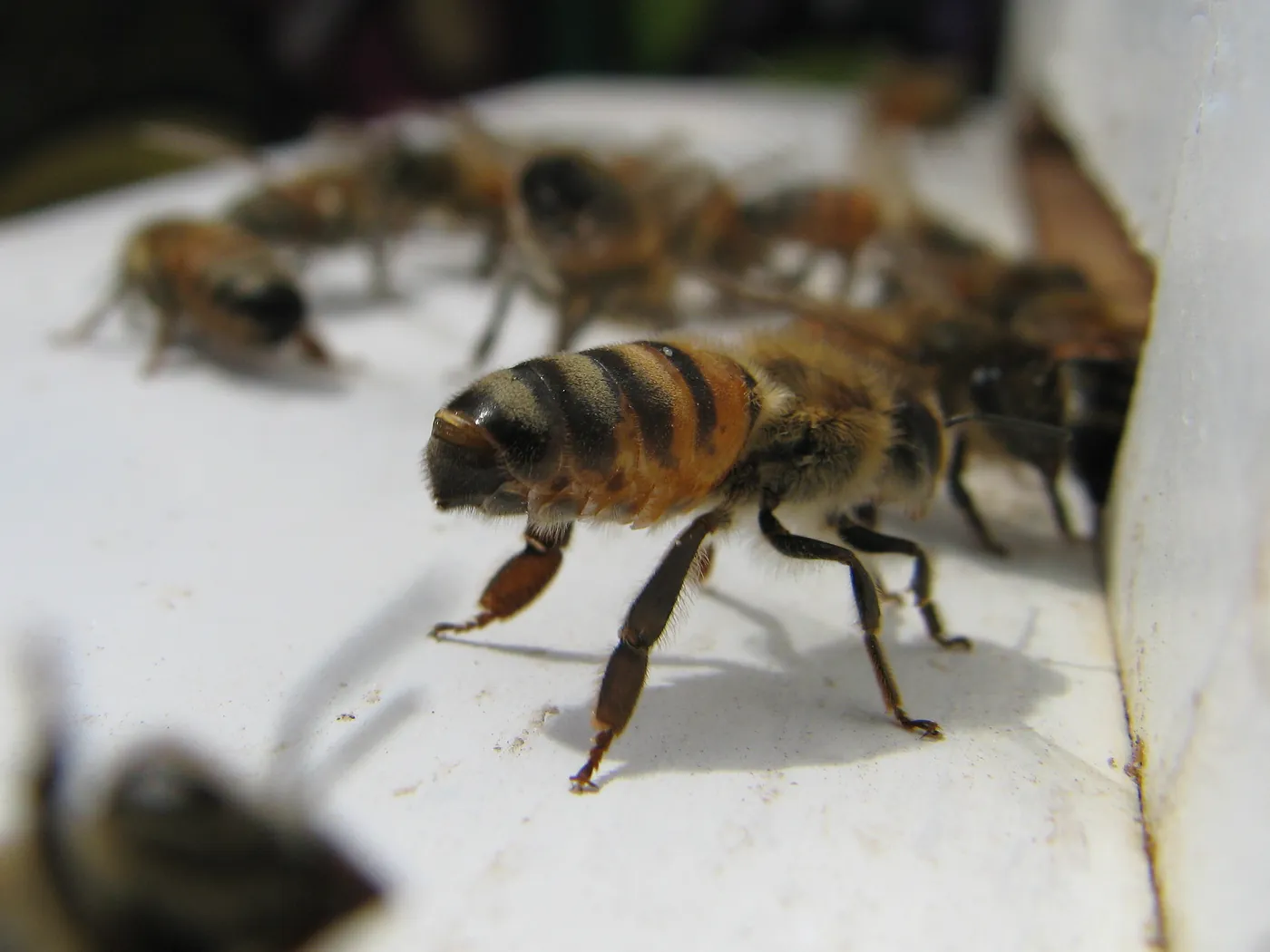
At the tip of a worker's abdomen is the Nasonov gland. The bee raises her abdomen, exposes the gland and fans her wings, blowing the scent backwards. It smells lemony and geranium-like: geraniol, citral and related compounds.
You'll see this when hiving a swarm: as the bees pour into a box or hive, workers line up at the entrance with abdomens raised, fanning and "calling" the rest in. The same happens when you shake bees in front of the entrance — they find the way in quickly.
Alarm pheromone: the smell of bananas
When a bee stings, she leaves her sting behind — and with it the alarm pheromone. Its main component is isopentyl (isoamyl) acetate, which smells of ripe banana or pear drops. Guards pick up the signal, raise their abdomens and fan to spread it, and more defenders head for the spot. That's why one sting is often followed by several more.
Smoke works in two ways. It masks the alarm pheromone so the signal doesn't spread through the colony. It also makes bees gorge on honey from the cells, and well-fed bees are calmer and less likely to sting.
Brood pheromones and entrance footprints
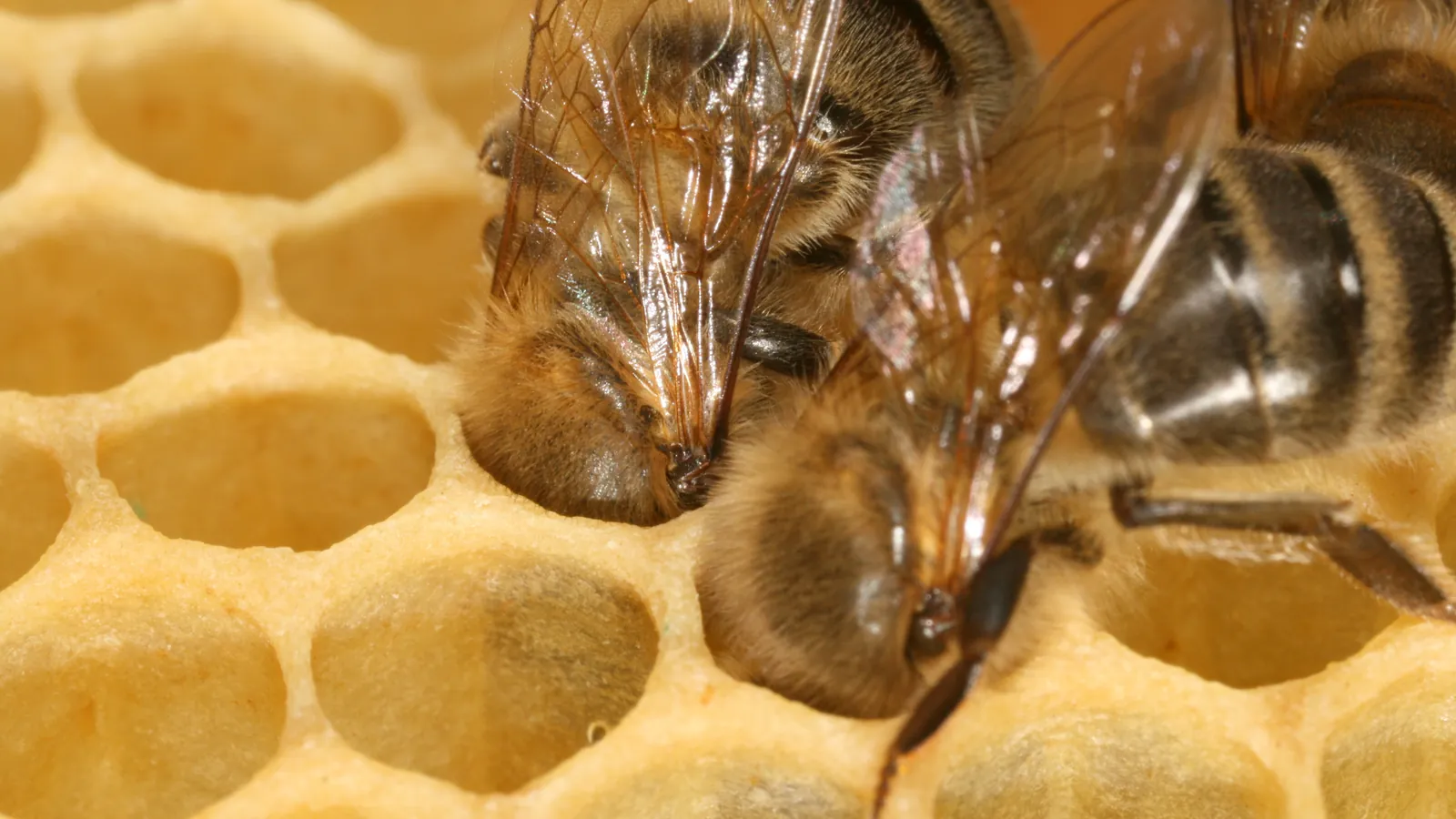
Larvae release brood pheromones (a blend of fatty-acid esters, and in the youngest larvae the volatile E-β-ocimene). They prompt nurse bees to feed the brood and foragers to collect pollen, and they suppress workers' ovaries. Open brood is a powerful signal in itself, which is why a frame of young brood calms a queenless colony and helps hold a swarm in its new hive.
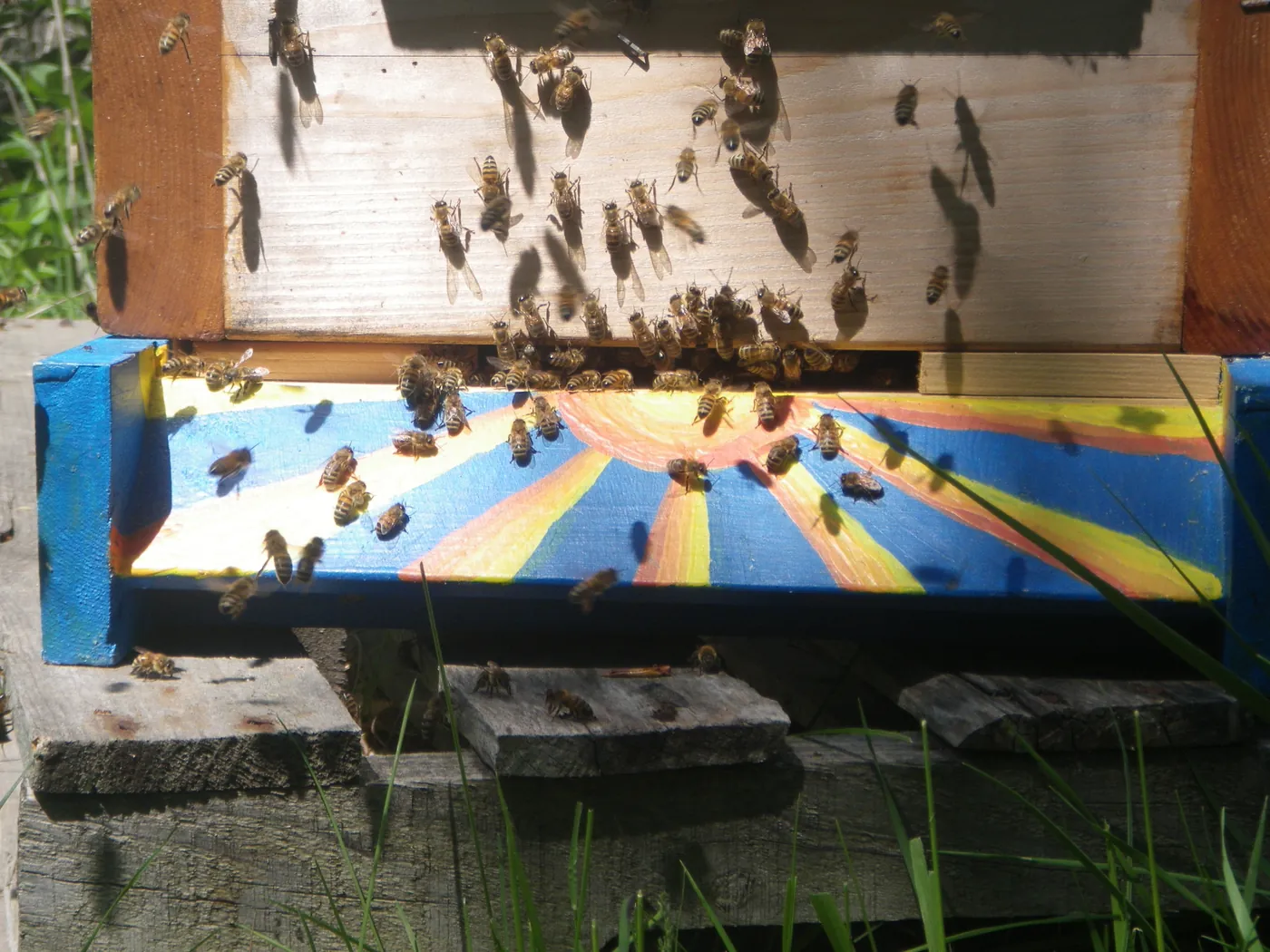
Bees walking on the landing board leave a footprint pheromone with their feet. It helps foragers find the entrance faster, especially after a hive has been moved or the entrance changed.
Sounds of the hive
Bees don't hear with ears as we do: they sense comb vibrations through their legs and air movement through their antennae. For a beekeeper, though, sound is one of the best ways to "look" into a hive without opening it.
Queen piping
Before a swarm leaves, or when a colony has more than one queen, you may hear queen piping. A newly emerged virgin queen "toots" — a series of "toot-toot-toot" notes as she presses against the comb. Queens still in their cells answer with a lower "quack". Beekeepers know that tooting heard at the hive in the evening means the colony is ready to throw a secondary swarm (cast).
The colony's hum and the queenless "roar"
A healthy colony hums evenly and calmly, and answers a gentle knock on the hive wall with a brief swell of sound that quickly dies down. A queenless colony sounds different: it "roars" — the hum is higher, louder and more anxious, and takes a long time to settle after a knock. Bees at the entrance run about aimlessly and work less. That's a cue for an urgent inspection.
Honeybee democracy: choosing a home
The American biologist Thomas Seeley, building on the work of von Frisch's student Martin Lindauer, spent decades studying how a swarm chooses its new home. He summed it up in the book Honeybee Democracy (2010).
- Hour 0The swarm settles on a branchThousands of bees hang in a cluster with the queen inside. A few hundred experienced foragers become scouts.
- Hours to daysSearch and "campaigning"Scouts inspect tree hollows and empty hives, then dance on the surface of the cluster. The better the site, the longer and livelier the dance.
- SelectionWeak options fadeEach scout dances less and less over time. Supporters of good sites recruit new "voters", poor sites lose their advocates, and stop signals damp down the rivals.
- Quorum15–20 scouts on siteOnce enough scouts are present at one cavity at the same time, they "know" the decision has been made.
- Lift-offWarm-up and flightScouts pipe, the swarm warms its flight muscles, takes off and follows the "informed" bees to the new home.
A swarm prefers a cavity of about 40 litres with a small entrance, several metres above the ground — something beekeepers use when setting bait hives. For why colonies swarm and how to prevent it, see our article on swarming.
What it means for the beekeeper
Understanding bee language isn't just fascinating science — it pays off in the apiary.
- Use your smoker. A few puffs at the entrance before opening the hive mask the alarm pheromone. Smoke lightly: too much disrupts the colony's work.
- Don't smell of "alarm". No bananas, strong fragrances or stale sweat. Clean clothes and calm movements mean fewer stings.
- Mark your queen. She's much easier to find on a frame, and you'll know if she's the same queen — otherwise a quiet supersedure goes unnoticed.
- Listen to your hives. A "roar" in summer or a restless hum in winter is a cue to inspect. Queen tooting in swarm season warns of a cast.
- Watch the entrance. Bees fanning with raised abdomens are a normal "call home" after shaking or hiving a swarm; plenty of bees bringing in pollen means there's brood and the queen is laying.
- Put scent to work. A frame of open brood helps a swarm stay in its new hive, and a citral lure draws swarms into a bait hive.
Whatever you notice at the entrance — a roar, piping, unusual behaviour — note it in your inspection journal: patterns become easier to spot and problems harder to miss. For how the colony is organised and what each bee does, read our article on the honey bee colony.