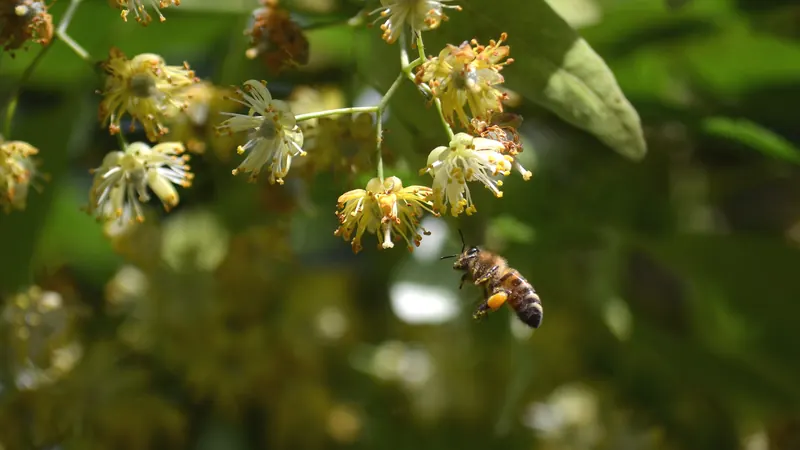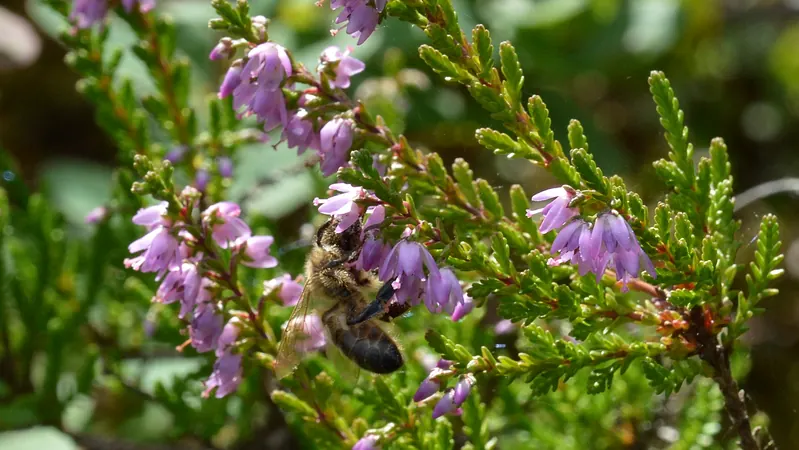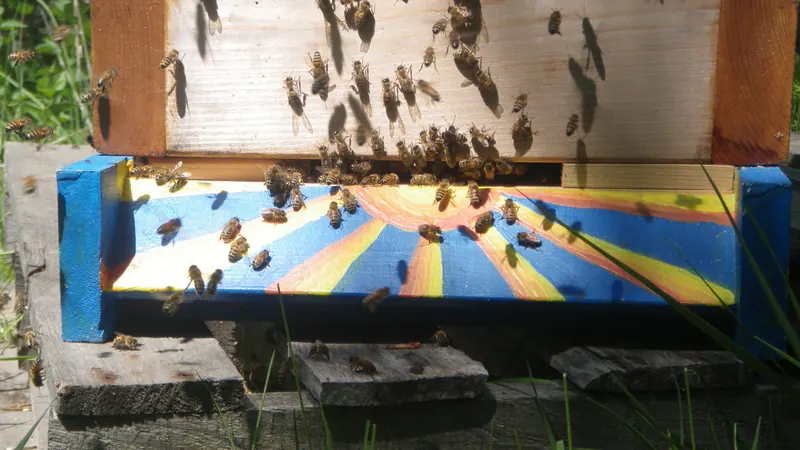
The first honey is extracted in summer, but its fate is decided in April. Spring honey plants rarely give a surplus crop; what they give is bees. Every willow catkin, every dandelion and apple blossom turns into brood, and brood turns into the foragers that will meet the lime and the buckwheat. Here is what blooms when in Belarus and the temperate belt of Eastern Europe, how much it yields, and how not to miss the early flow.
Why the colony needs a spring flow
Through winter a colony lives on its stores. Honey provides energy, and the bees need almost no protein because there is no brood. Everything changes once the queen starts laying. Larvae are fed on brood food, and brood food is made from pollen: without fresh protein the colony raises brood at the expense of the nurses' own bodies, and the winter bees wear out fast. That is why the earliest spring plants matter for their pollen, not their nectar. Pollen is what starts the colony growing.
After the cleansing flight, which happens at around 10–12 °C in the shade, bees begin to search for food. In early April there is almost no nectar to be found in Belarus, but hazel, alder and coltsfoot are already shedding pollen. A little later the willows open, and for the first time in half a year fresh nectar comes into the hive. Fresh nectar and pollen stimulate the queen better than any feed: egg laying jumps, and a colony that covered four or five seams of bees in March fills a brood box by the end of May.
Hence the main rule: the spring flow is not honey for the beekeeper, but food for colony growth. Spring honey can be taken only in exceptional years and only from strong colonies. Everything else should stay in the nest; it will come back in summer as an extra ten kilograms of lime honey.
What blooms in spring, in order
The dates below are for central Belarus in an average year. In the south of the country and in Ukraine everything flowers one to two weeks earlier; around Smolensk or Tver it is one to two weeks later. It is more useful to remember the order than the dates: the sequence barely changes from year to year, and from what is in bloom today you can tell what will open next week.
Late March to early April: the first pollen
- Hazel (Corylus avellana) and alder (Alnus). Wind-pollinated trees that give no nectar at all, but their catkins are the first mass pollen of the season. Hazel pollen is considered good quality for bees; on a warm day a flowering hazel hums. They bloom from late March to mid-April, sometimes while snow still lies on the ground.
- Coltsfoot (Tussilago farfara). Opens on sunny slopes and embankments as soon as the snow is gone. It gives pollen and a little nectar; its honey potential is small, but it flowers when nothing else does. Bloom lasts about a month, into early May.
April: willow, the first real flow
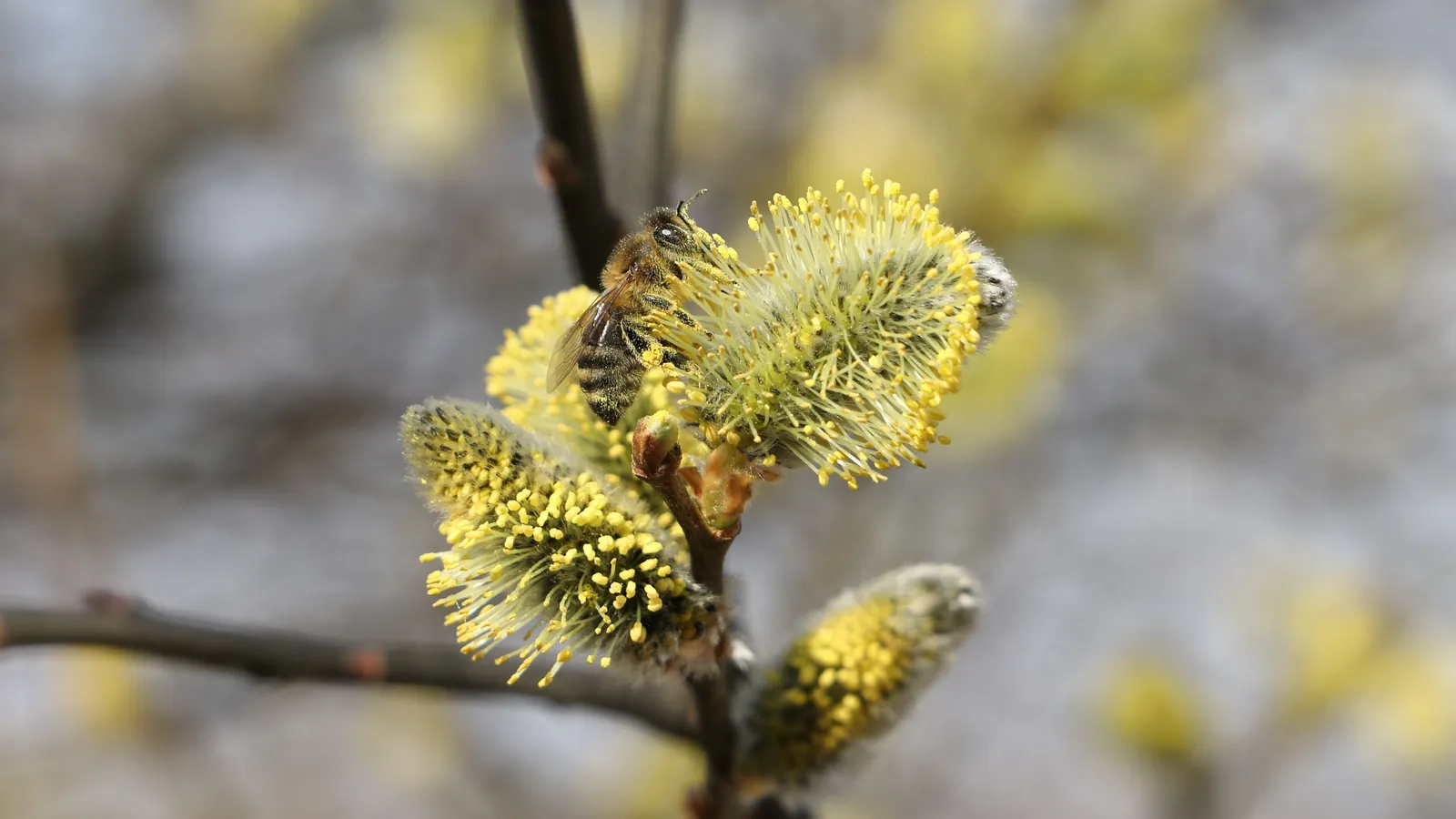
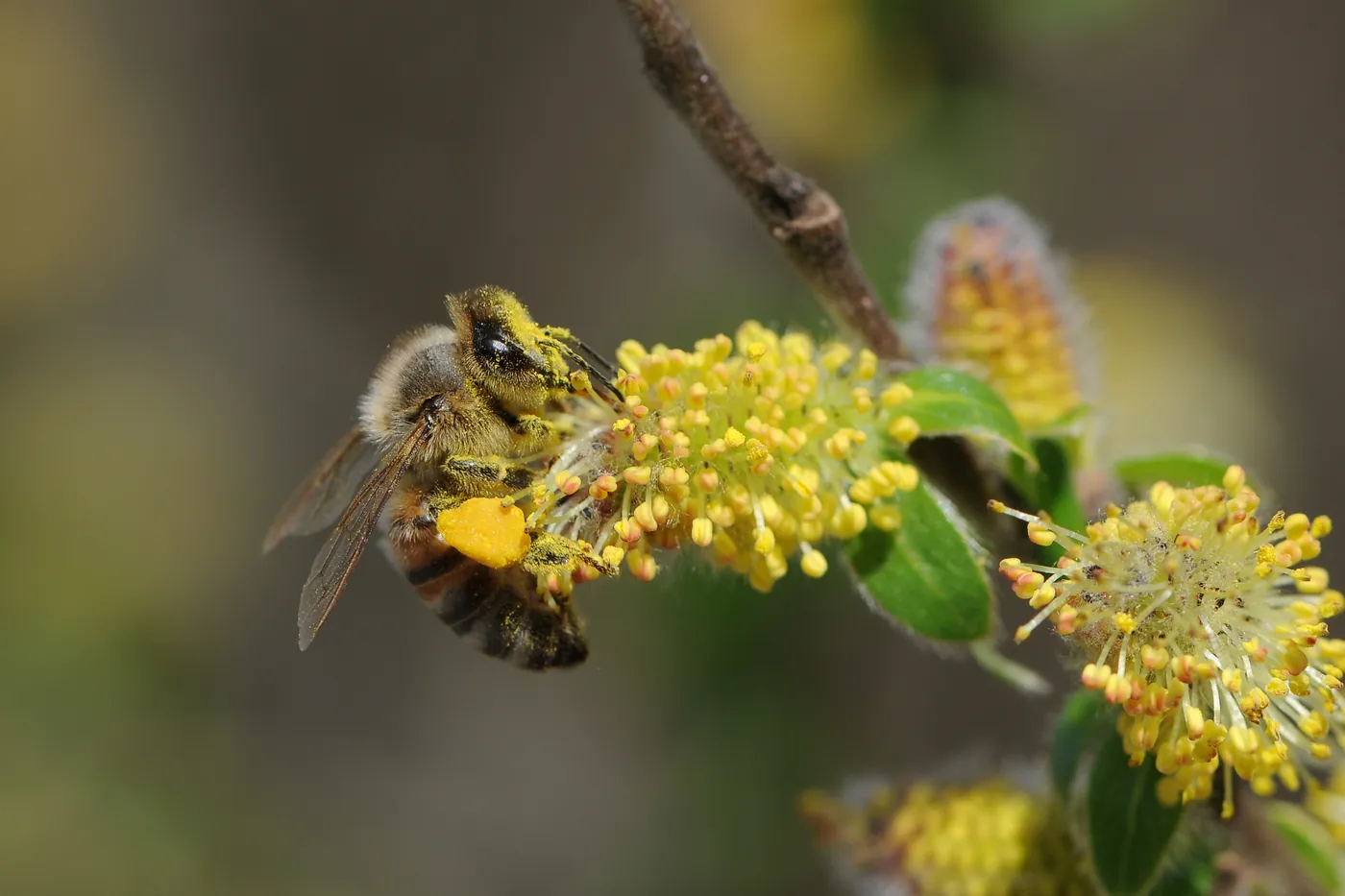
Willows are the main early honey plant of our region, and for many apiaries the first and only spring flow that shows on the scale. The first to open is goat willow (Salix caprea), the tree with the big fluffy "pussy willow" catkins; it is followed by violet willow (Salix daphnoides), white willow (Salix alba), crack willow and the shrubby willows along water. Together the different species flower for three to four weeks, usually from the first ten days of April to early May.
Willow gives both abundant nectar and plenty of pollen, and male and female trees contribute differently: the male catkins, yellow with anthers, are the pollen source, while the greenish female catkins secrete more nectar. Honey potential of willow stands is put at 100–150 kg/ha by various sources, and a strong colony brings in 2–4 kg a day from willow in warm weather. The one problem is that April warmth never lasts: much of the flow is usually lost to cold and rain. Willow honey is golden yellow with a slight bitterness and granulates quickly, but in the hive it is almost always eaten before it has a chance to set.
Late April to early May: maple, dandelion and orchards
Norway maple (Acer platanoides) flowers in late April, together with leaf burst, and blooms for only 7–10 days. But those are very generous days: its honey potential is estimated at 150–200 kg/ha, and where maples are plentiful, in parks, old estates and along forest edges, the scale hive gains a kilogram or more per day. The honey is light with a delicate flavour; as a rule all of it stays in the hive. Field maple and Tatar maple follow, and in woodland the alder buckthorn opens.
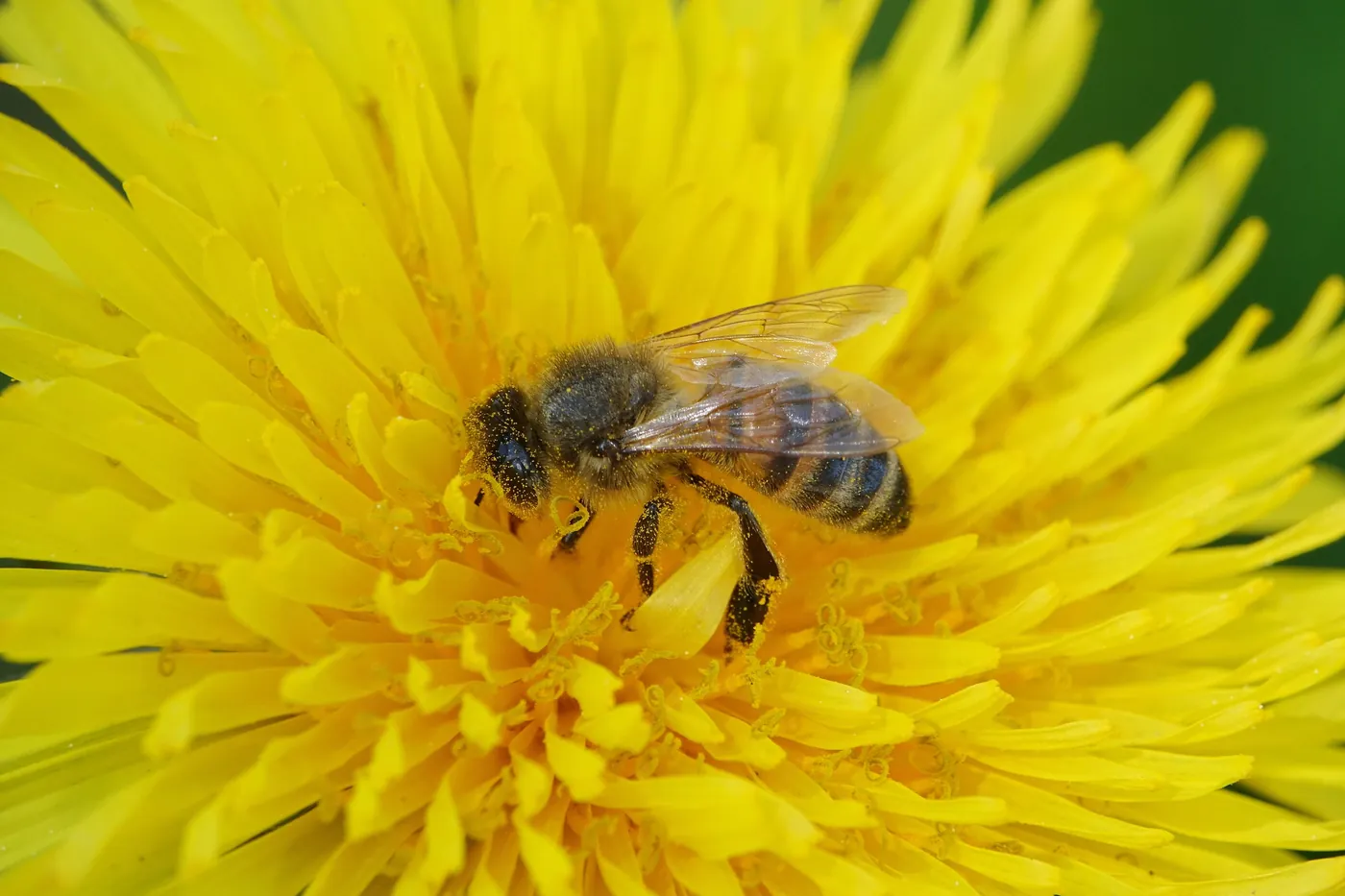
Dandelion (Taraxacum officinale) is the most abundant pollen plant of May. From early May it flowers for two to three weeks everywhere: in meadows, along roads, in orchards. It gives modest nectar, roughly 30–50 kg/ha, but so much pollen, orange and easy to recognise in the pollen loads, that nearly all of the May brood is raised on it. Dandelion honey is bright yellow, thick, slightly sharp in taste, and sets within days.
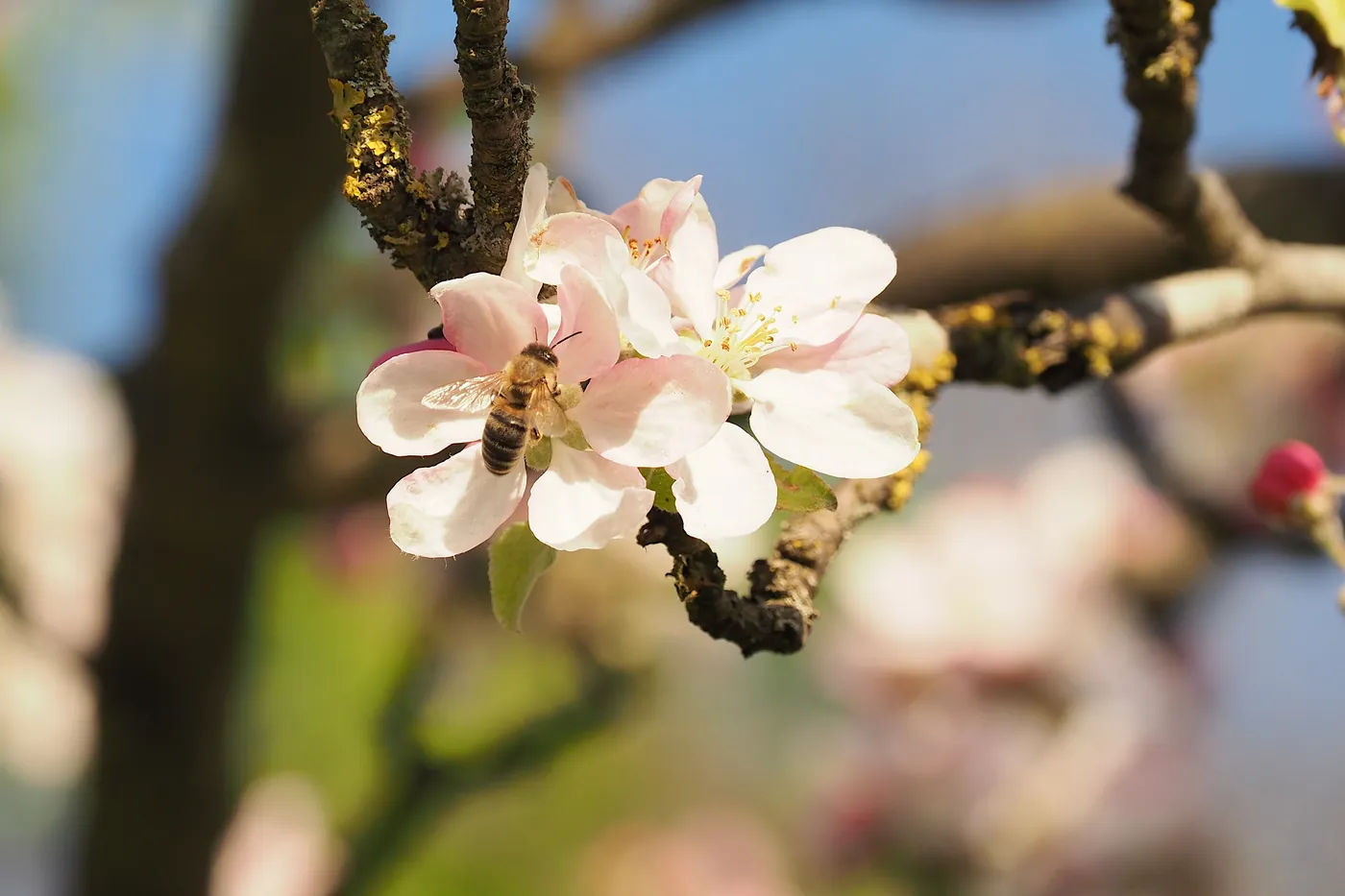
Fruit orchards flower alongside dandelion, but in sequence: first cherry plum and plum, then sour cherry and pear, and apple last. The whole orchard flow fits into about three weeks, from late April to mid-May. The honey potential of an orchard is modest, 20–40 kg/ha, but orchards stand close to apiaries and flower in any weather in which bees fly at all. Fruit-blossom honey is light and delicate with the scent of the flowers; hardly anyone has tasted it pure, because it goes into brood. Currants and gooseberry flower at the same time: gooseberry (Ribes uva-crispa) is one of the best soft-fruit honey plants, up to 50–70 kg/ha, and bees work it even in cool weather. In gardens and parks the bird cherry (Prunus padus) opens as well; it gives noticeable pollen and nectar, though no one harvests its fragrant honey separately.
May: oilseed rape, wild mustard and the first supers
Winter oilseed rape (Brassica napus) is the strongest spring honey plant wherever it is grown. Fields open in the second or third ten-day period of May and flower for three to four weeks; the honey potential is 50–100 kg/ha by various estimates, and rape gives a great deal of pollen as well. This is the first flow that can yield a surplus crop: a strong colony brings in 3–5 kg a day, and apiaries near rape put supers on before bloom begins.
Rape honey has a well-known peculiarity: it is high in glucose and granulates within days, sometimes right in the comb. It must be extracted as soon as it is capped, without waiting for the end of the season, or it will never leave the frames. Rape honey must not be left for winter: bees in the cluster cannot dissolve the hard crystals and starve on full combs. Set rape honey is white, fine-grained and almost without aroma, an excellent base for creamed honey.
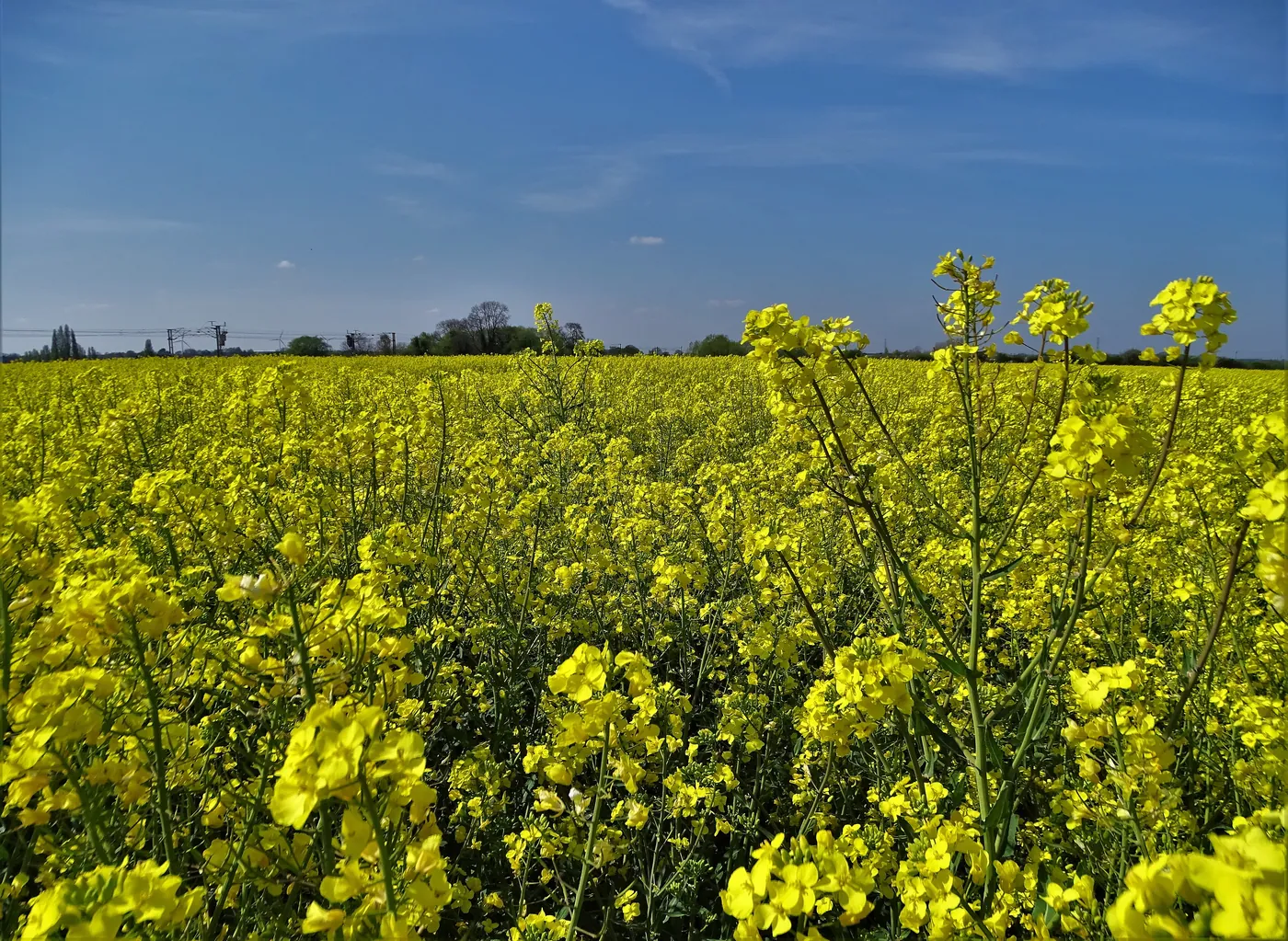
In the same fields and along verges, wild mustard and wintercress (Sinapis arvensis, Barbarea vulgaris) flower in May, relatives of rape with the same yellow racemes and the same fast-granulating honey. Their honey potential is around 40–50 kg/ha; where they have taken over fallow land they can give more than an orchard. By the end of May rowan (Sorbus aucuparia; pollen and nectar, about 30–40 kg/ha) and the first clovers in the meadows join in.
Late May to June: acacias, buckthorn and the turn to summer
Siberian pea-shrub (Caragana arborescens), often called yellow acacia in Eastern Europe, is a shrub of hedges and shelterbelts that flowers in late May to early June for 10–14 days. In the temperate belt its honey potential is estimated at 50–100 kg/ha, and in parts of Siberia it provides the main flow. The honey is light, clear, almost odourless and stays liquid for a long time, which also makes it good for wintering.
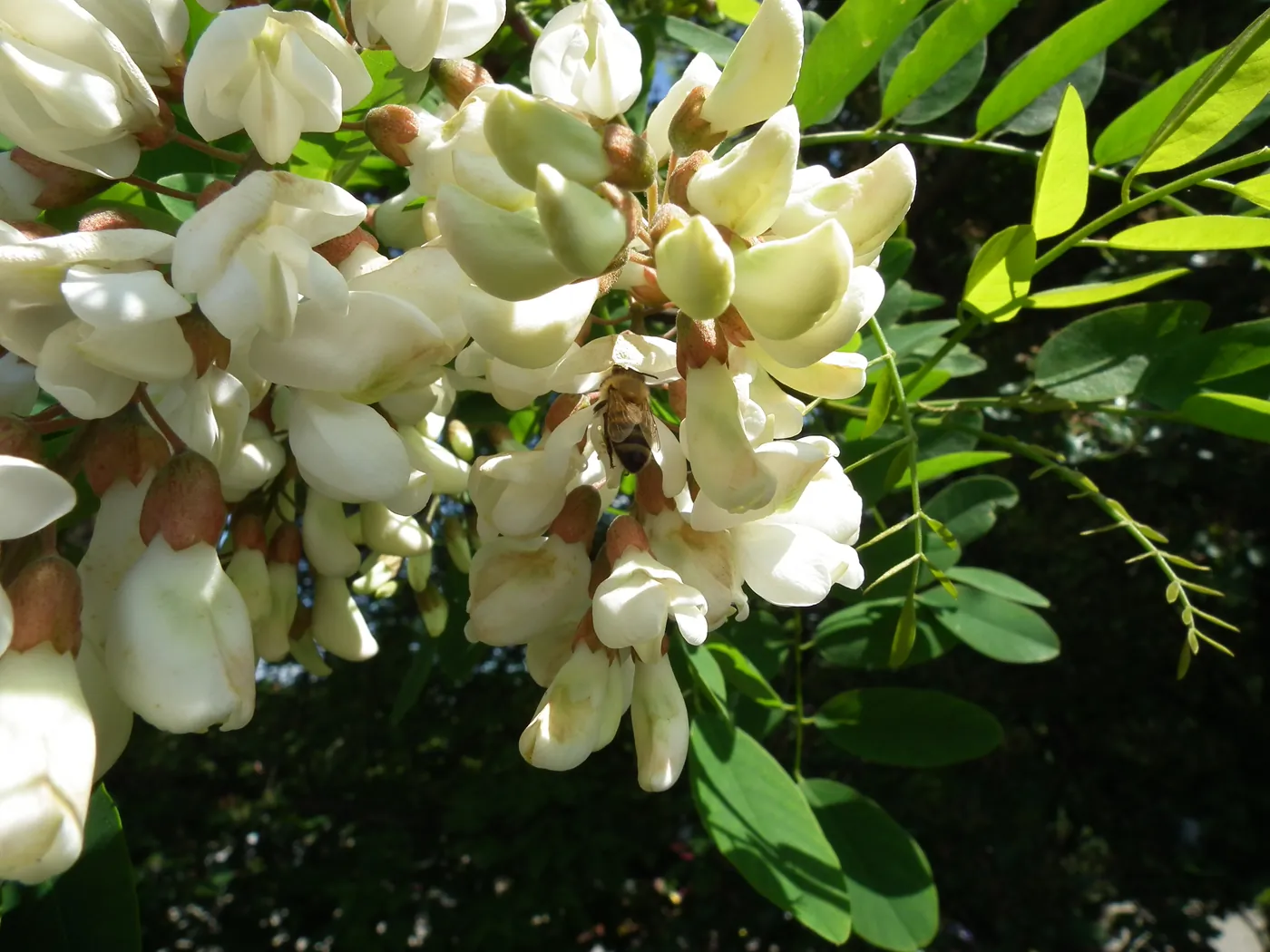
Black locust (Robinia pseudoacacia), known locally as white acacia, is a honey plant of the south: Ukraine, southern Russia, Moldova, Hungary. In Belarus it grows in the south and in towns, but its flow is irregular because the blossom often meets frost and rain. Where the climate suits it, it is one of the most productive honey plants of all: 300 kg/ha and more over 10–12 days of bloom. Acacia honey is almost colourless, very pale, delicately scented and can stay liquid for years, which is why it is so highly valued.
Alder buckthorn (Frangula alnus) starts flowering in late May and continues almost to the end of July: its small greenish flowers open gradually, and bees work it all summer. Its honey potential is moderate, around 30–35 kg/ha according to various sources, but the flow is steady and reliable, as buckthorn secretes nectar even in cool weather. In mid-June raspberry opens, and in forest districts that is where the summer flow begins, which we cover in the article on summer honey plants.
Spring honey plants at a glance
Dates are approximate for central Belarus and the temperate belt of Eastern Europe. Honey potential figures are averages from beekeeping literature for continuous stands; the actual intake depends on the weather and on how many plants are within flight range.
| Plant | Bloom | Nectar / pollen | Potential | Note |
|---|---|---|---|---|
| Hazel, alder | late March – mid-April | pollen only | — | first mass pollen; wind-pollinated |
| Coltsfoot | late March – early May | pollen, a little nectar | small | flowers when nothing else does |
| Willows (goat, violet, white) | early April – early May | nectar and pollen | 100–150 kg/ha | first real flow; weather-dependent |
| Norway maple | late April – early May | nectar and pollen | 150–200 kg/ha | only 7–10 days, but very generous |
| Dandelion | early – late May | much pollen, nectar | 30–50 kg/ha | orange pollen loads; honey sets fast |
| Fruit trees: plum, cherry, pear, apple | late April – mid-May | nectar and pollen | 20–40 kg/ha | all of it goes into brood |
| Currants, gooseberry | late April – mid-May | nectar and pollen | gooseberry up to 50–70 kg/ha | worked even in cool weather |
| Bird cherry | first half of May | nectar and pollen | about 20 kg/ha | maintenance flow |
| Winter oilseed rape | mid-May – mid-June | nectar and pollen | 50–100 kg/ha | surplus crop; extract at once, never leave for winter |
| Wild mustard, wintercress | May – early June | nectar and pollen | 40–50 kg/ha | honey granulates like rape |
| Rowan | late May – early June | nectar and pollen | 30–40 kg/ha | maintenance flow |
| Siberian pea-shrub (yellow acacia) | late May – early June | nectar, some pollen | 50–100 kg/ha | light honey, slow to set |
| Black locust (white acacia) | late May – June | nectar | 300+ kg/ha in the south | irregular in Belarus; a main flow further south |
| Alder buckthorn | late May – July | nectar, pollen | 30–35 kg/ha | long and steady flow |
| Raspberry | mid-June – July | nectar and pollen | 60–100 kg/ha | the turn to the summer flow |
Why the dates drift
Plants do not flower by the calendar but by accumulated warmth: botanists count the sum of effective temperatures, that is how many "degrees of warmth" above a threshold (usually 5 °C) have built up since the start of spring. Early honey plants need very little, so a warm week in late March brings out hazel and coltsfoot, while a cold April holds the willow back by two weeks. Three patterns follow from this.
- North and south. For every 100–150 km northward (or 100 m of altitude) spring arrives about three or four days later. Between Gomel and Vitebsk the difference in willow bloom easily reaches a week; between Kyiv and Moscow, two.
- Year to year. In an early and a late year the same tree in the same place flowers up to three weeks apart. A note such as "willow opened on 12 April" says little without the weather behind it.
- The order holds. Whatever the weather does, hazel opens before willow, willow before maple, maple before dandelion and orchards. Coltsfoot flowers with willow; sour cherry and plum with dandelion; when rape opens, apple is finishing while bird cherry and rowan gather pace.
Still, the best instrument is a hive on a scale. The map and the calendar tell you when a flow is possible; the scale shows whether it has actually started. A gain of 1–2 kg a day in late April means maple or willow is working; a flat line while the orchard is in full bloom means it is cold and the bees are staying home.
What the beekeeper does in spring
The beekeeper's job in spring is not to get in the way of colony growth and to give the bees room in time. A detailed month-by-month plan is in the beekeeping calendar; here is only what relates directly to the honey plants.
- Stores until the willow. Before the first flow the hive should still hold at least 8–10 kg of honey and a frame or two of bee bread. If stores are short, give spare honey frames or thick syrup; thin syrup in a cold April only chills the nest. Feeding does not replace pollen: if pollen is scarce, bee bread or protein patties help.
- Expand as the colony grows. With willow and maple in bloom the queen's laying rate jumps. Add frames when bees cover all the seams tightly and the outer frame holds brood. Too late, and the colony gets crowded and prepares to swarm; see the article on swarming for the causes. With dandelion and the orchards, foundation goes into the nest: this is the best time for comb building.
- Supers for willow and orchards. In a good year strong colonies get a super by willow bloom; the rest by the orchards and dandelion. Nectar takes about three times the space of ripe honey, and if the queen has nowhere to lay, the whole flow is wasted.
- Rape: extract at once. Supers go on before rape flowers, come off as soon as the honey is capped, and are extracted the same day. Check the brood frames too: rape honey that has set in the nest must be replaced before winter.
- Pesticides. Rape and orchards get sprayed. Arrange with the farm to be warned in advance, and on spraying days close the entrances or move the apiary.
- Water. Brood needs a lot of water in spring, and fetching it in the cold is dangerous for bees. Set up a drinker in a sunny spot before the first flight.
Spring feeds the colony, summer feeds the beekeeper
If this article had to fit in one sentence: spring honey plants work for the bees, not for the beekeeper. Willow, maple, dandelion and orchards give the colony protein and fresh nectar, and by June these have become the foragers for the main flow. What remains for the beekeeper is to follow the order of bloom, give space in time, take nothing extra, and not miss the rape. What comes next, when raspberry, melilot, lime and buckwheat open, is in the article on summer honey plants.