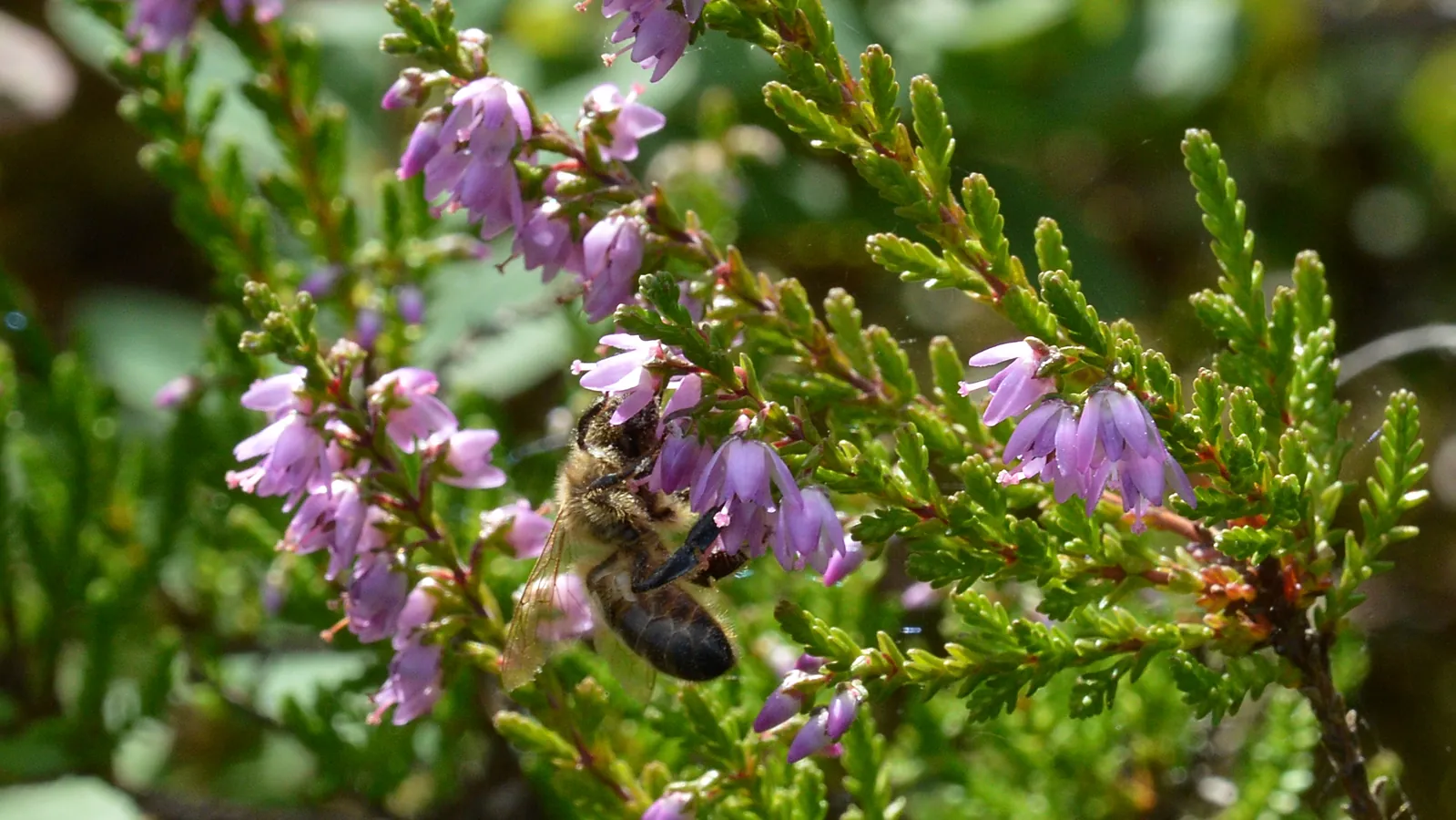
The season does not end with the main honey harvest. From mid-August until the first frosts, the colony lives on the late flow: heather, goldenrod, cover crops and roadside weeds. This flow rarely yields a surplus for the beekeeper, yet it decides how many winter bees the colony raises and what it will winter on. Here is what flowers in autumn, which of the late honeys is dangerous in winter stores, and how to spend the last weeks of the season so that you open strong hives in spring.
Why the colony needs a late flow
The real value of the late flow is bees, not buckets of honey. From mid-August to the end of September, in the temperate zone of Eastern Europe, the winter generation emerges: bees that will live not five or six weeks but six to eight months, survive the winter and rear the first spring brood. For the queen to keep laying and for young bees to build up their fat body, the hive needs at least small amounts of nectar and fresh pollen coming in every day. A maintenance flow of 200–500 g a day matters more for this than a short, heavy one.
The second job is to top up stores. If you extracted heavily in summer and the nest is empty in August and September, you will have to feed syrup. A good late flow from phacelia or sweet clover can cover a large part of the winter stores with natural honey.
The late flow has a dark side, too. A strong flow in September, especially from heather or buckwheat, is stored straight into the brood nest: honey fills the cells vacated by the last brood, the queen runs out of room, and the rearing of winter bees stops ahead of time. The colony enters winter with full combs but few bees, and on stores that may themselves be poor for wintering. So in autumn you have to watch not only whether there is food, but what kind and where it sits.
What flowers from August to October
Below are the late nectar and pollen plants of Belarus, central Russia and neighbouring regions, roughly in the order in which they come into flower. Dates and yields are approximate: they vary a great deal between years and localities.
Fireweed, sweet clover and other late finishers
Some summer plants run into August. Fireweed (Chamaenerion angustifolium) on clearings and burnt ground flowers from late June to mid-August, and in a cool, wet summer its last wave can bring a noticeable gain. Second-year white and yellow sweet clover (Melilotus) flowers from June to September; the literature credits it with 200–300 kg of honey per hectare and more, and pale sweet-clover honey is one of the best winter foods. Brown knapweed (Centaurea jacea) and chicory (Cichorium intybus) on verges and fallows last into September, perennial sow-thistle (Sonchus arvensis) and creeping thistle (Cirsium arvense) on neglected fields flower from July to September and in some places make up the main late-summer "weed flow". Mint and lemon balm near water and in gardens flower from July to September; they give modest honey but are visited eagerly.
Late-sown buckwheat
Buckwheat (Fagopyrum esculentum) sown in late June or early July flowers in August and gives the last strong flow in arable districts. It secretes nectar mainly in the first half of the day and in warm, humid weather; a yield of 70–100 kg/ha is a reasonable guide. Buckwheat honey is dark and rich in minerals. It is acceptable for wintering but inferior to pale honeys: it carries more indigestible residue, and with large stores dysentery is possible by spring.
Cover crops: phacelia, mustard, oil radish, turnip rape
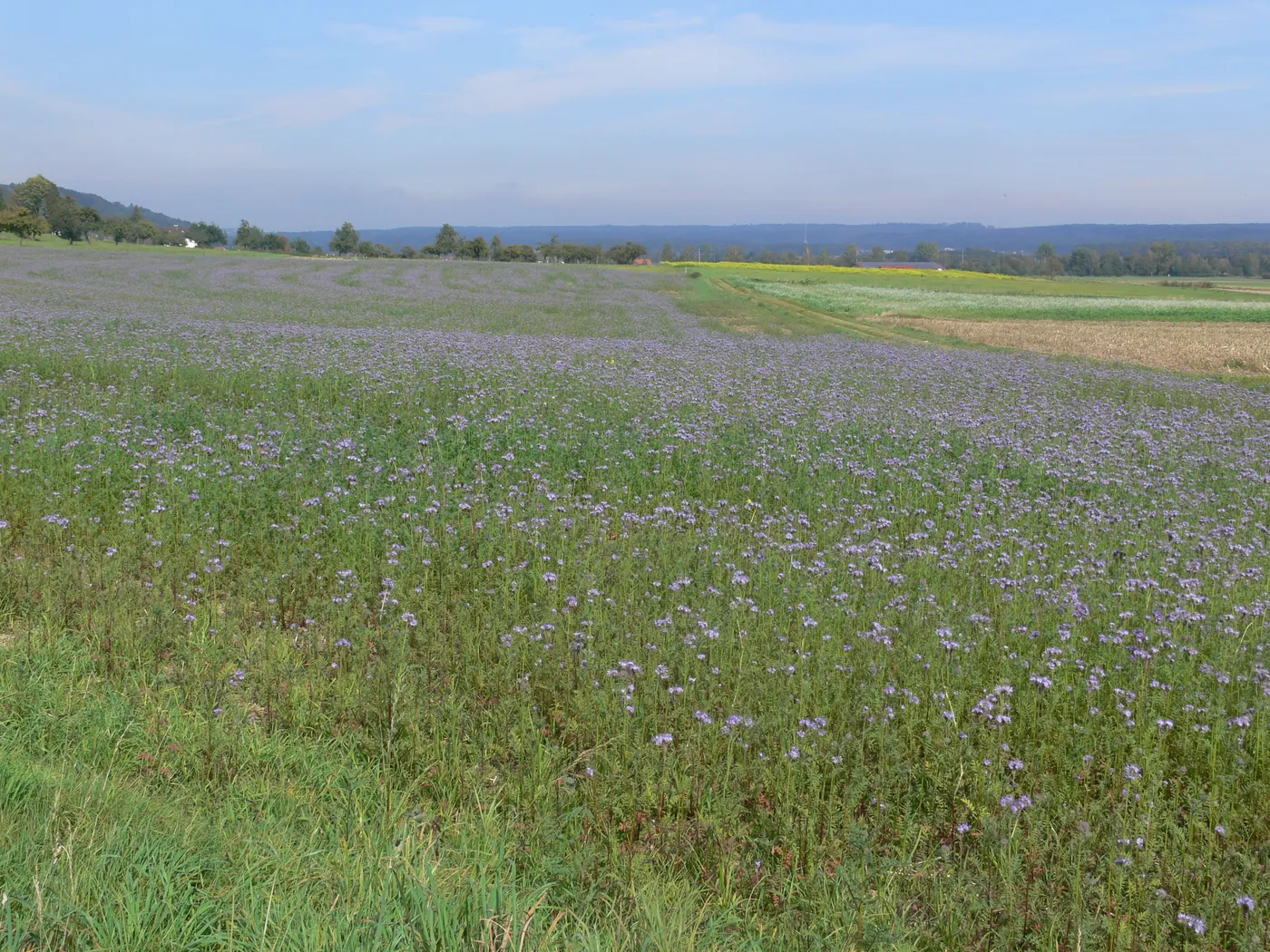
The most controllable late flow comes from crops sown after the cereal harvest, as green manure, fodder or specifically for bees. Phacelia (Phacelia tanacetifolia) flowers five to six weeks after sowing and keeps flowering for four to six weeks; sources quote 150–300 kg/ha, and it secretes nectar even in cool weather. The honey is pale and slow to granulate, which makes it good for winter. White mustard (Sinapis alba) flowers even faster, a month after sowing, but its honey, like that of oilseed rape and turnip rape, sets in the comb within weeks: it has no place in winter stores. Oil radish (Raphanus sativus var. oleiformis) flowers until the frosts and tolerates light frost, making it a valuable late source of pollen, though its honey also granulates quickly.
If you have an arrangement with a farm or land of your own, sowing phacelia or mustard in mid-July is a reliable way to give the colonies a maintenance flow until the end of September. When the field comes into flower depends on the weather: earlier and shorter in heat and drought, later and longer in a cool spell.
Common heather
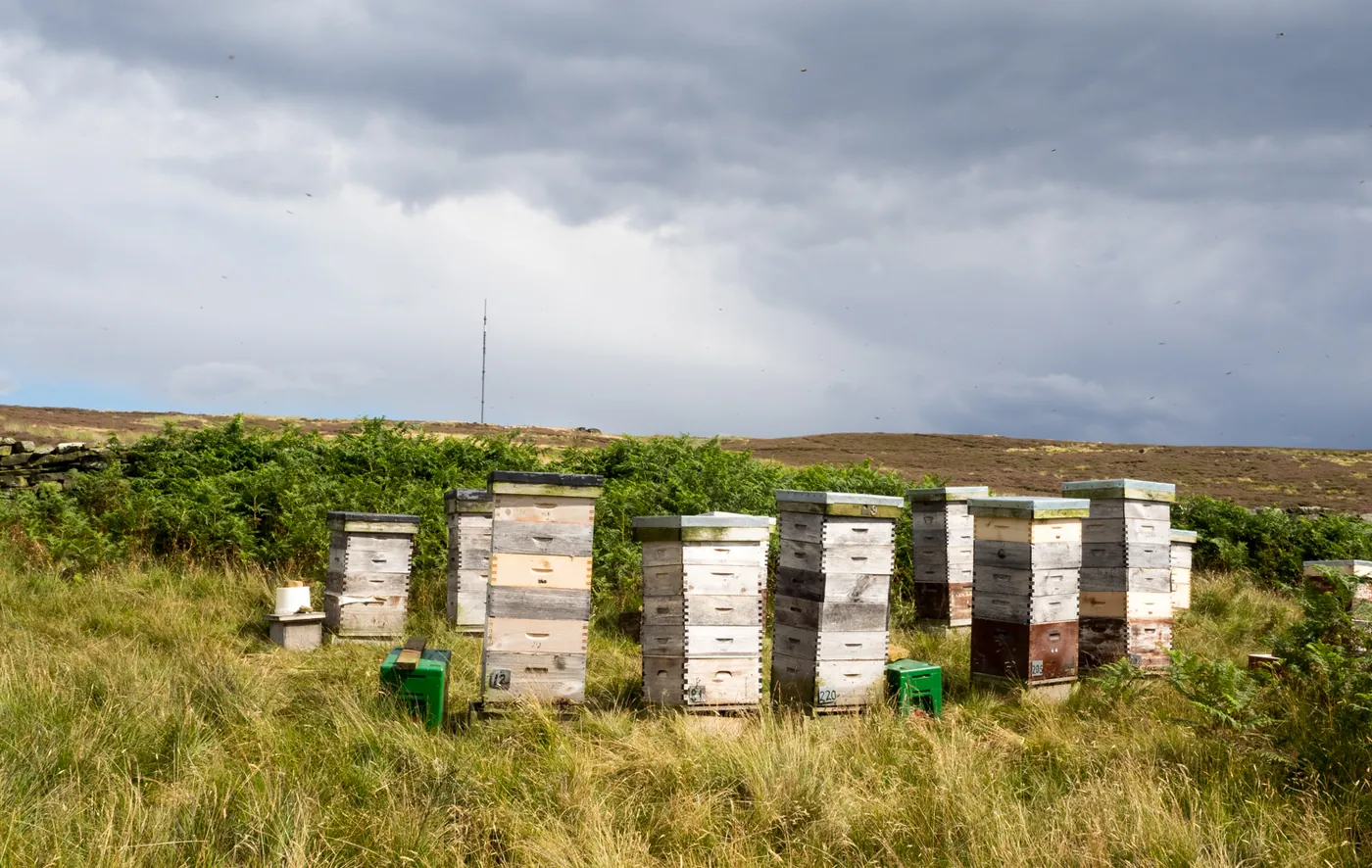
Common heather, or ling (Calluna vulgaris), grows on poor sandy soils: in pine forests, on moors and heaths, old burns and clearings. It flowers from early August to mid or late September, for a month to six weeks; in Belarus (especially in Polesia and the large pine forests) and in Poland, migrating hives to the heather is an old tradition, as it is in Britain, Germany and Scandinavia. Yield estimates vary enormously, from 50 to 200 kg/ha: in a dry year heather gives almost no nectar, while in a warm, moist September hives on scales gain a kilogram a day.
Heather honey is unmistakable: dark amber with a reddish tint, tangy, with a slightly bitter aftertaste. Its defining property is thixotropy: in the comb the honey is jelly-like and will not leave the cells in an ordinary extractor. The combs are either sold as cut comb or sections, or the honey is loosened with needle "agitators" or pressed out. It is unsuitable for wintering: high in protein and mineral salts, it puts a heavy load on the gut. If colonies stood on heather, they are wintered on honey from the summer plants or the heather stores are replaced with syrup.
Canada goldenrod
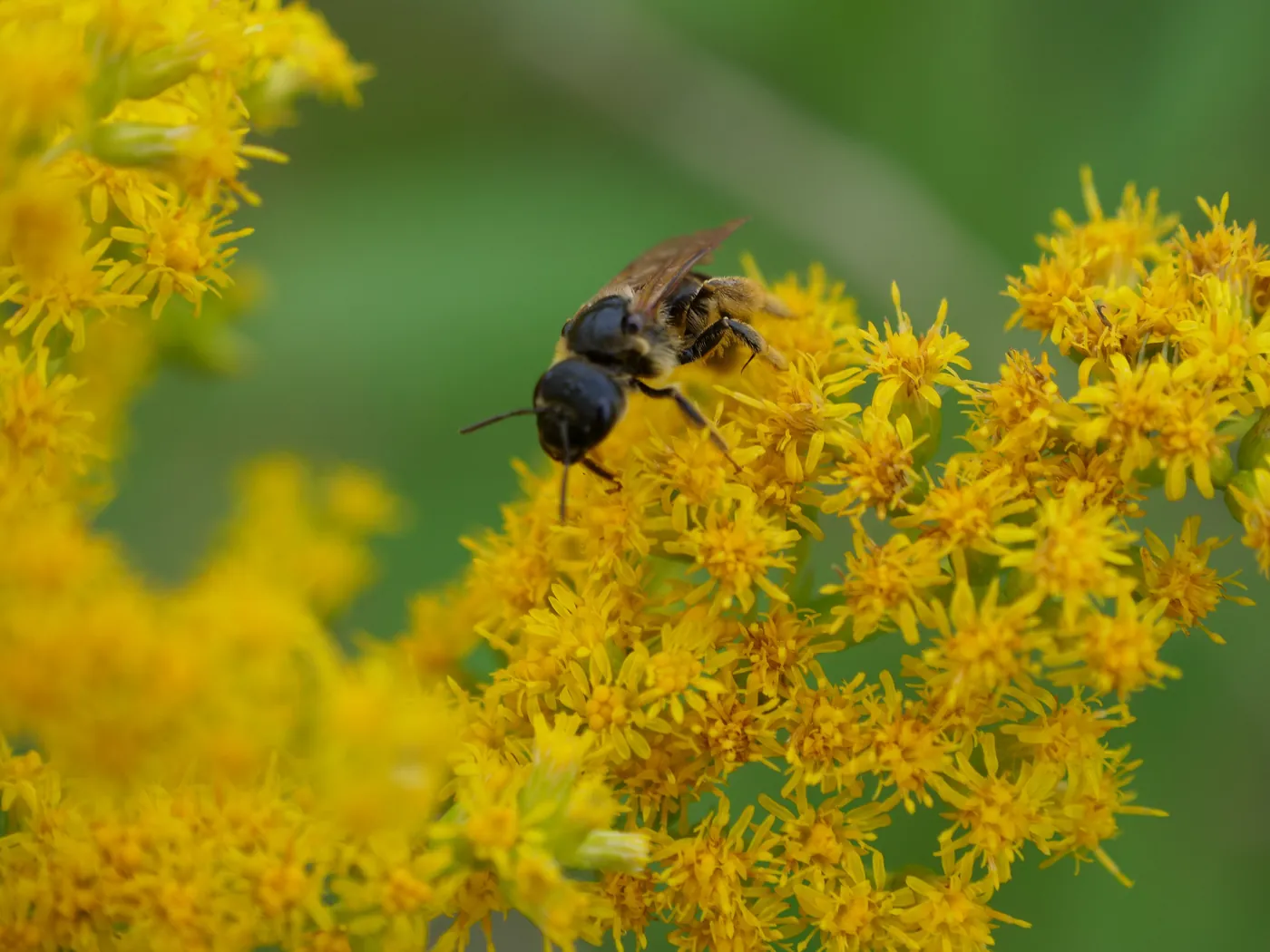
Canada goldenrod (Solidago canadensis) and the closely related giant goldenrod are invasive species that in recent decades have taken over waste ground, verges, abandoned fields and riverbanks across Belarus, Ukraine and central Russia. For nature this is a disaster, but for bees in September it is often the only mass source of nectar and pollen. It flowers from August to October; 50–100 kg/ha is a reasonable guide, and it is especially generous with pollen: the loads are bright yellow and heavy.
Goldenrod honey is golden-yellow with a sharp smell that puts many people off when fresh and mellows as the honey ripens. It granulates quickly, within a few weeks, so as the sole winter food it is risky; as a small share of mixed stores it usually does no harm. The main value of goldenrod is the pollen for rearing winter bees.
Bur-marigold and other plants by the water
In wet places, along ponds and ditches and on marshy meadows, bur-marigold (Bidens tripartita), purple loosestrife (Lythrum salicaria), flowering rush (Butomus umbellatus) and late mint flower in August and September. Individually they are modest (bur-marigold is credited with 30–70 kg/ha), but an apiary by the water often lives on them through September, when the fields are already harvested.
Ivy: the last flow of Western Europe
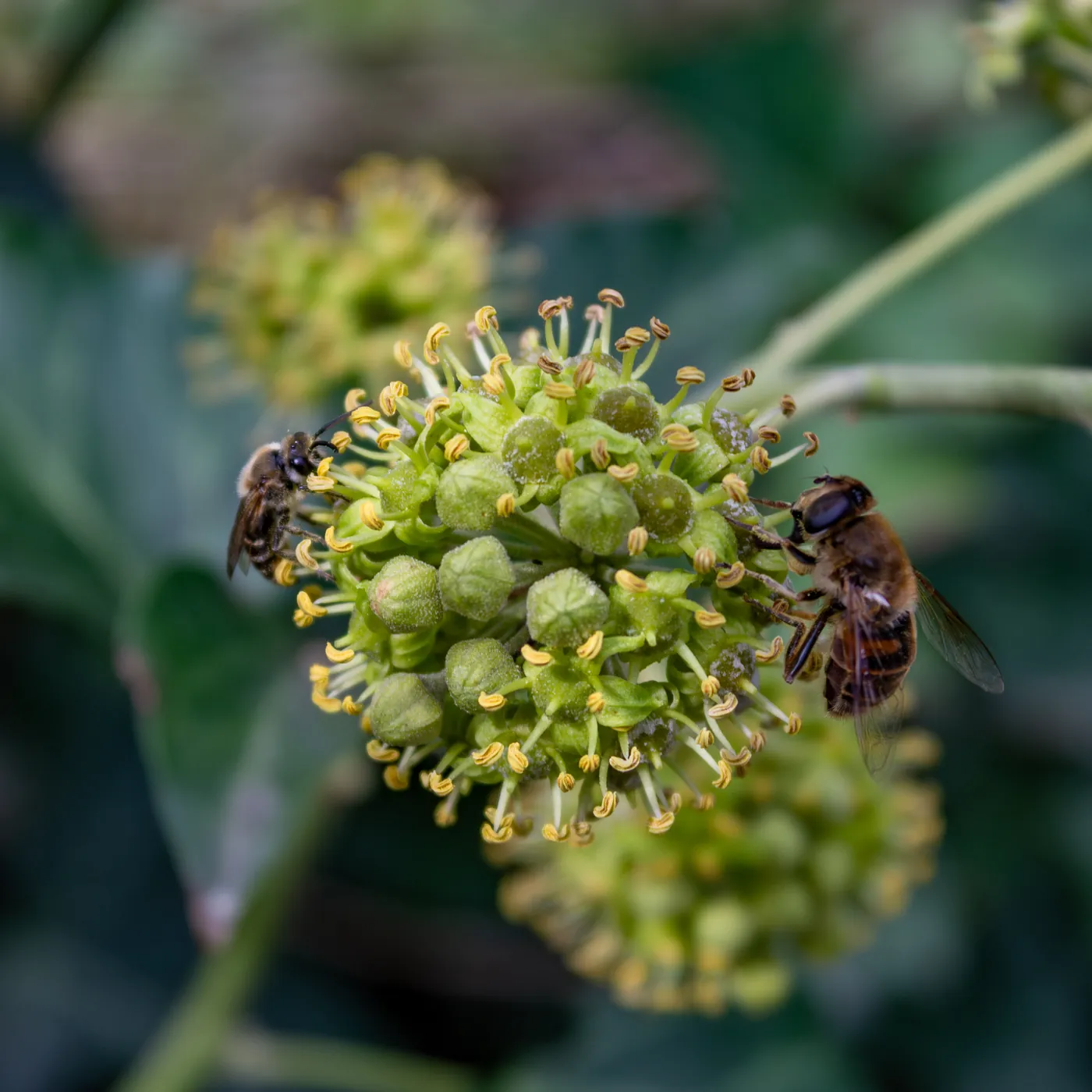
For beekeepers in Britain, France, Germany and other countries with a mild autumn, the last flow comes from common ivy (Hedera helix). Its inconspicuous greenish flower heads open in September and October and, in warm weather, literally hum with bees. Ivy gives plenty of pollen and nectar, but its honey granulates within days and sets as hard as stone. In Britain colonies often winter on ivy honey, though many beekeepers prefer it to sit in the nest mixed with earlier honey or syrup. In Belarus and central Russia ivy does not flower: it does not survive the winter outdoors there.
Honeydew: the flow you would rather not have
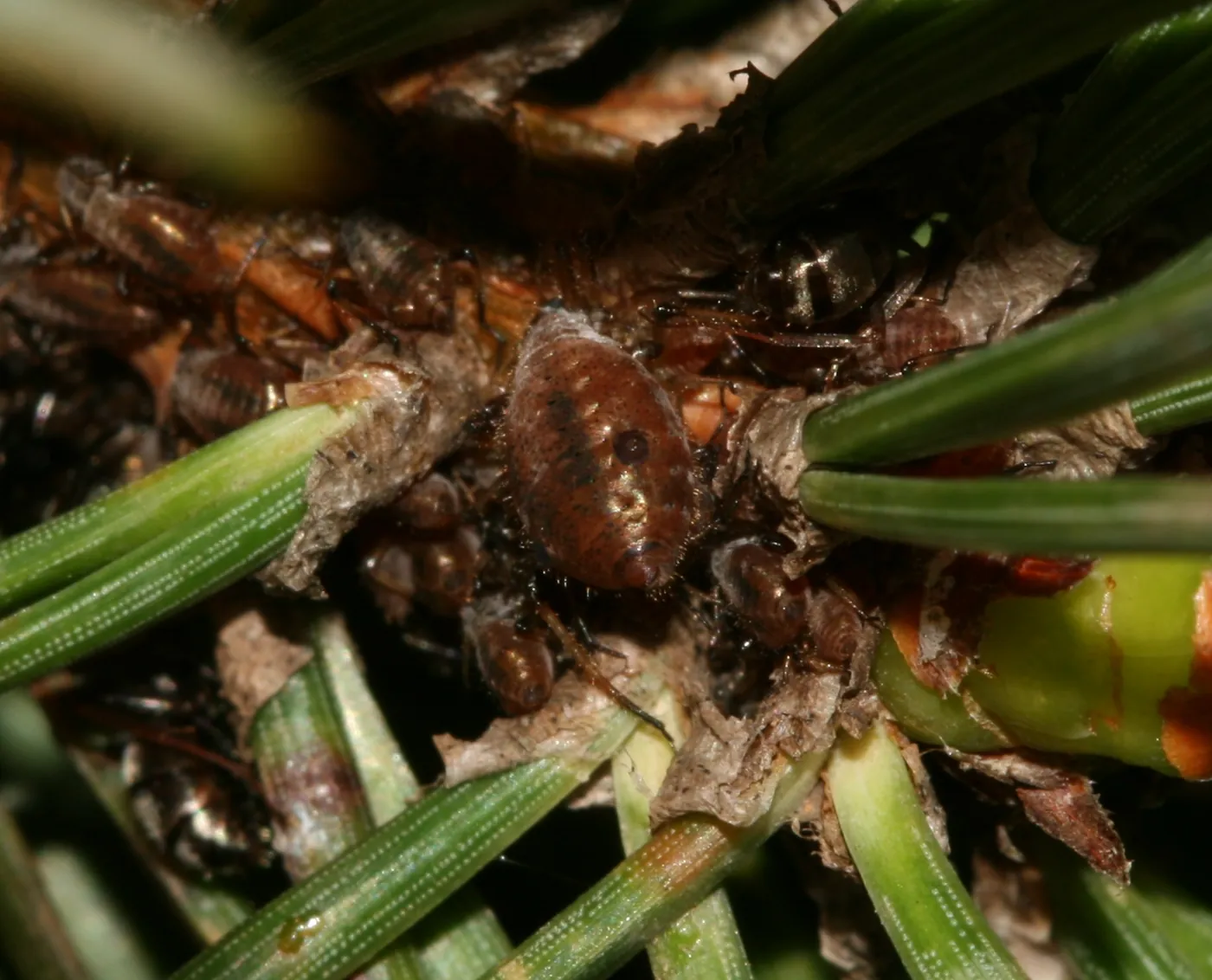
In a hot, dry summer and a warm autumn, when flowers are scarce, bees collect honeydew: the sugary secretions of aphids and scale insects on spruce, pine, fir, lime, oak and willow. In Belarus and central Russia the honeydew flow usually comes between July and September; forest apiaries can gain several kilograms a day, and in Central Europe spruce and fir honeydew honey is an expensive, prized product. For wintering bees, however, it is dangerous: it contains several times more mineral salts, dextrins and hard-to-digest sugars than floral honey. Bees do not fly in winter, undigested residue accumulates in the gut, and by February the colony falls ill with dysentery, weakens, and nosema often follows.
Late honey plants at a glance
| Plant | Flowering | Gives | Yield, kg/ha | Honey for winter |
|---|---|---|---|---|
| Fireweed (end of bloom) | to mid-August | nectar, pollen | 300–500 | good |
| Second-year sweet clover | June – September | nectar, pollen | 200–300 | good |
| Late-sown buckwheat | August | nectar, pollen | 70–100 | acceptable, inferior to pale honeys |
| Phacelia as a catch crop | August – October | nectar, pollen | 150–300 | good |
| White mustard, turnip rape | August – September | nectar, pollen | 40–100 | no: granulates fast |
| Oil radish | August – frosts | nectar, pollen | 40–100 | no: granulates fast |
| Common heather | August – September | nectar, a little pollen | 50–200 | no: jelly-like, high in protein |
| Canada goldenrod | August – October | nectar, much pollen | 50–100 | risky: sets quickly |
| Sow-thistle, creeping thistle | July – September | nectar, pollen | 80–130 | good |
| Knapweed, chicory | July – September | nectar, pollen | about 100 | good |
| Bur-marigold, mint, lemon balm | August – September | nectar, pollen | 30–100 | good |
| Ivy (Western Europe) | September – November | nectar, pollen | varies | risky: sets rock-hard |
| Honeydew from conifers and broadleaves | July – September | honeydew | weather-dependent | no: dysentery, nosema |
The yield figures come from various reference books and field observations; they describe the potential of a solid stand, not what one colony will bring in. In practice bees gather a small fraction, and weather and distance to the field decide everything.
Honeydew and heather honey in winter stores
An inspection in early September should answer two questions: is there enough food in the nest, and what kind is it. Warning signs:
- dark, almost black or greenish honey in open cells, gathered after the main harvest, with no buckwheat nearby;
- no floral aroma, a malty or "resinous" taste;
- bees flying to trees rather than flowers on hot, flowerless days; sticky leaves and needles in the forest;
- jelly-like honey that will not run out of uncapped cells, if the apiary stood near heather.
Honeydew is checked with simple home tests: a spoonful of honey is dissolved in an equal volume of water and lime water or 96 % alcohol is added. Honeydew honey turns cloudy and forms flakes; floral honey stays clear. The tests are crude, but enough for a "replace or not" decision. If in doubt, take a sample to a veterinary laboratory.
What to do if there is doubtful honey in the nest:
- Extract the honeydew and heather honey from the frames while it is warm and the bees can still process a replacement. Honeydew honey can be sold or kept for spring feeding; heather honey is a valuable product in its own right.
- Replace with syrup. The classic guide for the temperate zone is to finish feeding by 10–15 September, so that summer bees rather than the winter generation do the processing. Syrup 1:1 or 3:2 (sugar : water), in 2–4 litre portions in the evening.
- Swap in frames of capped pale honey from the summer plants, if you have them in reserve: the best option, needing no processing at all.
How to arrange the nest for winter and how much food to leave is described in detail in the article on wintering bees.
How to make use of the late flow
Building up winter bees
While even a modest flow continues, do not contract the nest: the queen needs empty cells, and the bees need room for pollen. Frames of bee bread in August are worth no less than honey: without protein the winter bees will not build up their body reserves. Contracting and insulating the nest is a job for late September, once the last brood has emerged, not for mid-August "by the calendar".
Colonies headed by queens raised this year lay longer and more willingly in autumn. If there is an old queen you meant to replace, the best time is July or August: a young queen on the late flow will raise the winter generation, while an old one stops laying earlier.
Migrating to the heather
Only strong colonies are taken to the heather, in late July or early August before flowering starts, with minimal honey in the nest so that heather honey does not mix with the winter stores. Shallow supers and section frames for comb honey are convenient. The colonies are brought back as soon as flowering ends, usually in mid to late September, and the nest is checked straight away: heather honey lands in the brood area, and such frames are replaced. Because of all this effort, migrating to the heather pays off only when there is a good market for comb and pressed honey.
Preventing robbing
As soon as the flow stops, and in autumn that can happen in a single cold day, robbing begins. Strong colonies rob weak ones, and during feeding anyone they can. Reduce entrances to 2–3 cm, leave no open combs or drips of syrup around the apiary, feed in the evening after flying stops, and do not keep hives open for long on flowerless days. Autumn robbing is also the main route by which mites arrive from collapsing colonies, your own or your neighbours'.
Varroa treatment
The window between the last flow and winter is the main one for mite control. The principal treatment goes in right after the main harvest, in late July or August, so that the winter bees emerge from clean brood; apiaries that stood on heather treat immediately on returning. The later the treatment, the more winter bees the mite has already damaged as pupae. A control count in late September or October shows whether an extra treatment in the broodless period is needed. Methods and thresholds are covered in the article on varroa.
- Do not contract the nest while the flow continues and the last brood is emerging.
- Check the stores in early September: quantity and quality, honeydew tests.
- Extract or replace doubtful honey by mid-September.
- Reduce entrances, feed in the evening, never leave combs exposed.
- Treat for mites after the harvest and check the result in October.
Dates drift: how to tell the flow is over
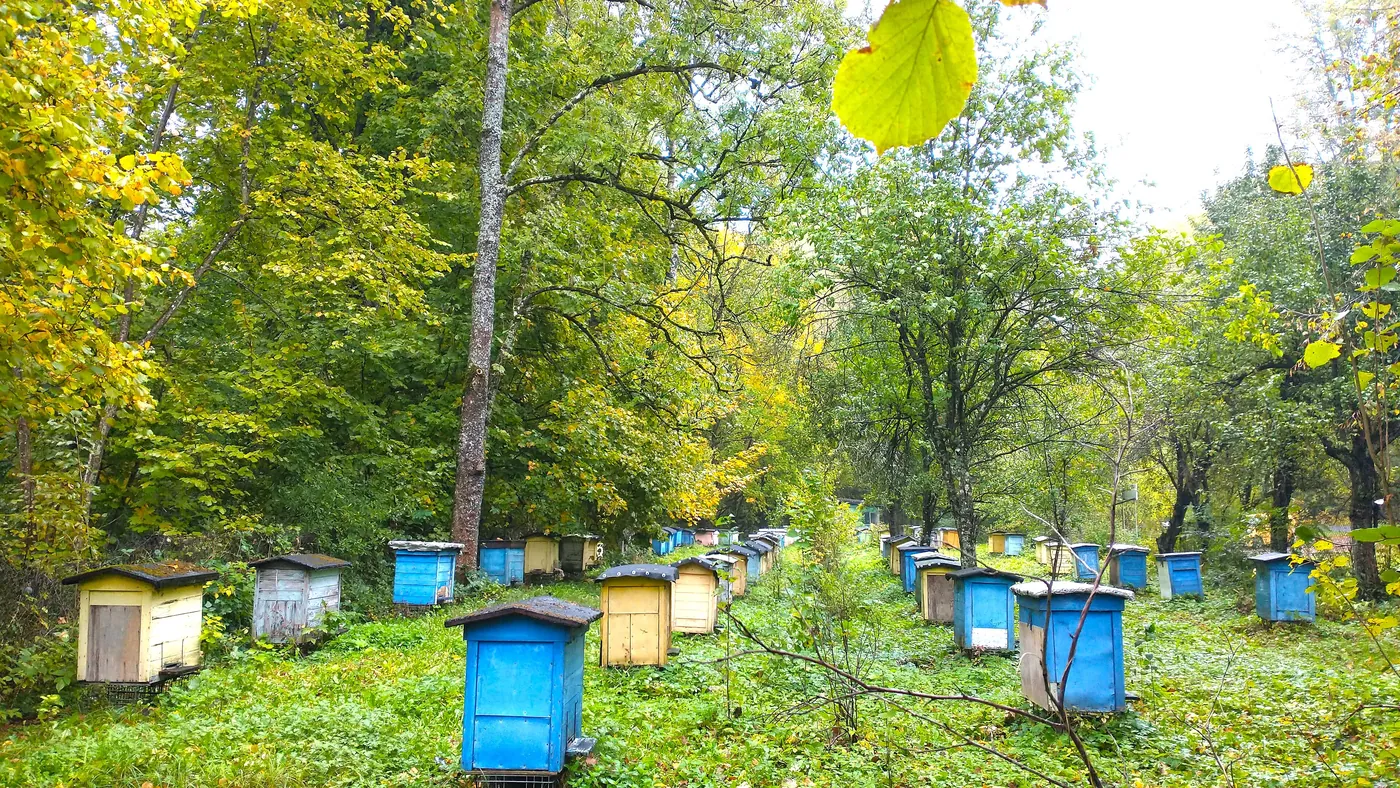
All dates in this article are a guide for central Belarus and central Russia. In southern Ukraine heather and goldenrod finish earlier while late-sown buckwheat is still flowering in September; in northern Russia heather is almost the only autumn honey plant, and in Western Europe ivy closes the season in November. Even in one place no two years are alike: a dry August shifts flowering, and a warm September stretches it by a fortnight.
To estimate the dates for your area, open the honey plant bloom map: it shows when heather, goldenrod, phacelia and other plants flower where you are. The same bloom calendar for the coordinates of your apiary is available on the apiary card in the Beehive app. And the most honest answer to "is the flow over?" comes from a monitor hive on scales: as long as the weight rises by at least 100–200 g in the evening, the bees are still bringing something in; once the weight stands still or drops several days running, the flow is over and it is time to finish the autumn work. For major cities of Belarus and Russia there are ready-made flowering calendars.
Conclusion
The late flow is the season's last chance to influence wintering. It is good if it is modest but long: such a flow raises winter bees without clogging the nest. It is good if it comes from phacelia, sweet clover or mixed herbs: that honey can stay for winter. It is worse if it comes from heather, goldenrod or honeydew: then you have September to replace the stores. The spring and summer plants that open the season are described in the articles on spring and on summer honey plants, and the month-by-month sequence of autumn work is in the beekeeper's calendar.