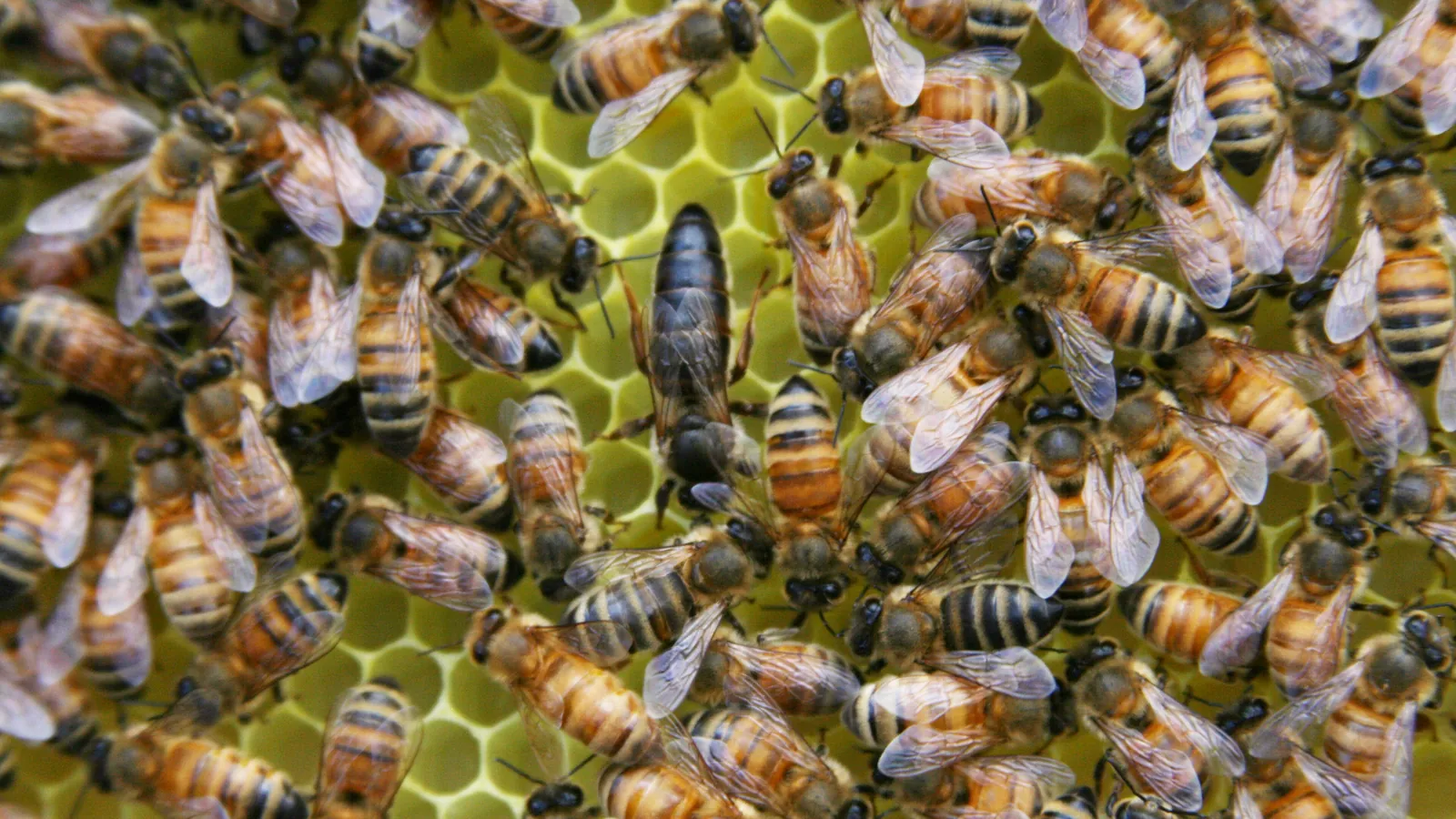
Two hives side by side, with the same boxes and the same forage, can behave in completely different ways: one quietly fills its supers, the other swarms every June and greets the beekeeper with a cloud at the entrance. Often the difference is the breed. Over thousands of years the honey bee has split into dozens of subspecies, each shaped by its own climate. Working out which bee lives in your hives, and which one you actually need, is one of the most rewarding decisions on an apiary.
Why the breed matters
A breed is not a colour; it is the way a colony behaves through the whole year. Each race has its own set of traits, and they are exactly what a beekeeper notices during inspections:
- Winter hardiness. How many months without a cleansing flight a colony can stand, how frugally it uses its stores, how sensitive it is to damp and nosema. In Belarus and central Russia this is the first criterion.
- Swarming tendency. Some races start queen cells at the slightest crowding, others work for years without a swarm. How this shows and what to do about it is covered in the article on swarming.
- Gentleness. Whether you can work without gloves and keep bees next to the house, or cannot approach the hive without a smoker.
- Productivity on a particular flow. There are bees for a short, intense honey flow (lime, buckwheat, fireweed) and bees for a long, thin flow from meadow flowers. Tongue length decides whether they can reach the nectar in red clover.
- Spring build-up. An early explosion of strength is ideal for rapeseed and orchards, but risky if the main flow comes only in July.
Matching the breed to your climate and your forage removes half the problems you would otherwise be fighting all summer.
The main honey bee breeds
All the breeds discussed here are subspecies (geographic races) of one species, Apis mellifera. They interbreed freely, so a breed stays pure only where there are no foreign drones within several kilometres. The descriptions below follow the breed standards and typical beekeepers' observations; individual lines and colonies may deviate from them.
Dark European bee (also called the Central Russian bee) — A. m. mellifera
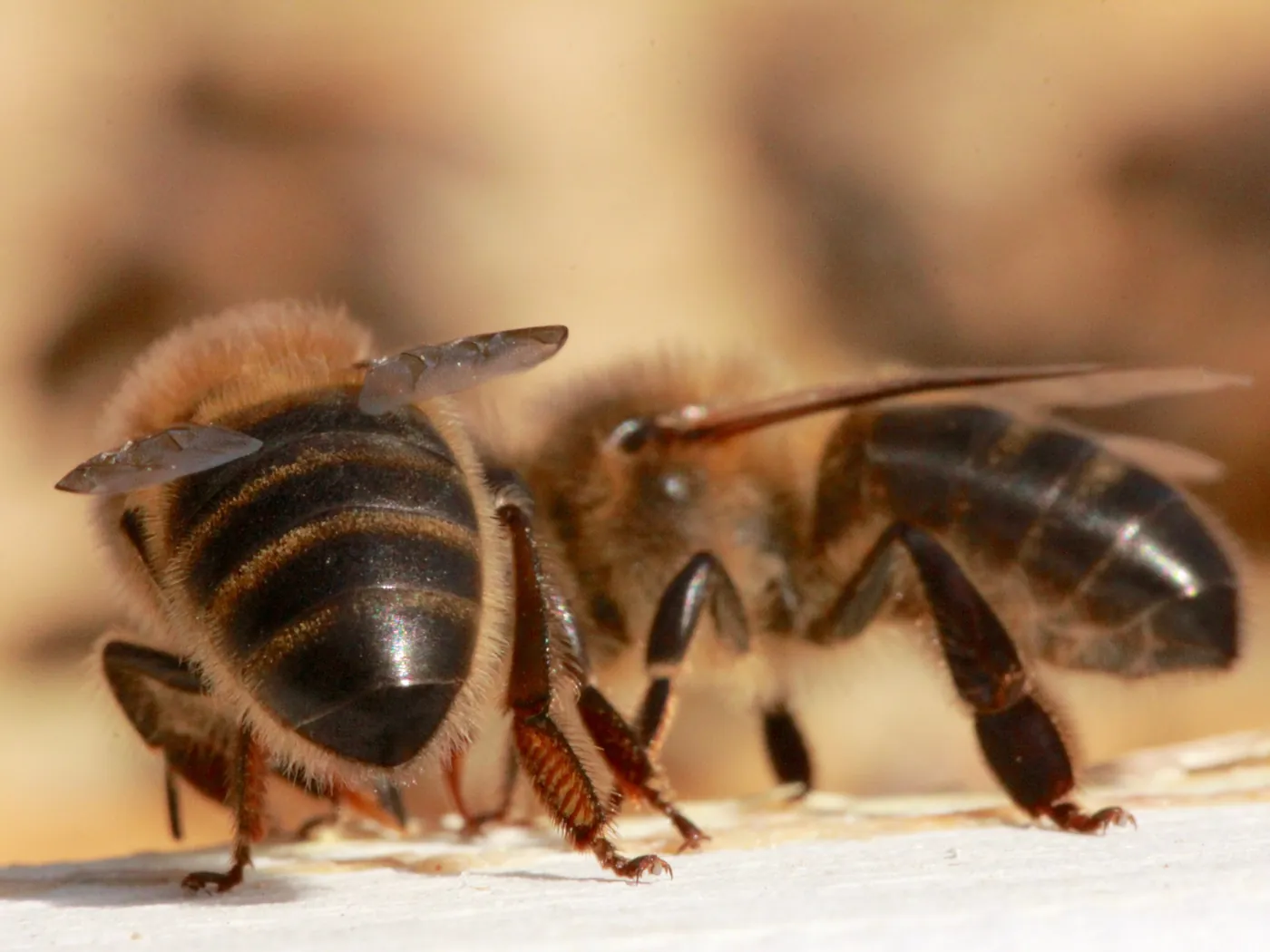
The native bee of northern and central Europe, historically from the Pyrenees and the British Isles to the Urals. Large, dark, almost without yellow markings, with dense hair. The tongue is short, around 6.0–6.4 mm, and the cubital index is low. It is the hardiest of the European bees: a colony copes with 6–7 months without a cleansing flight, uses its stores sparingly and resists nosema and honeydew poisoning. Honey cappings are dry and white.
The temper is difficult. The bees are defensive, run off the comb during inspections and hang in clusters from the bottom bar, and they resent interference. Swarming is strong: in a crowded hive half the apiary can leave with swarms. On the other hand, on a short, heavy flow from lime, buckwheat or fireweed the dark bee works like no other, filling supers in a few days. The queen lays up to 2,000 eggs a day, colonies are strong and use little propolis. In spring the colony builds up unhurriedly, following the local flow rather than the calendar.
Pure populations survive in Bashkortostan (the Burzyan bee of the Shulgan-Tash reserve), Tatarstan, the Perm region, the Altai, and the Vologda and Oryol regions; in Belarus, remnants remain in Polesia and in the north. In western Europe it is being carefully restored as the "European dark bee", "abeille noire", "dunkle Biene" and "native Irish bee" — on the British Isles, in Scandinavia, Switzerland and France.
Carpathian bee — A. m. carpatica
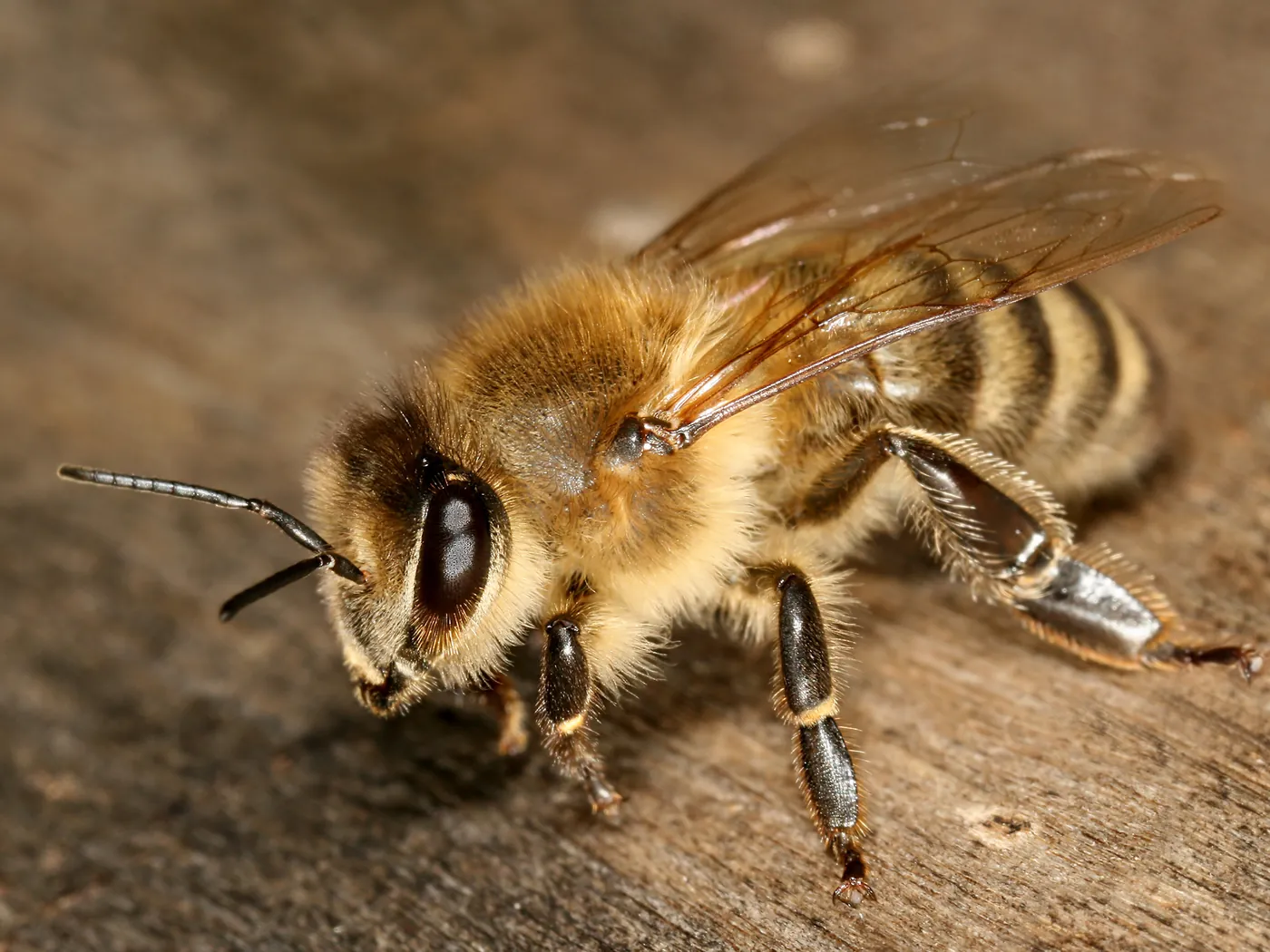
The bee of the Ukrainian Carpathians, above all Transcarpathia. Genetically it is very close to the Carniolan, and many scientists abroad treat it as an eastern ecotype of carnica, but in Ukraine, Belarus and Russia it is kept as a separate breed with its own standard. Grey, with silvery hair, and a long tongue of roughly 6.3–7.0 mm, which lets it take nectar from red clover.
The Carpathian bee is gentle, sits calmly on a lifted frame, swarms little, makes good use of thin and intermittent flows and builds up early and evenly in spring. Cappings are dry. It winters well: in Belarus and central Russia this has been proven over decades, though in Siberia it falls behind the dark bee. The drawbacks are a tendency to rob and some sensitivity to nosema in a damp winter. It is the most common breed among beekeepers in Ukraine and Belarus and one of the most popular in European Russia.
Carniolan bee — A. m. carnica
Its homeland is Slovenia, Austria, Croatia and the Balkans, the territory of historical Carniola. Today it is the most widespread breed in Europe: it dominates in Germany, Austria, the Czech Republic, Slovakia, Hungary and Poland and is well represented in Scandinavia. In appearance it closely resembles the Carpathian: grey with silvery rings of hair, no yellow. The tongue is around 6.4–6.8 mm, the cubital index is high, cappings are dry.
Its main virtues are exceptional gentleness and rapid spring build-up: the Carniolan comes out of winter as a small cluster, uses stores frugally and then grows explosively with the first pollen. It is the ideal bee for early forage: rapeseed, orchards and acacia, or in Belarus willow, maple and dandelion. The downside is swarming: natural populations swarm heavily, but in modern selected lines (Peschetz, Sklenar, Troiseck and the lines of German and Austrian institutes) this trait is much weaker. On a strong flow the Carniolan can severely restrict the queen's laying and fill the brood nest with honey. It uses little propolis. Wintering in Belarus and central Russia is good with adequate stores; in Siberia results are uneven.
Italian bee — A. m. ligustica
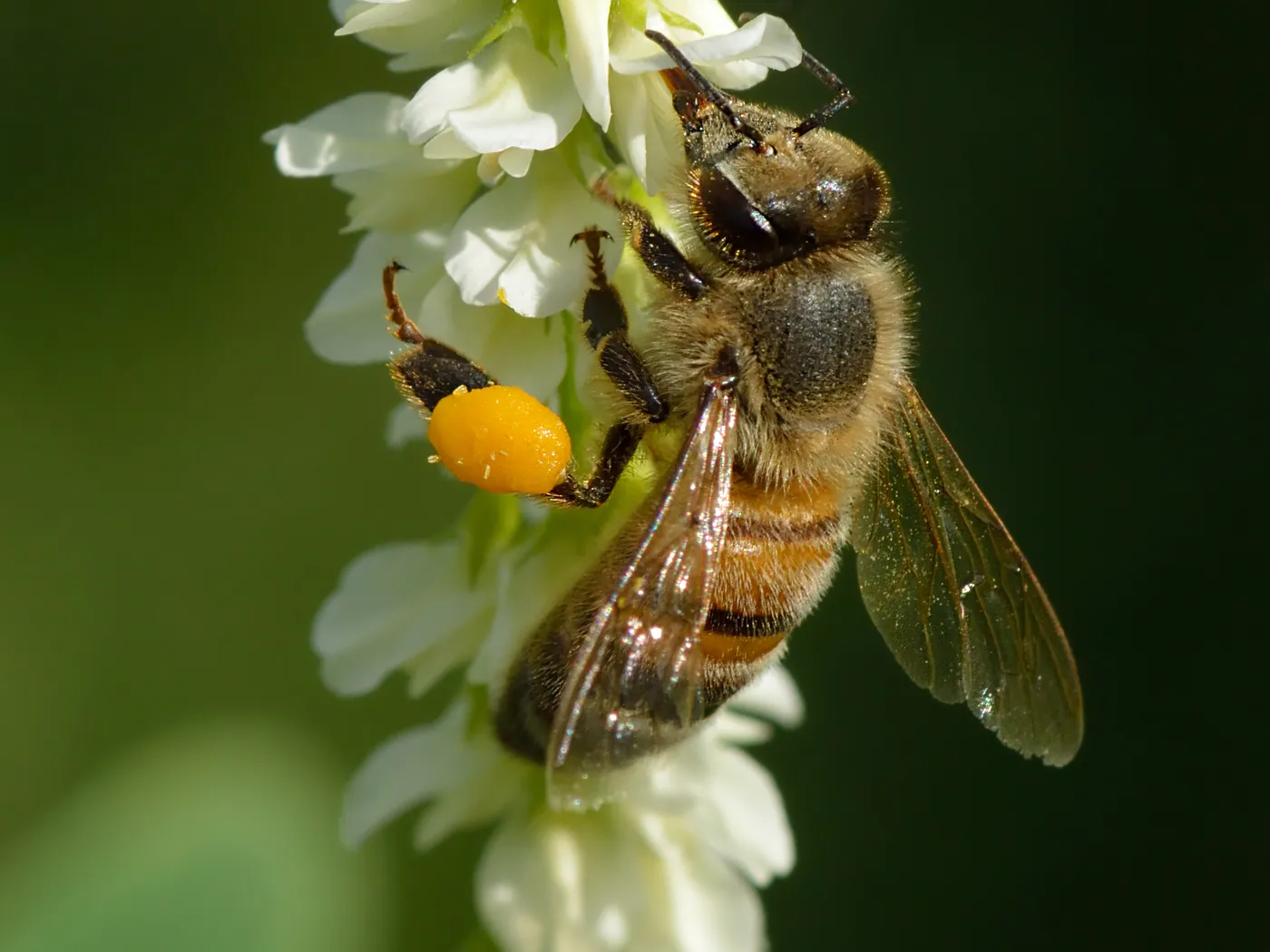
The bee of the Apennine peninsula and the most numerous breed in the world: beekeeping in the USA, Australia, New Zealand, South America and southern Europe rests on it. It is easy to recognise by the yellow or golden rings on the abdomen. The tongue is about 6.4–6.7 mm, cappings are mixed.
The Italian is gentle, swarms little and is extremely prolific: the queen can lay more than 2,000 eggs a day and colonies grow huge. The bees build comb beautifully, keep the hive clean and defend it well against wax moth. But this breed was not made for a northern winter. It does not know when to stop: it keeps rearing brood in autumn, eats a lot of stores, winters as a large cluster, copes badly with a long confinement and is prone to nosema. It is also inclined to rob and to drift into neighbouring hives. In Belarus and central Russia it is rarely kept pure; mostly it survives as a component of crosses and of the Buckfast bee.
Grey Caucasian mountain bee — A. m. caucasica
The bee of the mountain regions of Georgia, Armenia, Azerbaijan and the North Caucasus. Grey like the Carniolan but darker, without yellow marks. Its signature trait is the longest tongue of any race, around 7.0–7.2 mm: the Caucasian takes nectar from red clover and other deep flowers that other bees cannot reach. It is considered the gentlest breed and the least inclined to swarm: with proper management only a small share of colonies swarm.
The Caucasian makes excellent use of a thin, drawn-out flow and switches quickly from one plant to another, but on a short heavy flow it falls behind the dark bee. Cappings are wet and dark, so the combs look "flooded". It uses propolis heavily, to the point of sealing entrances and gluing down the inner cover. Winter hardiness is poor: the breed suffers in a long winter, is susceptible to nosema, and its mass introduction to northern regions in the twentieth century ended in heavy losses. Queens are less prolific than Italian or dark bee queens.
The yellow Caucasian (valley) bee of Transcaucasia is treated separately: it has yellow rings, is more defensive and even less hardy, and is quite unsuitable for northern regions.
Ukrainian steppe bee
The bee of the forest-steppe and steppe of Ukraine — the Poltava, Kirovohrad and Cherkasy regions. Grey, slightly lighter than the dark bee, with a tongue of about 6.3–6.7 mm. In temperament it is intermediate: moderately gentle, moderately swarmy, winters well and resists nosema. Cappings are dry. It works well on buckwheat, sunflower and steppe herbs. Outside Ukraine it is rare, but historically it was this bee, together with the dark bee, that gave rise to the Far Eastern bee.
Buckfast
The only man-made breed on this list. In 1919 Brother Adam (Karl Kehrle), a monk of the Benedictine Buckfast Abbey in Devon, England, began crossing the colonies that had survived the acarine epidemic, which had wiped out the local dark bees, with Italian bees. Later he travelled across Europe, the Middle East and Africa adding Anatolian, Greek, Macedonian, Saharan and other blood to the breed, and he carried on selecting for more than half a century.
The result is a bee coloured from yellow-brown to dark, gentle, reluctant to swarm, very prolific and productive, with strong colonies that fill multi-storey hives with honey. Cappings are dry, propolis use is moderate, and it resists acarine. Buckfast is popular in Germany, Denmark, Sweden, France, Poland, Belarus and European Russia. It winters in our climate if colonies are strong and stores are ample, but it eats more than the dark bee or the Carniolan.
One important caveat: Buckfast is not a subspecies but a bred "combination breed". It keeps its qualities only under constant selection. A Buckfast queen mated with local drones produces unpredictable, often defensive bees in the second generation.
Other bees worth knowing about
- The Far Eastern bee. Not a subspecies but a population that formed in Primorye and the Amur region from Ukrainian and dark bees brought by settlers in the second half of the nineteenth century. Hardy, calmer than the dark bee, superb on lime. Most importantly, it has lived alongside the Varroa mite for more than a century and has developed noticeable resistance; in the USA it became the basis of the "Russian bee" line.
- The Africanised bee. A cross between the African A. m. scutellata and European races that arose in Brazil in the 1950s and colonised South and Central America and the southern USA. Extremely defensive and swarmy, but resistant to disease and mites. Not found in Europe or in our region.
- Apis cerana, the Asian (eastern) honey bee. A different species, not a breed. It lives in India, China, Japan, Korea and the Russian Far East. Smaller, with weaker colonies and lower honey yields, but it is the original host of the Varroa mite and has learned to live with it over millennia. It does not interbreed with Apis mellifera.
Breeds compared
The table gives generalised ratings based on breed standards and beekeepers' experience. There is always variation within a breed: a selected Carniolan line may swarm less than a "backyard" Caucasian.
| Breed | Winter hardiness | Swarming | Gentleness | Tongue | Cappings | Where it does best |
|---|---|---|---|---|---|---|
| Dark European | Very high | High | Low | ≈6.0–6.4 mm | Dry | North, forest; short heavy flow from lime, buckwheat, fireweed |
| Carpathian | Good | Low | High | ≈6.3–7.0 mm | Dry | Belarus, Ukraine, central Russia; thin and intermittent flows |
| Carniolan | Good | Medium (low in selected lines) | Very high | ≈6.4–6.8 mm | Dry | Central Europe; early forage — rapeseed, orchards, acacia |
| Italian | Low | Low | High | ≈6.4–6.7 mm | Mixed | Warm climate with a long season; commercial apiaries |
| Grey Caucasian | Low | Very low | Very high | ≈7.0–7.2 mm | Wet | Caucasus, south; thin drawn-out flow, red clover |
| Ukrainian steppe | Good | Medium | Medium | ≈6.3–6.7 mm | Dry | Forest-steppe and steppe; buckwheat, sunflower |
| Buckfast | Medium | Low | High | ≈6.5–6.8 mm | Dry | Strong colonies in large hives; temperate Europe |
Where the breeds are kept
Belarus and central Russia
Historically this was dark bee country, but over the twentieth century it was heavily diluted by imports: first Caucasian, then Carpathian and Italian. Today the market mostly offers the Carpathian (by far the most packages and queens on sale), Carniolans of various lines from Germany, Austria, Poland and local breeders, Buckfast and, less often, the dark bee from breeding apiaries in Bashkortostan, Tatarstan and the Oryol and Vologda regions. In Belarus the dark bee (Polesie population) and the Carpathian are the traditional breeds, while the Carniolan and Buckfast have in practice become the third and fourth in recent years.
The risk is dragging north something that was never built for a six-month winter. Caucasian and Italian bees winter badly in Belarus and around Moscow: nosema, dysentery, heavy losses in a drawn-out spring. Carniolans, Carpathians and Buckfast winter normally but need attention to stores and a dry wintering site. And remember: a purchased queen gives consistent offspring only in the first generation; after that the local drones take over.
Northern Russia, the Urals and Siberia
Dark bee territory, no alternatives. Seven months without a flight and frosts near –40 °C are survived only by the dark bee and the local populations derived from it. Attempts to keep southern breeds in Siberia regularly end with apiaries dying in winter. This is where the reserves and breeding farms for conserving the dark forest bee operate.
Southern Russia and Ukraine
In the steppe and forest-steppe of Ukraine the Carpathian dominates, with the Ukrainian steppe bee in the east and south. The Krasnodar and Stavropol regions and the Rostov region are the zone of the grey Caucasian, the Carpathian and their crosses; summers are long and forage is varied, and here the Caucasian's long tongue genuinely pays off. Buckfast and Carniolans are common too.
The Caucasus
Georgia, Armenia, Azerbaijan and the republics of the North Caucasus are the homeland of the grey Caucasian mountain bee and the yellow Caucasian bee. Breeding farms here traditionally shipped queens across the former USSR and abroad.
Europe
Central and eastern Europe from Germany to Bulgaria is Carniolan country; in Slovenia it is protected by law as the only breed allowed, and the Slovenian "Kranjska sivka" is a national symbol. In Scandinavia, the Netherlands, France, Britain and Ireland the Buckfast is widespread, while the dark European bee survives in protected populations: the island of Læsø in Denmark, Colonsay in Scotland, parts of Ireland and valleys in Switzerland. Italy, Spain and Greece are home to the Italian, Iberian and local Greek bees.
The Americas, Australia and New Zealand
There were no honey bees there before Europeans brought them. Commercial beekeeping rests on the Italian bee and its crosses with Carniolan and Caucasian stock; the USA also has "Russian bee" lines of Far Eastern origin. South and Central America are populated by the Africanised bee.
How to choose a breed for your apiary
There is no universal "best breed", otherwise everybody would have been keeping it long ago. Start from three questions.
- What is your winter like? If the confinement lasts 5–6 months or more, your choice is the dark bee or Carpathian and Carniolan lines proven in your region. With a short, mild winter the list is longer.
- What is your forage? One heavy main flow (lime, buckwheat, fireweed) favours the dark bee and the Far Eastern bee. An early flow from rapeseed and orchards favours the Carniolan and Carpathian. A long, thin flow from mixed herbs favours the Carpathian, Caucasian and Buckfast.
- Who is nearby? An apiary in a village, by the house, next to neighbours needs gentle breeds only: Carniolan, Carpathian, Buckfast. The defensive dark bee belongs on an out-apiary in the forest.
The most reliable guide is what successful beekeepers in your district have been keeping for the last ten years. Their bees have been selected by the local winter, and the local drones will be the same as yours.
Crosses and "mongrels"
Most apiaries keep crosses rather than pure-bred bees. That is not a problem in itself: the first generation (F1) from a pure queen and foreign drones often shows heterosis, with colonies stronger and more productive than either parent. The trouble starts later. In the second and third generations the traits segregate unpredictably: calm bees in one hive, defensive ones in the next, swarmy bees with poor wintering in a third. This is where the story of "the southern queen that wintered beautifully the first year and then the colony vanished" comes from: her daughters mated with whoever was around, and their grandmother's hardiness did not reach them.
Two practical conclusions follow. Either requeen regularly with pure-bred queens from a reliable breeder, or run your own selection: rear queens only from the colonies that winter best and behave best, and cull the worst. The second path is what a "local bee" really is, and in ten years it beats any imported stock.
Breeding zones and regulations
The USSR already had a breed zoning plan that listed which breeds could be kept in each region. Russia has kept this principle in its beekeeping law, and in certain territories (for example, the Burzyan district of Bashkortostan) importing bees of other breeds is banned to conserve the dark forest bee. In Belarus breeding work focuses on the dark bee and the Carpathian; which breeds are officially recommended for your region today is best checked with the local veterinary service. The EU has no single rule, but Slovenia permits only the Carniolan, and a number of islands and valleys in Denmark, Britain, Ireland and Switzerland are declared dark bee reserves where foreign queens may not be brought in. Before ordering queens from afar, check the rules of your own region.
How to identify the breed in your own hives
There is no exact answer "by eye", but several signs allow an educated guess.
- Colour. Yellow rings on the abdomen mean Italian blood or Buckfast. Grey with silvery hair and no yellow means Carniolan, Carpathian or Caucasian. Black, large, with narrow bands of hair means the dark bee. A mix of colours in one colony means a cross.
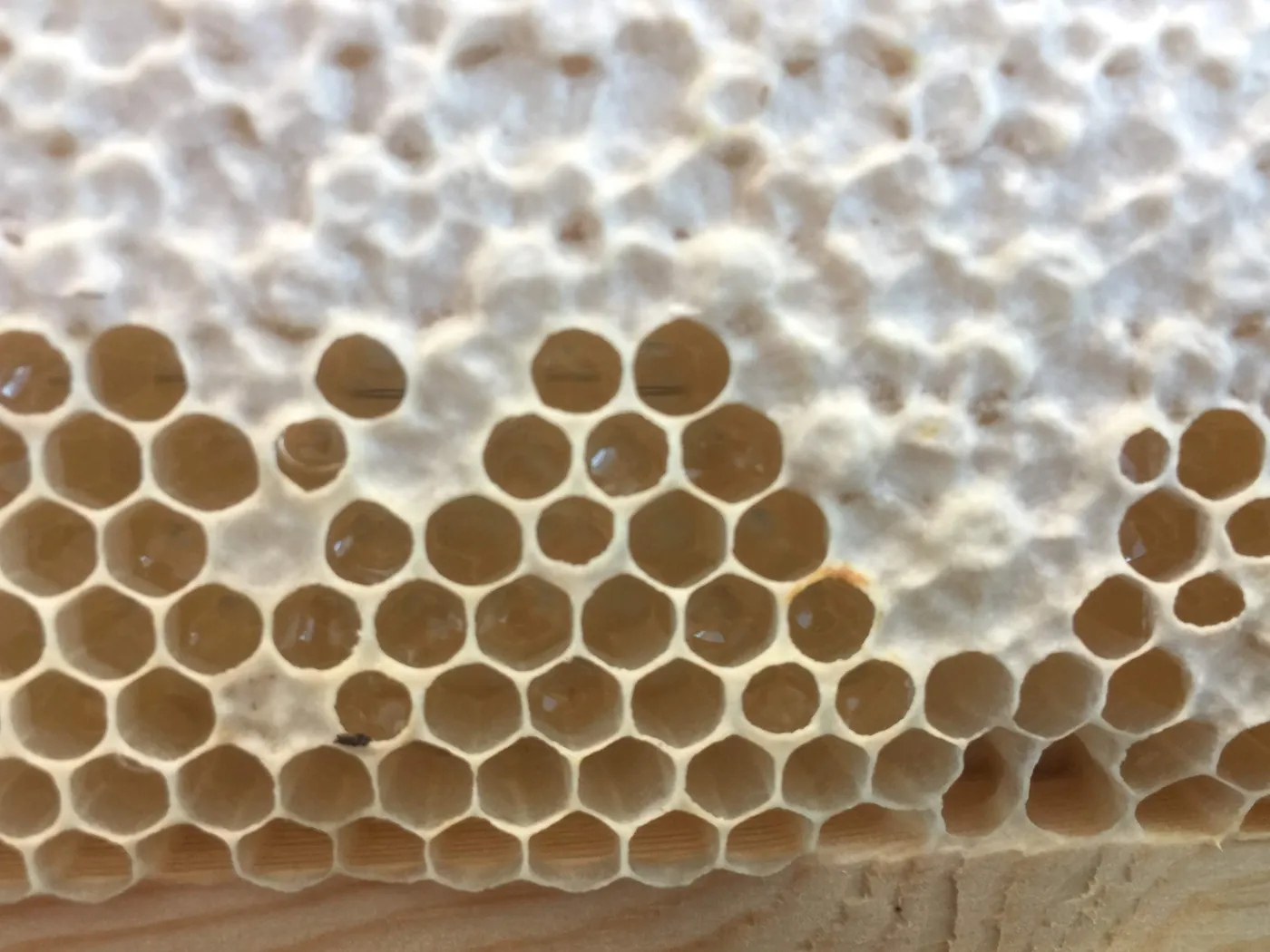
- Honey cappings. White, "dry" cappings (an air gap between honey and wax) point to the dark bee, Carniolan, Carpathian or Buckfast. Dark, "wet" cappings (wax lying straight on the honey) point to Caucasian blood. Mixed cappings suggest Italian bees or crosses.
- Behaviour on the comb. Bees sit calmly and the queen keeps laying: Carniolan, Carpathian, Caucasian. Bees run down, hang in a beard and go for your hands: dark bee or a defensive cross.
- Propolis. Entrances heavily glued, inner cover stuck fast: a Caucasian trace. Minimal propolis: dark bee, Carniolan.
- Autumn and winter. The colony stops rearing brood early and winters as a small cluster: Carniolan, dark bee. Brood until the cold and a large cluster: Italian, Buckfast.
Only the laboratory can identify a breed reliably. The classic method is morphometry: in 30–50 bees the tongue length, wing length and width, tergite colour and above all the cubital index are measured — the ratio of the lengths of two veins in the third cubital cell of the forewing. In the dark bee it is low, roughly 1.5–1.9, in the Carniolan high, about 2.4–3.0, with the Italian and Caucasian in between; discoidal shift also matters, negative in the dark bee and positive in the Carniolan. Today wings are photographed and measured by software, and breeding farms increasingly confirm the breed by DNA analysis. An ordinary apiary rarely needs this; it is enough to know which breeder the queen came from and how her daughters behave.
The bottom line
Fashions in breeds come and go: in the 1970s everybody imported Caucasians, in the 2000s Carpathians, today Carniolans and Buckfast. What survives winter and brings honey is not a name but zoned bees proven by the local climate. For Belarus and central Russia that means the dark bee where its temper can be managed, and the Carpathian or proven Carniolan lines where gentleness matters more. In the north and Siberia, only the dark bee. In the south the choice is wide, and there the Caucasian's long tongue or the Italian's fecundity really do pay off.
Whatever you keep, the main tool is record-keeping. Note the breed and origin of every queen, the year she was reared, and how the colony wintered, swarmed and worked the flow. After two or three seasons it becomes clear which lines deserve to be multiplied and which should be replaced. How colonies of different breeds prepare for winter and what decides the outcome is covered in the article on wintering.