When you open a hive, you are not looking at thousands of separate insects but at one living whole. A single queen, tens of thousands of workers and a few hundred drones work like the organs of one body: on her own, any bee is doomed, yet together they survive frost, raise the next generation and store honey. The better a beekeeper understands how this works, the fewer mistakes they make at inspections.
The colony as a superorganism
Back in the 19th century the German beekeeper Johannes Mehring described the colony as a single creature — “der Bien”. Today biologists call it a superorganism: it is not the individual bee that reproduces but the whole colony, by swarming, with the queen and drones acting as its reproductive organs.
The superorganism has its own “systems”: the comb is its skeleton and pantry, workers are its muscles and immune system, pheromones and dances are its nervous system. The colony holds the brood nest at a steady 34–35 °C (93–95 °F), much like a warm-blooded animal, and decides for itself how many bees to rear, when to draw comb and when to split.
Queen, workers and drones
A colony has three castes, and telling them apart on a frame is easy — even if you have never spotted a queen before.
The queen
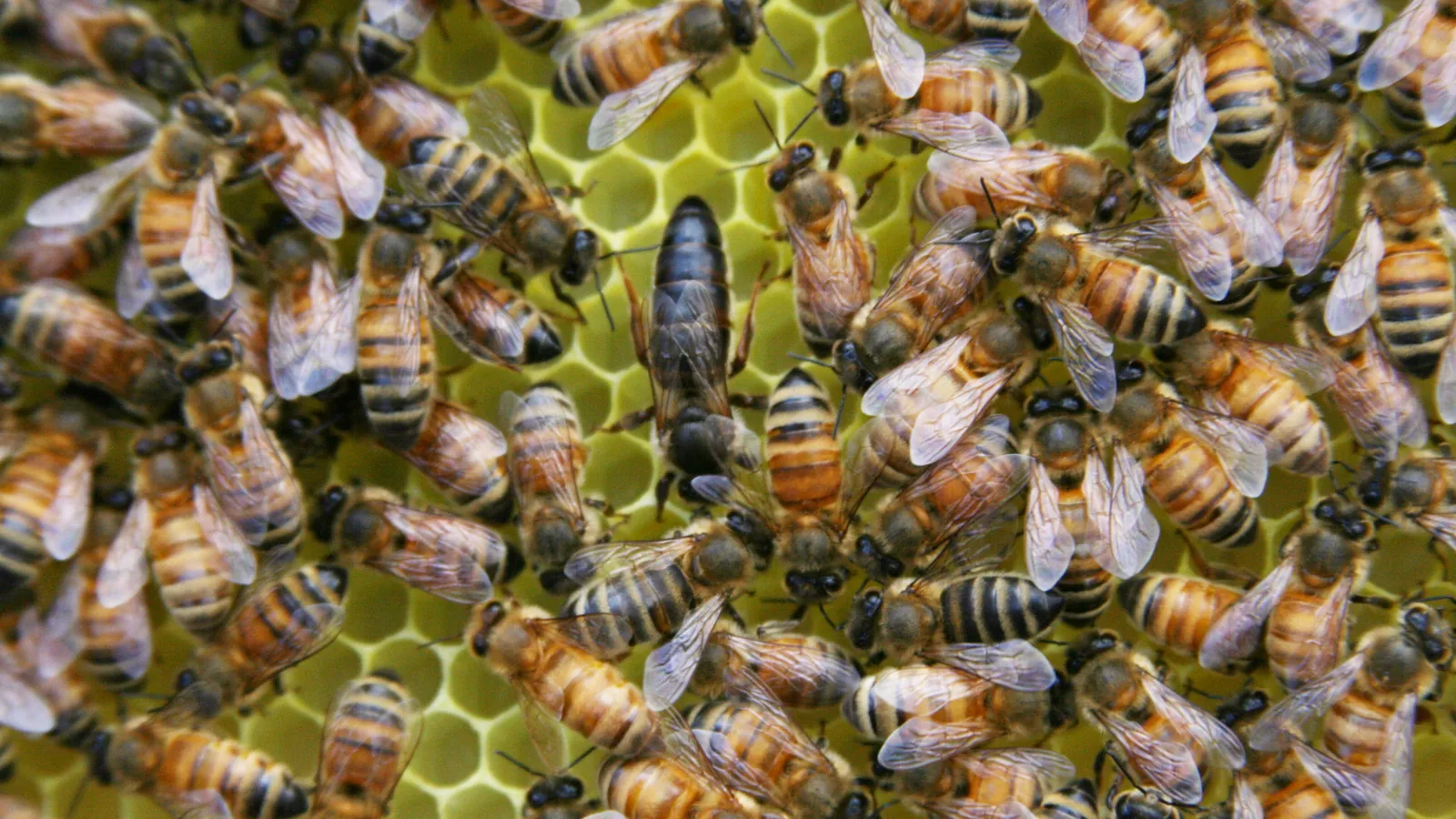
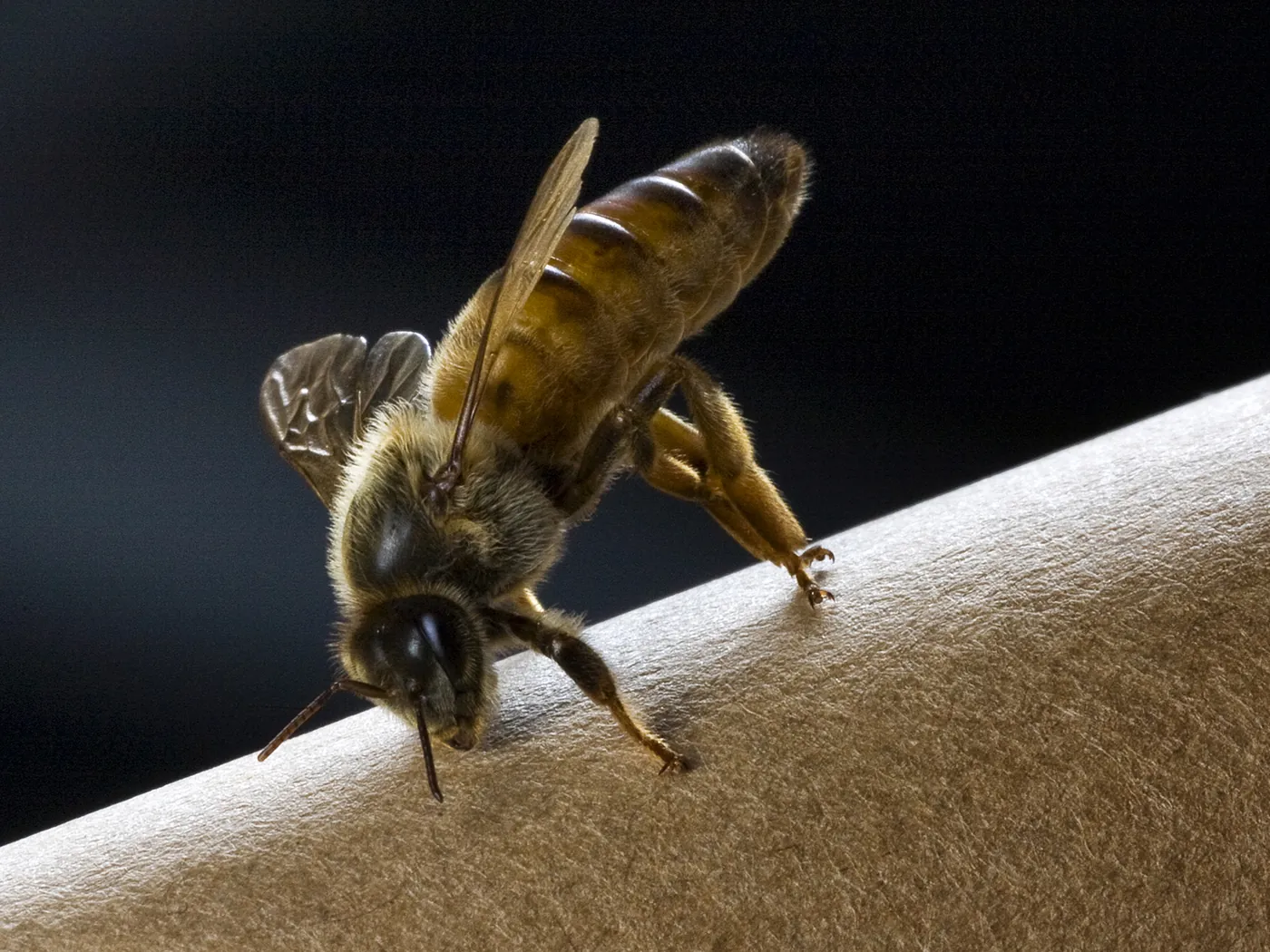
The only fully developed female and the mother of every bee in the hive. She is noticeably longer than the workers thanks to her long abdomen, which sticks out well beyond her folded wings. Her legs are longer and lighter, and she moves unhurriedly. She has no pollen baskets or wax glands, and her smooth, curved sting is used only against rival queens.
The queen does not “rule” the colony: decisions are made by the workers. Her job is to lay eggs and produce the pheromones that tell the colony she is alive. She can live 4–5 years, but lays noticeably less after her second season, which is why most beekeepers requeen every one or two years.
Worker bees
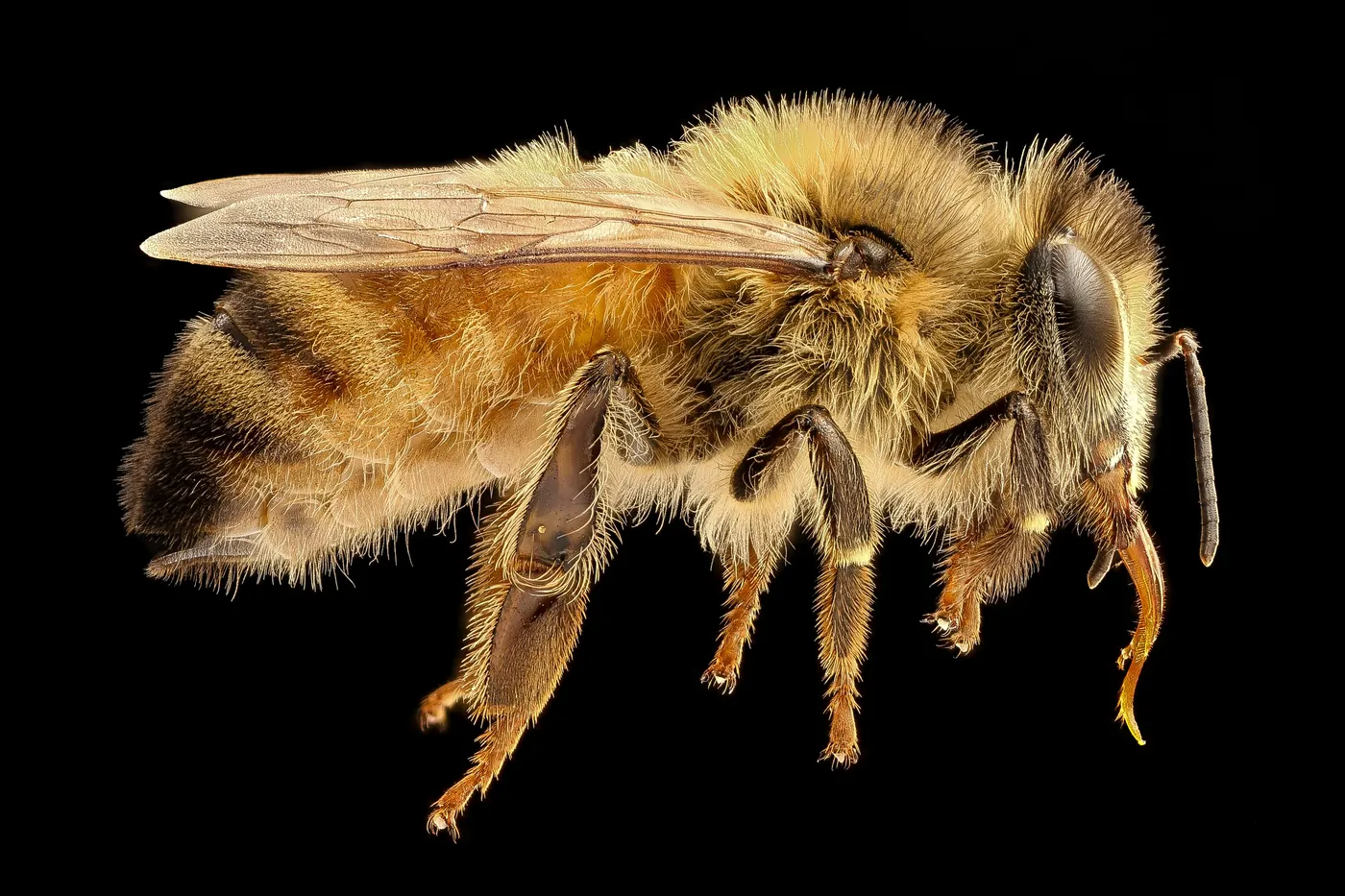
Workers are underdeveloped females and make up the vast majority of the colony. They are the smallest bees, with pollen baskets on their hind legs, wax glands under the abdomen and a barbed sting. They do everything: brood care, comb building, defence, and collecting nectar and pollen.
Their lifespan depends on the season. A summer bee wears out in 5–6 weeks — foraging is what kills her. Winter bees, reared in August and September, do almost no brood rearing and live 5–7 months, long enough to see the spring.
Drones
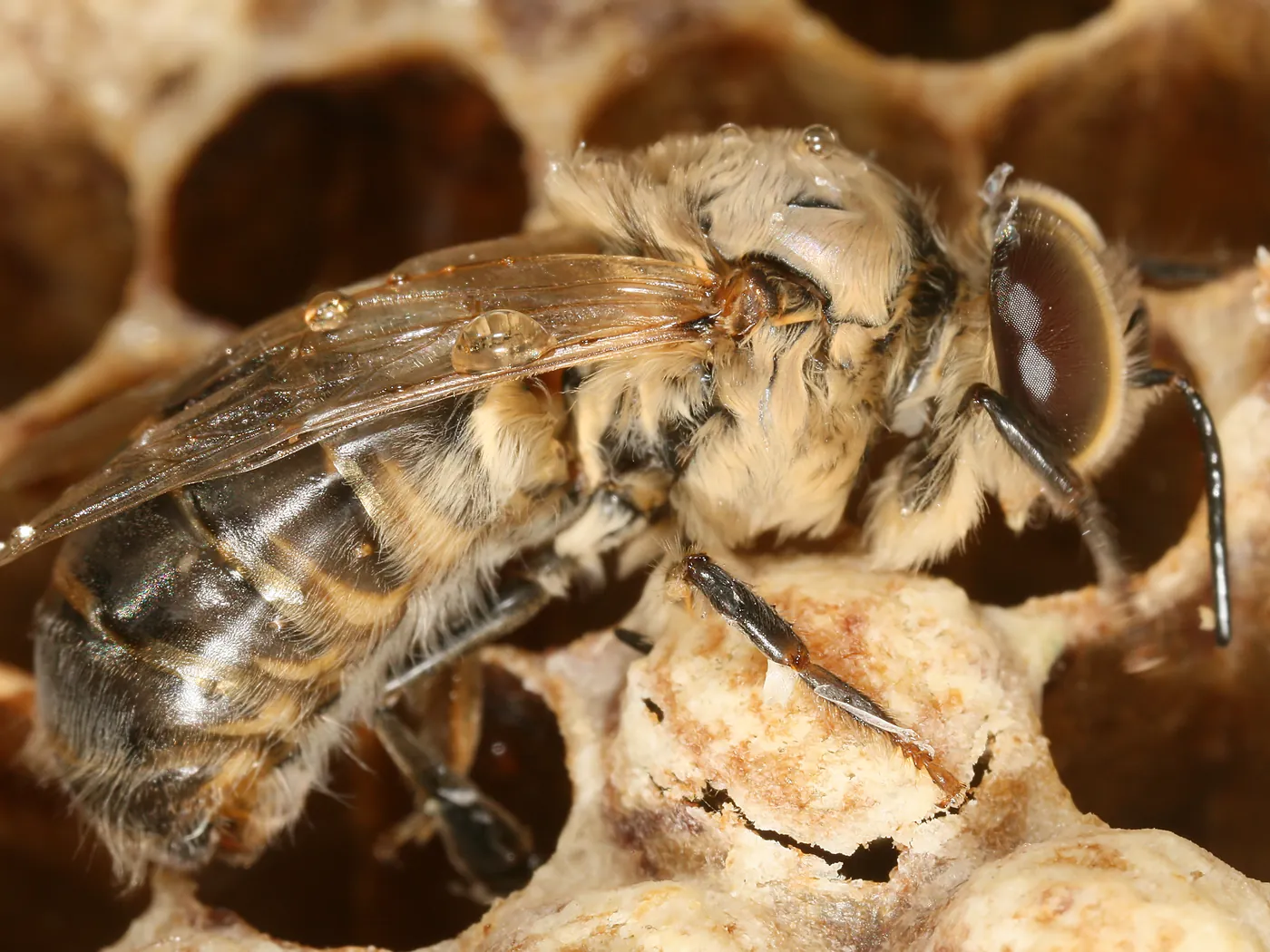
The males: large and stocky, with huge eyes that meet on top of the head. They have no sting, barely feed themselves and do no work. They have one task — to mate with a young queen from another colony. Drones appear in spring, number from a few hundred to a couple of thousand per colony, and live a few weeks. In autumn, when the flow ends, the workers stop feeding them and drag them out of the hive. If a colony still keeps drones late in autumn, check whether it has a laying queen.
From egg to bee: 16, 21, 24 days
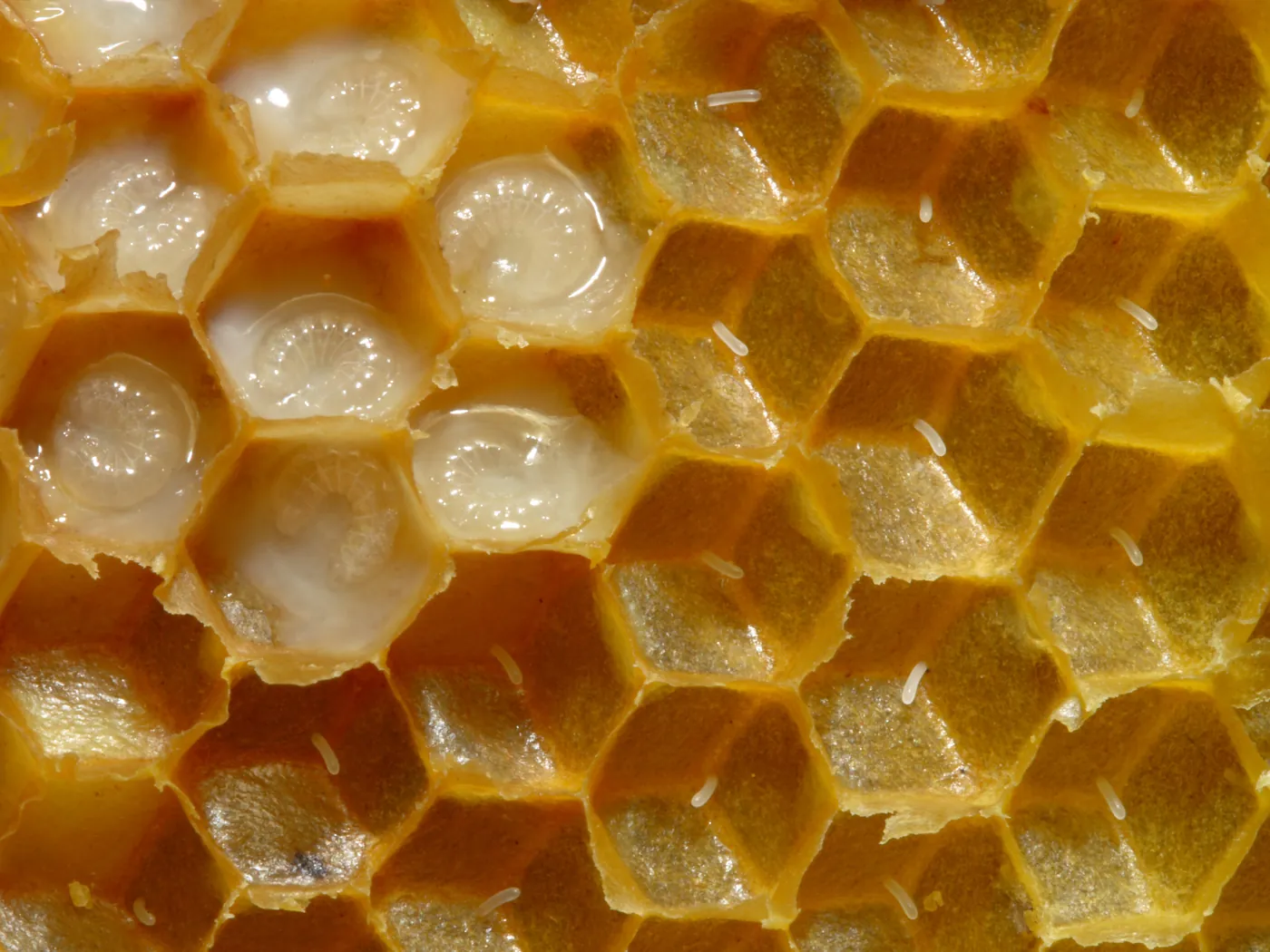
All three castes go through the same stages: egg, larva, pupa. The egg stands in the cell for three days, then a larva hatches. The larva is fed in an open cell, and once it fills the cell the bees cap it with wax — inside, it spins a cocoon and turns into a pupa. The castes differ only in how long each stage lasts.
These numbers are the basis of all beekeeping arithmetic. Found a capped queen cell? A young queen will emerge in a week or so. Lost the queen, but there have been no eggs for only a few days? The colony can still raise a new one from its own larvae. The easiest way to work out the dates is the queen rearing calendar: it lays out the whole path from grafting to emergence day by day.
Royal jelly: queen or worker?
Queens and workers develop from identical fertilised eggs. Diet makes the difference. For the first 2–3 days all larvae receive royal jelly from nurse bees — a secretion of their hypopharyngeal and mandibular glands. After that, worker larvae are switched to “worker jelly” mixed with honey and pollen, while a future queen keeps getting lavish amounts of pure royal jelly right up until her cell is capped.
That is why a colony that loses its queen can raise a new one from an ordinary worker larva — provided it is no more than three days old. The younger the larva, the better the queen, which is why queen breeders graft larvae less than a day old.
A worker bee’s career
A worker changes jobs as she ages, following the maturing and then fading of her glands. She starts inside the hive, in the dark and safe brood nest, and leaves the most dangerous work — foraging flights — for the end of her life.
- Cleaners (days 1–3). A newly emerged bee cleans and polishes cells — the queen will not lay in a dirty one. Young bees also keep the brood warm.
- Nurses (roughly days 3–12). Their hypopharyngeal glands are fully developed; they feed the larvae, the queen and the drones.
- Comb builders and nectar receivers (days 12–18). Their wax glands are active, so they draw comb and cap cells. At the same time they take nectar from foragers, ripen it into honey and pack pollen into bee bread.
- Guards (around days 18–21). With a full venom sac they check every bee at the entrance and drive off robber bees, wasps and other intruders.
- Foragers (from day 21). They collect nectar, pollen, water and propolis, while scouts find new forage and “tell” their sisters about it with dances on the comb.
Before they become foragers, young bees take orientation flights. On a warm afternoon you can see dozens of them hovering in front of the hive, facing the entrance and memorising its position.
A queen’s life: mating, eggs, pheromones
It takes a queen about two weeks to go from her cell to her first eggs, and during that time it is best to leave the colony alone.
- Day 16EmergenceThe virgin queen chews through the cap and seeks out and destroys other queen cells, unless the colony is preparing to swarm.
- 5–10 days oldMating flightsOn warm, calm days she flies to drone congregation areas — spots where drones from the whole district gather year after year, usually 1–5 km (½–3 miles) from the apiary and 10–40 m up. Over one or several flights she mates with 10–20 drones.
- 2–3 days after matingFirst eggsThe semen (5–7 million sperm) is stored in her spermatheca for the rest of her life. She starts laying about 10–14 days after emergence.
- All seasonThe laying machineIn late spring and summer the queen lays up to 1,500–2,000 eggs a day — more than her own body weight. Fertilised eggs become workers and queens, unfertilised ones become drones.
Pheromones: how the colony “knows” it has a queen
The queen produces a blend of pheromones, the main component being 9-oxo-2-decenoic acid. Her retinue constantly licks and touches her, spreading the substance through the nest. As long as the “queen scent” is there, workers’ ovaries stay undeveloped and the colony is in no hurry to build queen cells. The same pheromone attracts drones during mating flights.
If the queen is lost, the colony notices within hours: bees run about restlessly and “roar”, and within a day they start emergency queen cells over larvae of a suitable age.
The colony through the year
The number of bees changes several-fold over the seasons. A beekeeper who understands this rhythm adds space in time, does not miss swarming and prepares the right bees for winter.
- WinterThe colony sits in a cluster of 10–20 thousand winter bees, with no brood. Towards late winter the queen starts laying a little in the centre of the cluster.
- SpringAfter the first cleansing flights the winter bees die off fast and are replaced by young ones. In April the colony hits its low point, then grows day by day.
- SummerPeak strength: 50–60 thousand bees and 8–10 frames of brood. Time for swarming, splits and the main honey flow.
- Late summer and autumnThe queen lays less, long-lived winter bees are reared and drones are evicted. The colony prepares for winter.
The key months are August and September. That is when the bees that must survive until spring are reared. If the colony is weakened by varroa or short of food at this point, there will be few winter bees and they will be weak — and no amount of feeding in October can fix that.
Comb and cells
Comb is the colony’s nursery, larder and “telephone network” all at once: vibrations and scents travel through it. Bees build several types of cell.
| Cell | Width | Depth | Used for |
|---|---|---|---|
| Worker | 5.2–5.4 mm | 10–12 mm | Worker brood, honey, bee bread |
| Drone | 6.2–7 mm | 13–16 mm | Drone brood, honey |
| Queen cell | 8–10 mm | 20–25 mm | Queens only, hangs downwards |
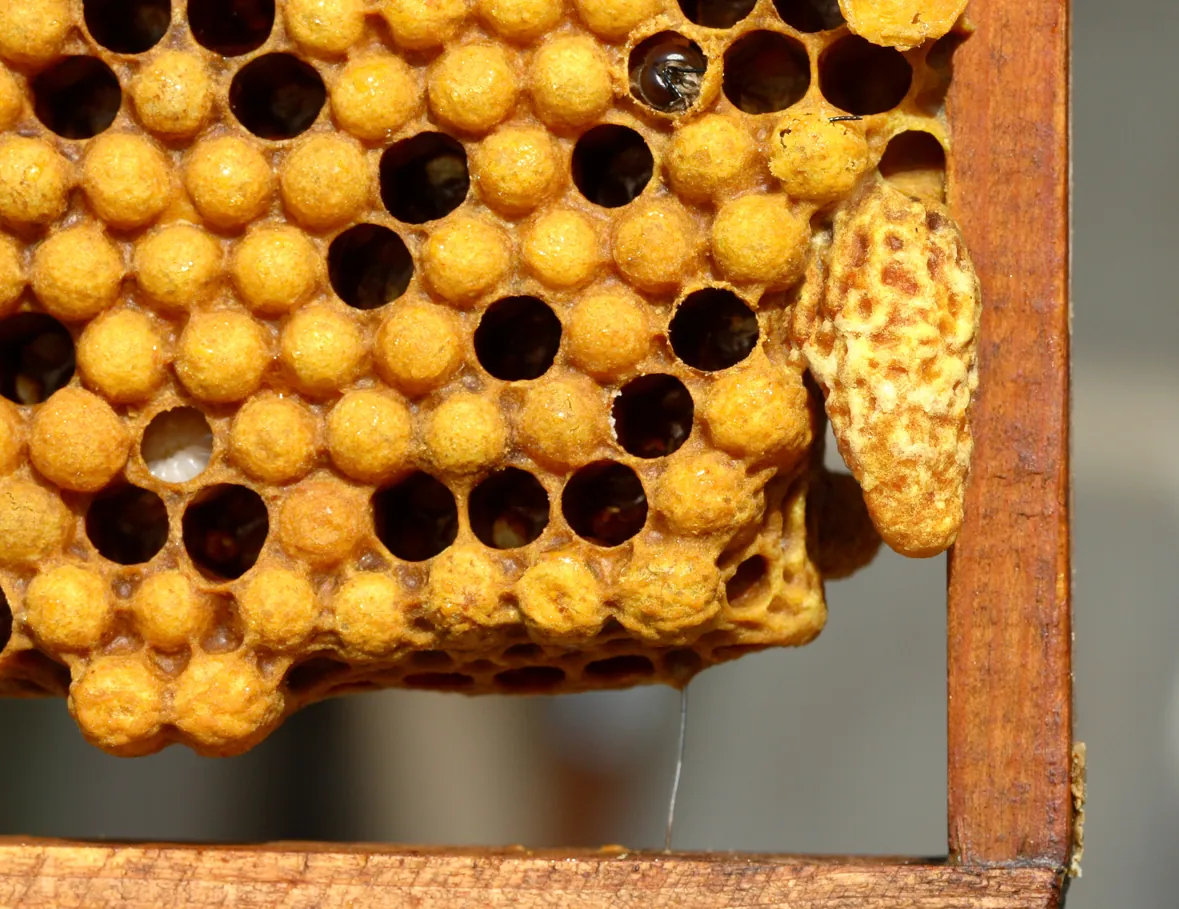
A square decimetre of comb (about 15 square inches) holds roughly 400 worker cells on each side. Capped worker brood has flat, light-brown cappings; drone brood has domed cappings that look like bullets. Honey is sealed with white “dry” or darker “wet” cappings, while bee bread stays open and glistens in different colours.
A typical brood frame is arranged in rings: brood in the centre, a band of bee bread around it, and an arch of honey along the top and edges. If the pattern is broken — say, nectar packed right into the middle of the brood — the queen is probably running out of room to lay.
How to tell your colony is doing well
As a beginner, you don’t have to see the queen at every inspection. It is far more important to read the signs of her work.
- There are eggs. One egg at the bottom of each cell, standing in the centre. Since eggs last three days, they prove the queen was there no more than three days ago.
- There is open brood of all ages — from tiny “commas” to plump C-shaped larvae in brood food.
- The capped brood is solid, with few gaps; cappings are even and dry, not sunken or perforated.
- There are stores: honey above the brood and bee bread around it; in early spring, at least 8–10 kg (18–22 lb) of honey.
- The bees are calm and hum evenly, with no fighting or piles of dead bees at the entrance.
How to find the queen
- Work calmly and go easy on the smoke. Smoke and jolts make the queen run and hide.
- Start with the frames that have eggs. That is usually the centre of the brood nest. Outer honey frames can be skipped.
- Look first at the side of the frame that faced its neighbour — the queen moves away from the light to the far side.
- Look for a pattern, not a queen. Her retinue forms a “daisy” around her, heads inwards, and her long abdomen stands out among the rounder workers.
- Mark the queen once you find her with a coloured dot on her thorax — next time you will spot her in seconds and know her age.
Warning signs
No eggs and no open brood in the active season, and the bees are “roaring” — the colony has probably lost its queen. Don’t rush: if there are capped queen cells, or a young virgin queen has not started laying yet, wait up to two weeks.