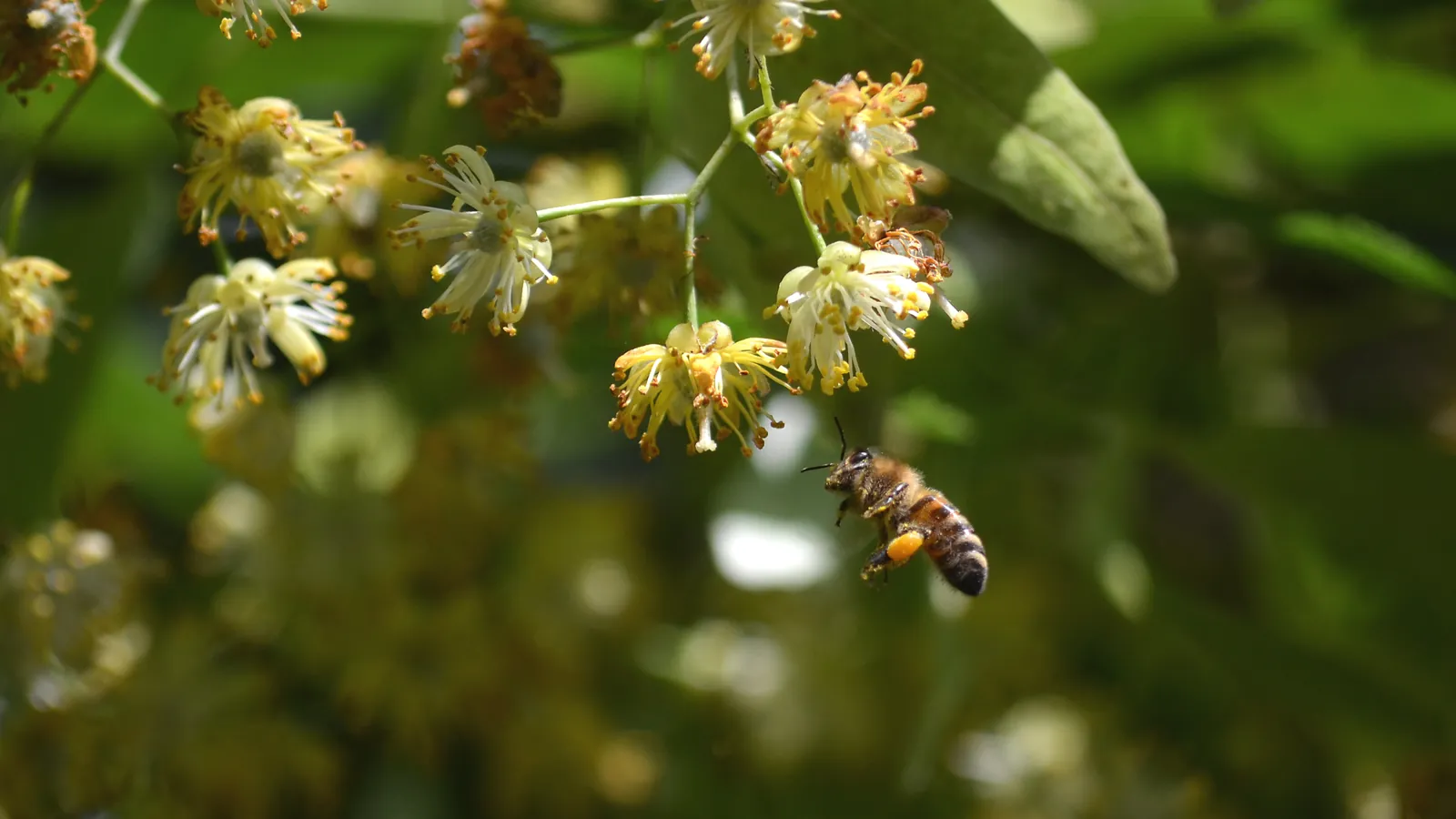
The whole beekeeping year is preparation for a few weeks of summer when the scale hive gains three to five kilograms a day. That is the main honey flow, and it decides whether the season ends with a harvest or with just enough stores to feed the bees. Here we look at which summer plants produce it, how much honey to expect per hectare, why lime does not flow every year, and how to read the scale graph so you miss neither the start nor the end.
What the main flow is and how to see it
There is almost always some flow while something is in bloom: willow, orchards, dandelion, clover. But in spring and early summer the bees bring in about as much as the colony eats for its growth — that is a maintenance flow. The main flow is the period when nectar comes in noticeably faster than the colony uses it, and the surplus is stored in the combs as harvestable honey. In the temperate belt it usually falls in late June and July, lasts from ten days to a month and provides most of the year's crop.
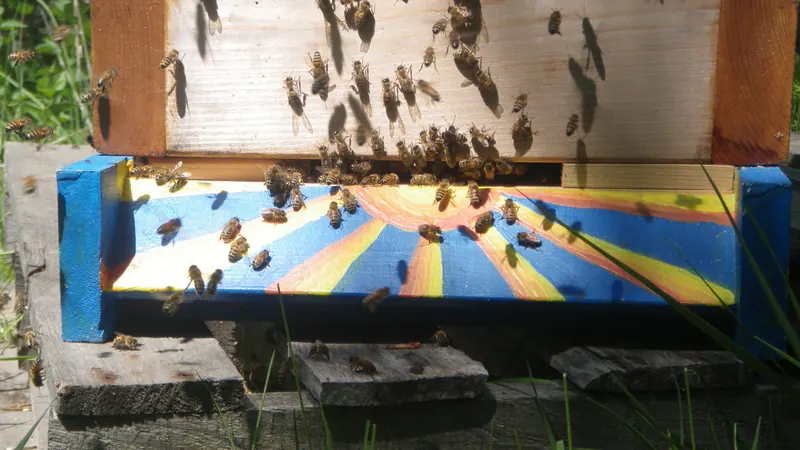
You can see it in the bees' behaviour: heavy flight until dusk, the hive humming at night as the colony evaporates water from the nectar, the smell of honey at the entrance, fresh white wax on the top bars. But there is only one precise instrument — a scale hive. A strong colony is placed on a scale and its weight written down every evening. A gain of 0.5–1 kg is a maintenance flow; 2–5 kg a day is the main flow; on the best days on lime or fireweed a colony can bring in 8–10 kg or more. When the gain turns into a loss, the flow is over: time to take the supers off and extract.
If your apiary has Beehive smart scales, the gain curve draws itself: you can see the day the lime "opened", the dip during a rainy week and the moment the colony switched from storing to consuming. After two or three seasons of such graphs you have your own picture of the flow in your area — more accurate than any handbook.
The main summer nectar plants
Yields below are given in kilograms of honey per hectare of solid bloom — not what your apiary will collect, but the plant's potential in good conditions. Sources differ considerably, so treat the figures as a guide, not a promise.
Forest and forest edge: raspberry, alder buckthorn, fireweed
Raspberry (Rubus idaeus) blooms from mid-June to early July on clear-cuts, forest edges and in gardens. Wild stands yield roughly 60–100 kg/ha, by some accounts up to 150. It is valued for reliability: the nodding flower shields its nectar from rain, and bees work raspberry even in cool, overcast weather when lime stays silent. The honey is light, delicately scented and slow to granulate.
Alder buckthorn (Frangula alnus) is an unremarkable shrub of damp woods that blooms for a long time, from late May to July, and yields by various estimates 15–35 kg/ha. On its own it gives no surplus, but in forest regions, together with raspberry, it bridges the June dearth.
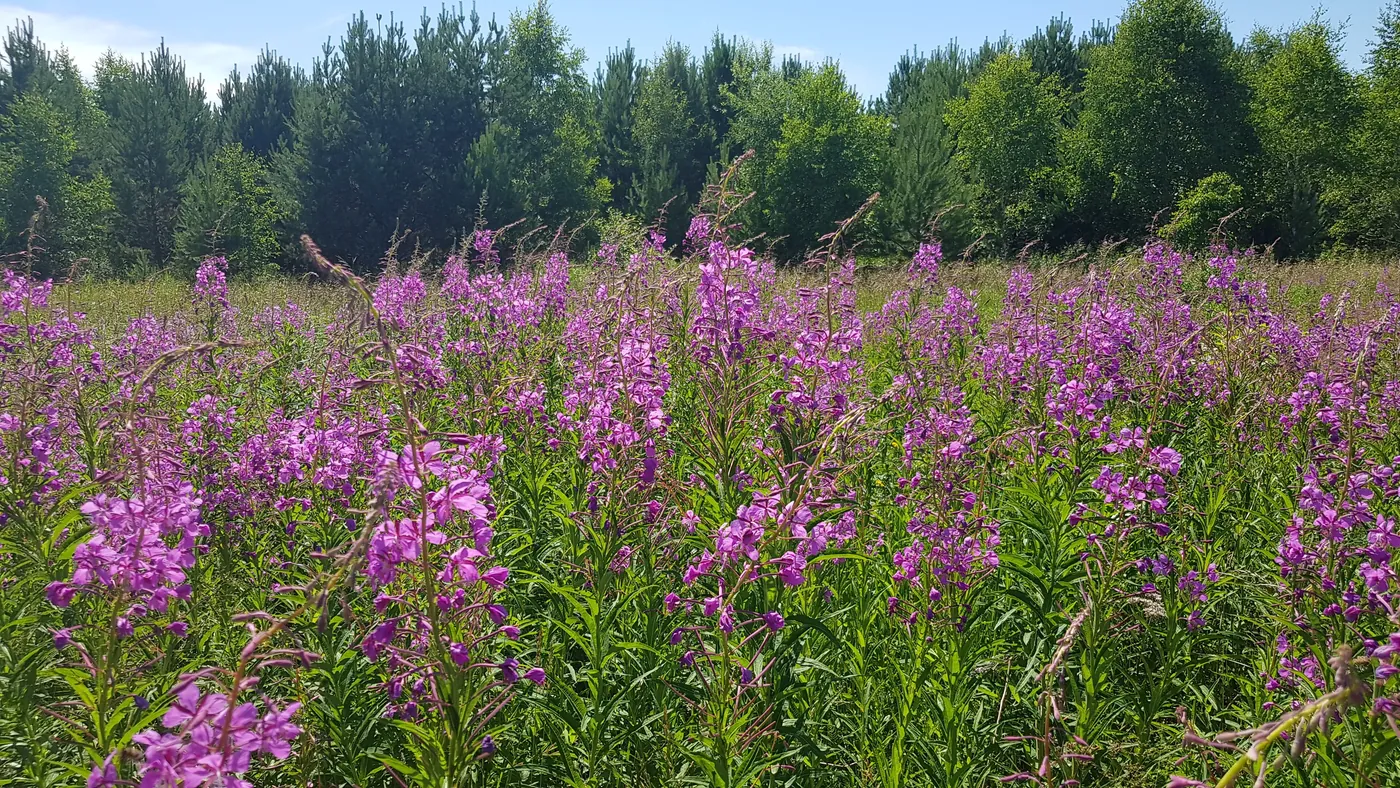
Fireweed, or rosebay willowherb (Chamaenerion angustifolium), is the main nectar plant of the north, clear-cuts and burnt ground. It blooms from early July to mid-August, yielding 300–500 kg/ha, and in a warm wet summer figures of 600 are quoted. Nectar flows abundantly in warm humid weather; in drought fireweed quickly "dries up". The honey is water-clear with a greenish tint, very delicate, and granulates into a white, lard-like mass. Fireweed stands live 5–7 years after logging or fire before young forest shades them out, so beekeepers move after them.
Meadow and field: clover, sweet clover, viper's bugloss, sainfoin
White clover (Trifolium repens) blooms from June until autumn on pastures, verges and lawns. It yields 50–100 kg/ha, but strongly depends on moisture: in a dry summer clover gives almost no nectar and revives after rain. The honey is light, almost white, mild, and granulates quickly. Red clover is less accessible to honey bees: its long corolla tube is made for bumblebees, and bees take its nectar only when it flows abundantly and on the second cut.
Sweet clover, white and yellow (Melilotus albus, M. officinalis), is among the most productive meadow plants: 200–300 kg/ha, up to 500 in good conditions. A biennial, it blooms from June to August on waste ground, embankments and fallows and is sown as green manure and fodder. It is drought-tolerant and secretes nectar even in heat, when clover has already given up. The honey is light amber or white with a faint vanilla note and sets into a fine-grained mass.
Viper's bugloss (Echium vulgare) grows on dry slopes and steppe and is a close relative of borage. It blooms in June and July, handbooks credit it with 300–400 kg/ha, and it does not fear drought: nectar flows all day, and bees prefer it to most of its neighbours. The honey is light amber, thick and slow to granulate. In the south it is sown deliberately next to apiaries.
Sainfoin (Onobrychis) is a fodder crop of the south: Ukraine, the black-earth belt, the Caucasus, southern Europe. It blooms in late May and June, yields about 100–300 kg/ha (up to 400 by some sources) and is often the first strong flow of the steppe zone. The honey is light amber, clear, delicately scented and slow to set.
Cornflowers: the blue cornflower (Centaurea cyanus) in rye and wheat fields and the brown knapweed (C. jacea) on meadows and fallows. Yields are 30–100 kg/ha; knapweed is more productive and blooms until September. Cornflower honey is greenish with a slight almond bitterness. Mixed meadow flora — cranesbill, field scabious, St John's wort, oregano, sage, wild mint — together gives 20–50 kg/ha, but over a long period, June to August, and in grassland regions it adds up to a slow but steady flow and a rich polyfloral honey.
Lime: queen of the temperate belt
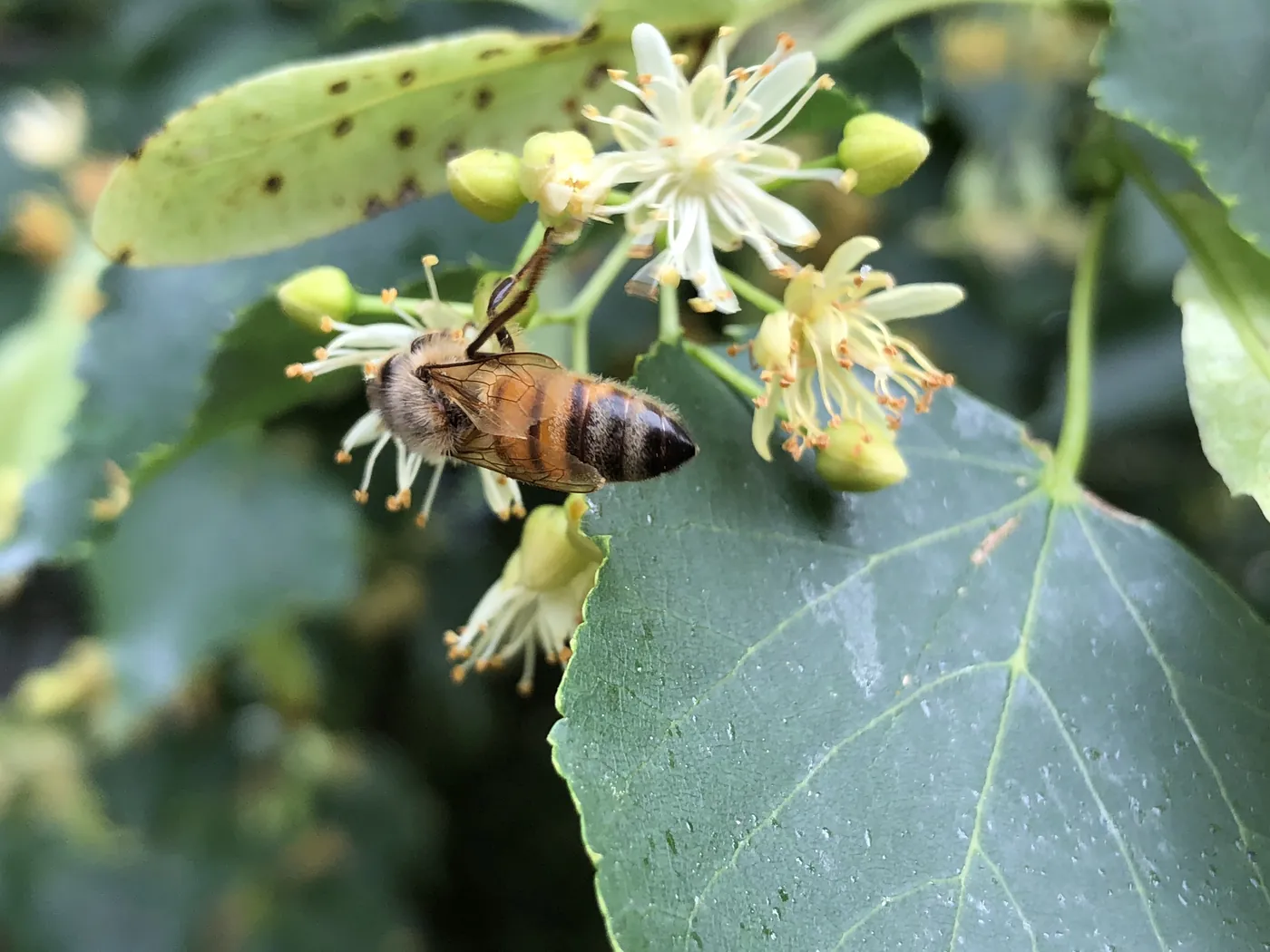
Small-leaved lime (Tilia cordata, also called linden) blooms from late June to mid-July, only 10–14 days, and in a good year gives more in that time than all other plants together. Solid stands are rated at 500–1,000 kg/ha, a single mature tree at roughly 10–15 kg; in the Russian Far East, where Amur and Manchurian limes grow, scale hives show 10–20 kg a day. In towns, limes in parks and streets give urban apiaries a steady if smaller flow.
But lime is capricious. It secretes nectar in warm, humid, still weather, best at +20…+26 °C after a warm night. A cold night, a dry wind, heat above 30 °C or rain washing nectar out of the open flowers — and there is no flow. It flows well once every three to five years, and experienced beekeepers never stake a season on it alone. Age matters too: trees younger than 20–25 years bloom weakly, the peak is at 40–80 years, and old or shaded trees give little. The honey is light amber with the characteristic minty lime aroma and sets in 1–3 months into a pale fine-grained mass.
Field crops: buckwheat, sunflower, coriander
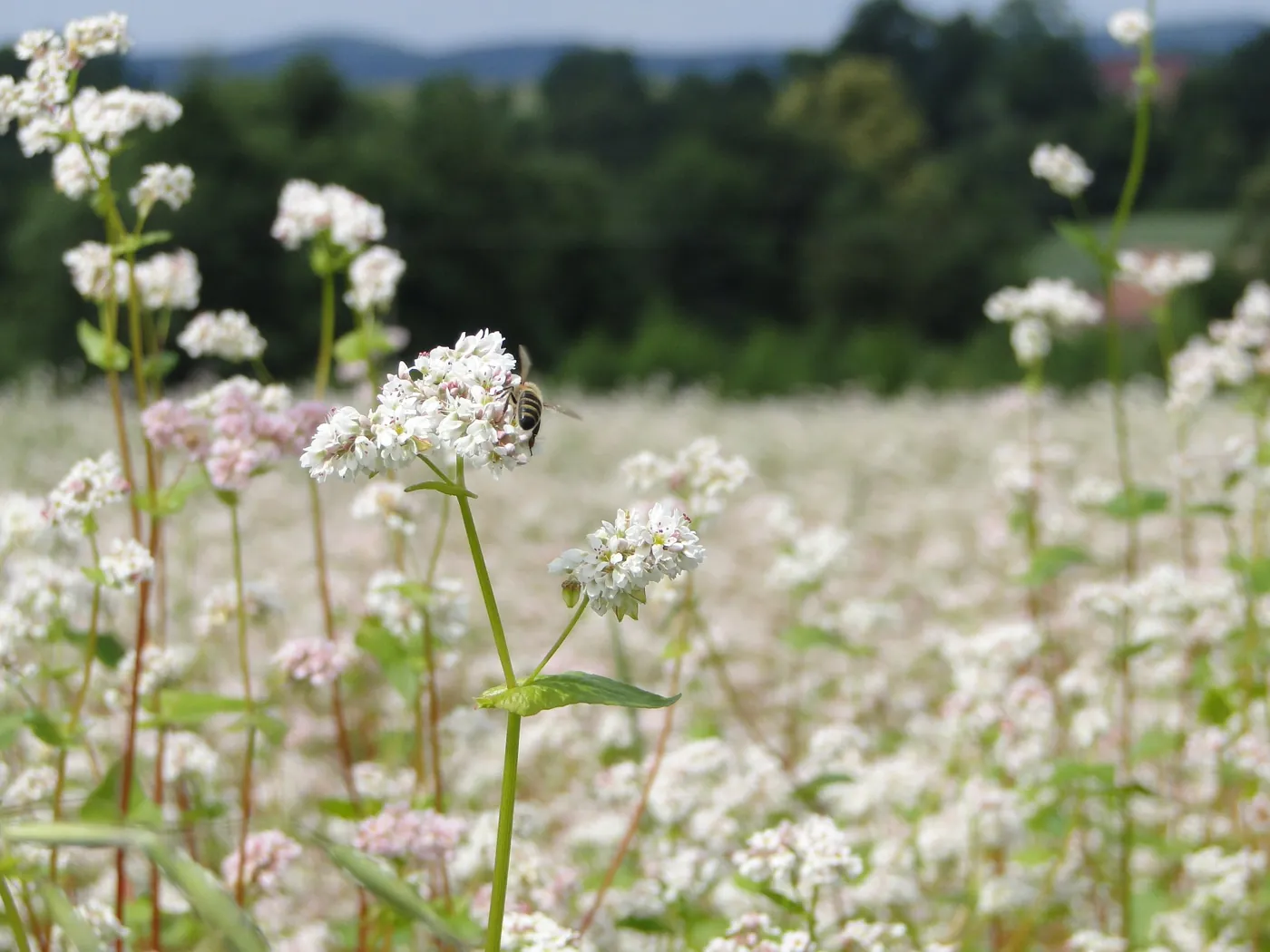
Buckwheat (Fagopyrum esculentum) is the main field nectar plant of Belarus, Ukraine, the Volga region and the black-earth belt. It blooms from July to mid-August for 30–40 days and yields 60–100 kg/ha, with 150–200 quoted for good varieties on good soil. Its main peculiarity is that nectar is secreted in the first half of the day: in the morning bees pour onto buckwheat, by noon the flowers "dry up" and flight dies down. It likes warm nights and humid air; in dry heat it gives little. The honey is dark, reddish-brown, with a sharp taste and aroma, rich in iron, and granulates quickly and coarsely.
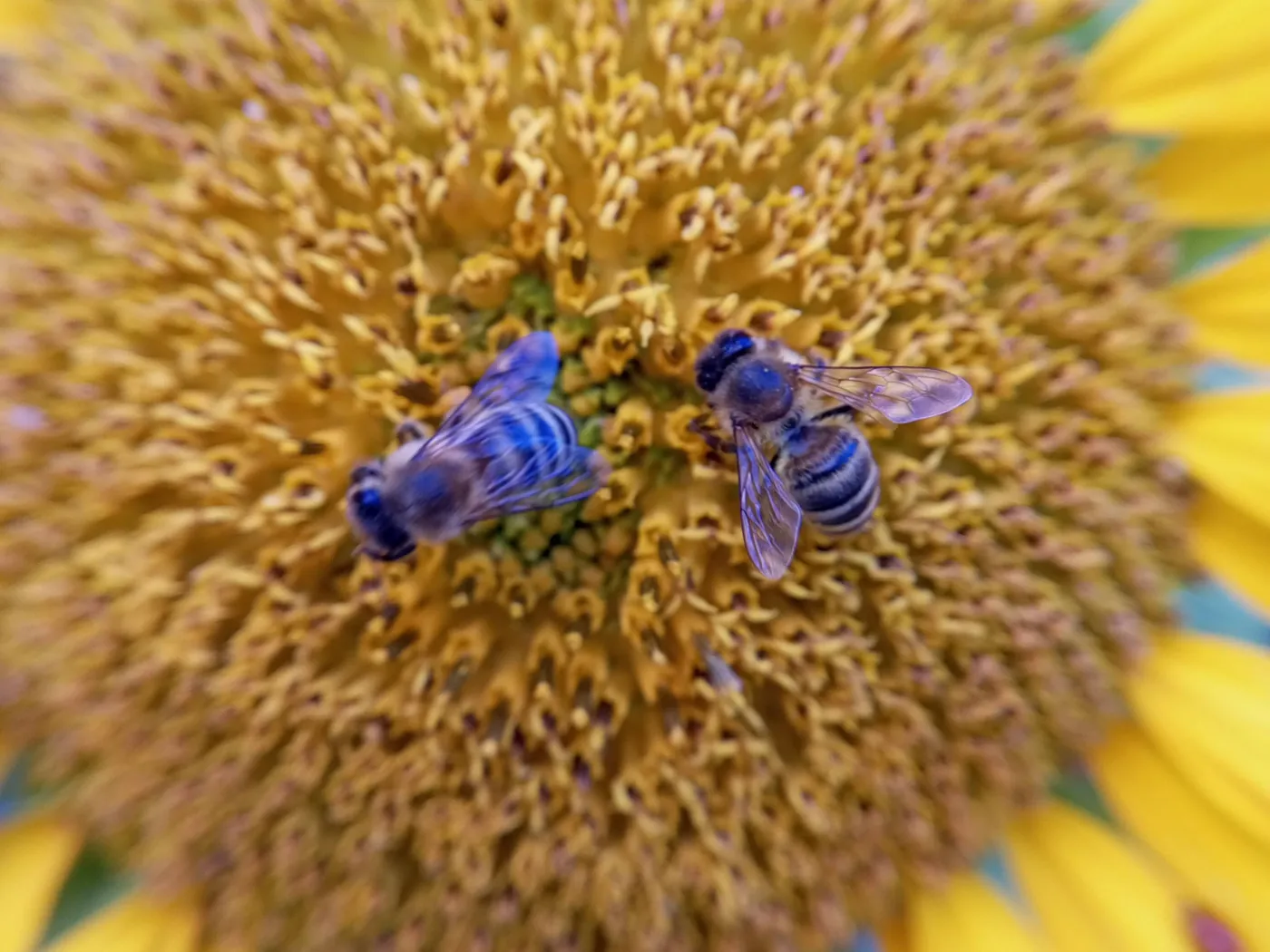
Sunflower (Helianthus annuus) is the nectar plant of the steppe south: Ukraine, southern Russia, Hungary, the Balkans. It blooms in July and August for about a month and yields 30–50 kg/ha; modern hybrids secrete less than old varieties, but the areas are enormous, and sunflower remains the main flow of whole regions. The honey is golden yellow with a slight tartness and granulates very fast — within two or three weeks, sometimes right in the comb. Extract it at once and never leave it as winter stores.
Coriander (Coriandrum sativum) is grown in the south as an essential-oil crop. It blooms in June and July, yielding by various accounts 100–200 kg/ha and more. The honey is amber with a strong spicy aroma that mellows with time; it granulates slowly.
Sown nectar plants: phacelia and others
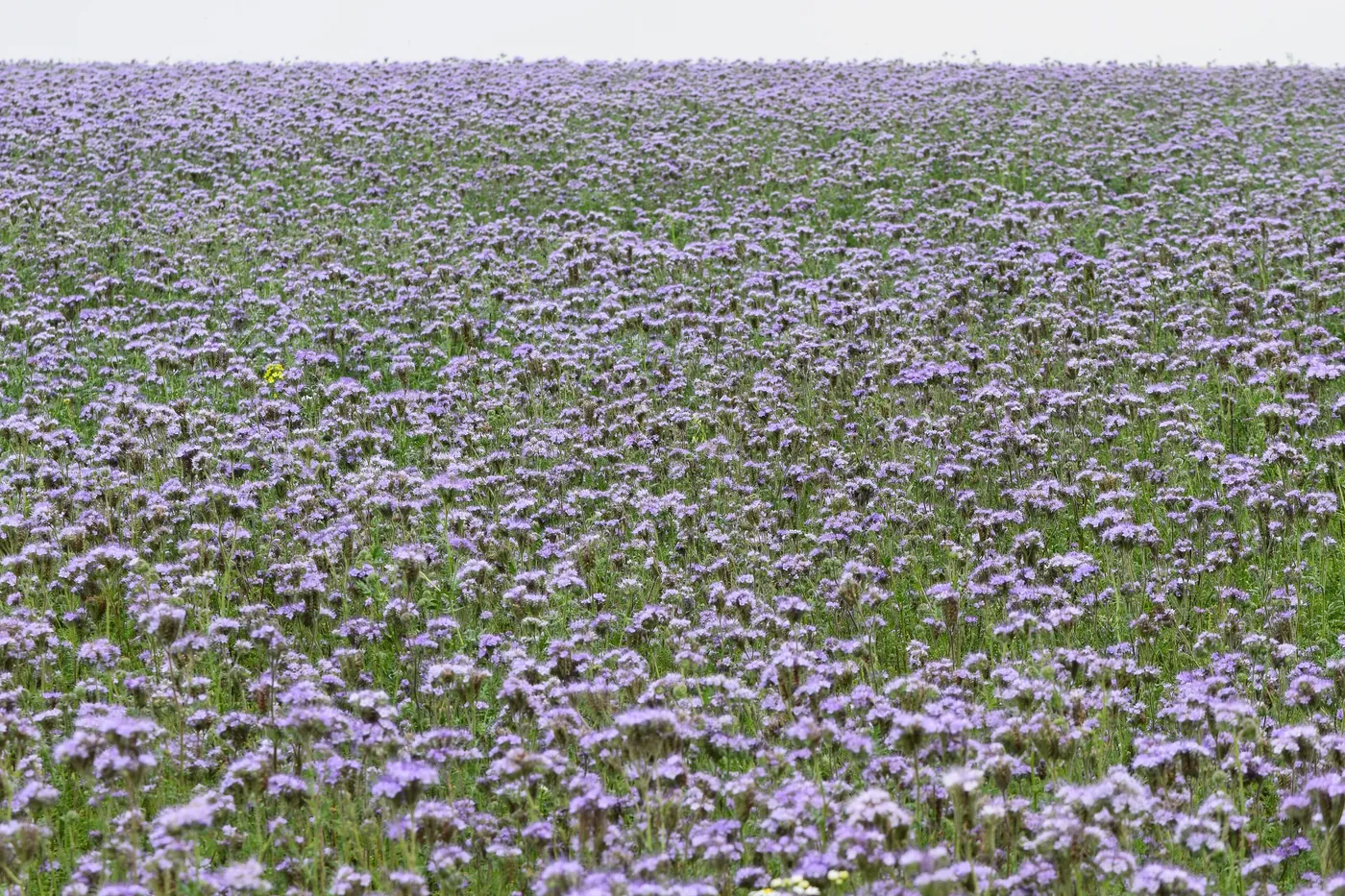
Lacy phacelia (Phacelia tanacetifolia) is the best of the sown nectar plants and the most accessible way to manage a flow. It comes into bloom 5–7 weeks after sowing and flowers for about a month; sown at three or four dates from May to July, it can bloom from June until frost. It yields 150–300 kg/ha, and in a warm wet summer 400–500 is quoted. Nectar flows all day and bees work phacelia until evening. The honey is light, almost white or greenish, delicate and slow to set. A strip of phacelia of 0.5–1 ha next to the apiary bridges the June dearth and keeps colonies working until the lime. Alongside it beekeepers sow white mustard (which blooms even sooner, in 4–5 weeks), borage, sweet clover, and in the south viper's bugloss and sainfoin.
Heather: the bridge to autumn
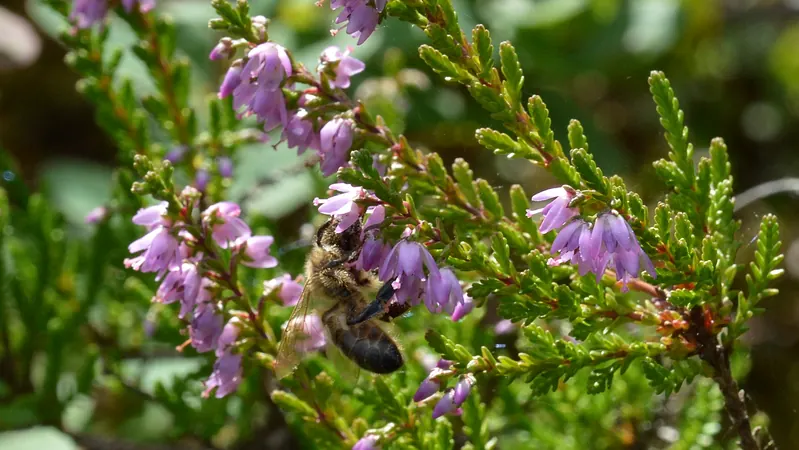
In August summer gives way: lime and fireweed finish, buckwheat fades. On sands and bogs heather (Calluna vulgaris) comes into bloom — in Polesia, the Baltics and Scandinavia it gives the last surplus honey, dark, jelly-like, with a bitter note. Heather, goldenrod and the other late-season plants are covered in the article on autumn nectar plants.
Summer nectar plants: timing, yield, honey
Dates are for Belarus and central Russia; in Ukraine and southern Europe everything is one to three weeks earlier, in the north later.
| Plant | Type | Bloom | kg/ha | Honey |
|---|---|---|---|---|
| Raspberry | forest, garden | mid-June — early July | 60–100 | light, delicate, slow to set |
| Alder buckthorn | forest | late May — July | 15–35 | blended into forest honey |
| Fireweed | forest, burns and clear-cuts | July — mid-August | 300–500 | clear, greenish, sets to a white mass |
| White clover | wild, pastures | June — September | 50–100 | almost white, mild, sets fast |
| Sweet clover, white and yellow | wild, sown | June — August | 200–300 | light, vanilla note, fine-grained |
| Viper's bugloss | wild, sown (south) | June — July | 300–400 | light amber, thick, sets slowly |
| Sainfoin | field crop (south) | late May — June | 100–300 | light amber, clear, sets slowly |
| Cornflower / knapweed | arable weed / meadow | June — August / September | 30–100 | greenish, slight almond bitterness |
| Small-leaved lime | forest, park | late June — mid-July | 500–1,000 | light amber, minty aroma, sets in 1–3 months |
| Buckwheat | field crop | July — mid-August | 60–100 (up to 200) | dark, sharp, rich in iron, sets fast |
| Sunflower | field crop (south) | July — August | 30–50 | golden, sets in 2–3 weeks |
| Coriander | field crop (south) | June — July | 100–200 | amber, spicy aroma |
| Phacelia | sown | 5–7 weeks after sowing | 150–300 | light, delicate, sets slowly |
| Mixed meadow flora | wild | June — August | 20–50 | polyfloral, rich flavour |
| Heather | wild | August — September | 100–200 | dark, jelly-like, bitter note |
Flow types by region and the dearth period
Which plant becomes your main flow depends on what surrounds the apiary. Three types of flow are usually distinguished.
- Forest flow — Belarus, northern and western Russia, the Baltics, Scandinavia, the Carpathians. It rests on raspberry and alder buckthorn in June, lime in early July, fireweed on clear-cuts in July and August. The flow is drawn out and rarely very strong, but steady: when lime is silent, raspberry or fireweed carries on.
- Field flow — southern Belarus, Ukraine, the black-earth belt, the Volga region, southern Poland, Hungary. Rapeseed in May and June, sainfoin and coriander, then buckwheat and sunflower in July and August. It depends on crop rotation: the field that was buckwheat this year will be wheat next year, and the apiary has to move.
- Meadow and steppe flow — floodplains, pastures, virgin slopes. Clover, sweet clover, viper's bugloss, cornflower and mixed flora from June to August. The flow is even, 1–2 kg a day, the honey polyfloral.
In most areas summer is split into two periods. The first is the maintenance flow of May and early June: orchards, dandelion, rapeseed, maple. The second is the main flow from late June. Between them, usually in the second half of June, comes the dearth: the orchards have finished and the lime has not yet opened. It is the swarmiest time of the season: colonies are strong, there is no work, and everything you failed to do against swarming comes back now.
Four things help you through the dearth: sown nectar plants (phacelia, mustard, sweet clover) sown in May; moving the bees to raspberry, alder buckthorn or early sweet clover; keeping colonies busy — nucs, foundation, queen rearing; and composure — not tearing down queen cells indiscriminately, but splitting the strong colonies that are going to swarm anyway. More on the swarming season in the article on swarming.
Why nectar does not always flow
The plant is in bloom — and the scale stands still. It happens often, and the reason is almost always the weather. Nectar is a sugar solution the plant secretes from its nectaries when it has a surplus of photosynthesis products and water. Any shortage shuts the tap.
- Temperature. Most plants secrete nectar at +20…+30 °C; the optimum for lime and buckwheat is +22…+26 °C. Below +15 °C secretion almost stops; above +32 °C the nectar thickens and dries in the flower.
- A warm night. The nectar bees will collect tomorrow is prepared by the plant overnight. After a cold night (below +10…+12 °C) lime and buckwheat are almost empty in the morning even if the day is hot. Night frosts in June kill the flow for several days.
- Humidity. Secretion is best at 60–80 % air humidity, after warm rain, in muggy weather. A dry wind "dries out" both lime and buckwheat within a day. But a downpour during bloom washes the nectar out of the open flowers of lime, raspberry and fireweed.
- Drought. Short of soil moisture, the plant stops secreting nectar and drops its flowers. Clover, fireweed and buckwheat suffer first; sweet clover and viper's bugloss hold out longest.
- The plant itself. Age (lime), variety (sunflower, buckwheat), condition after the previous year, abundance of flowers. Lime blooms and flows heavily once every three to five years — after a year of heavy bloom the tree rests.
Moving bees to the flow
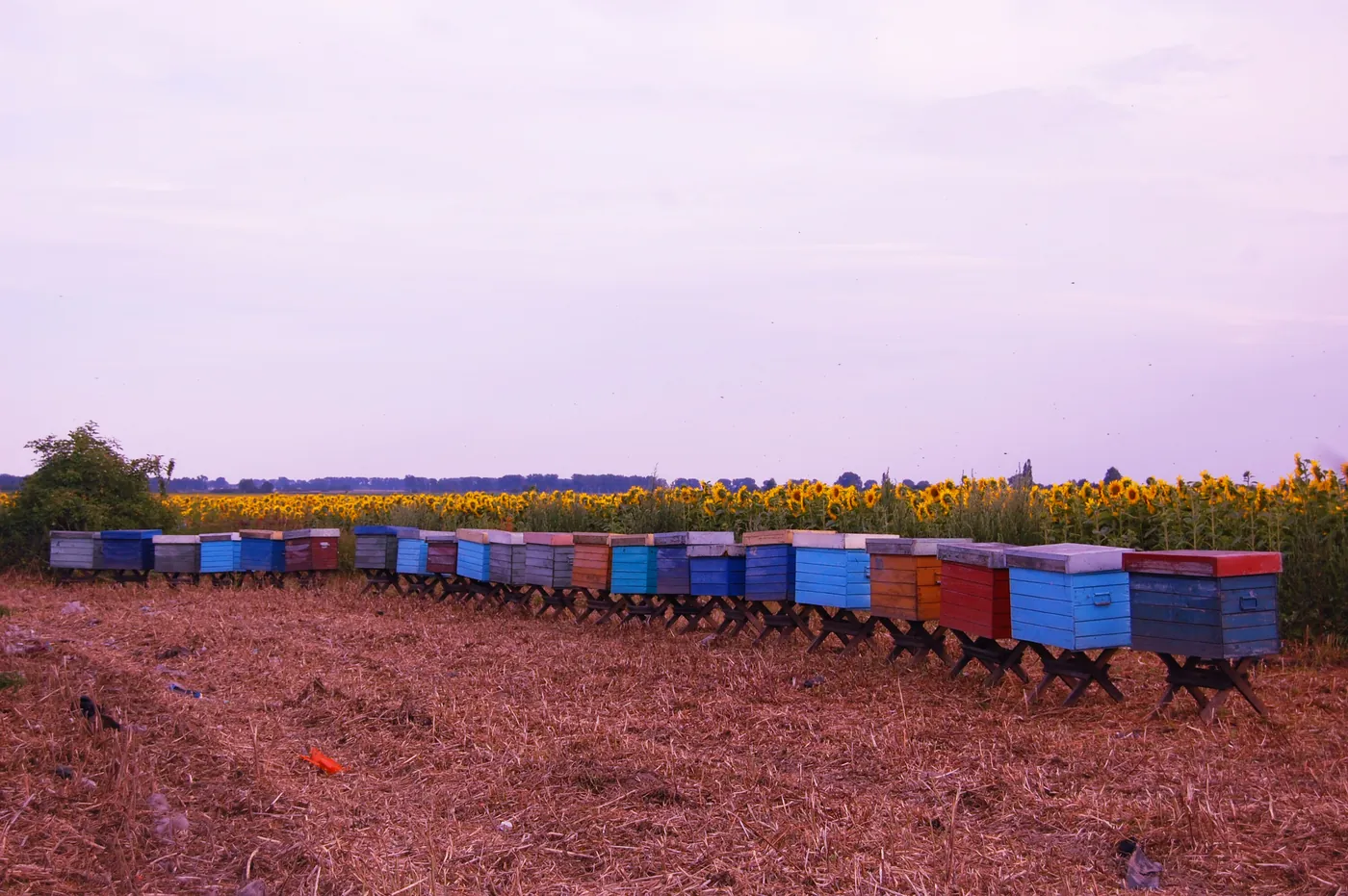
If the apiary has no strong nectar plant of its own, you go to one. Migratory beekeeping means moving colonies to a flowering mass: to rapeseed in May, to lime or raspberry in early July, then to buckwheat, fireweed, sunflower, heather. A stationary apiary collects on average one or two main flows, a migratory one three or four a season, and the crops differ several-fold. But moving costs effort, money and risk, so work out whether it pays.
Distance. A bee will fly 5–7 km for nectar, but the productive radius is about 2–3 km: beyond that a forager burns on the trip almost as much as she brings home. A circle of 2 km radius is roughly 1,250 ha, of 3 km about 2,800 ha. If the buckwheat or the lime wood lies more than 3 km from the apiary, it barely exists for your bees; within 1 km it works at full strength. Hence a simple rule: it is worth moving if the plant is more than 3 km away and its area at the new site is at least tens of hectares of a field crop or solid stands of lime or fireweed.
Stocking density. Pollination guidelines give a reference: 2–3 colonies per hectare on buckwheat, 0.5–1 on sunflower, 2–4 on phacelia and sweet clover, several colonies per hectare of lime within flight range. If three other apiaries already stand at the same field, the flow has to be shared with all of them. Apiary density grows every year, especially around rapeseed and sunflower, so arrange your site in advance — with the farm and with the neighbours.
When and how. Move colonies at the start of bloom, not at its height: bees need two or three days to learn the area. Transport at night or in the early morning when all foragers are home, with entrances closed, ventilation open and boxes firmly strapped. At the site, face the entrances toward the crop, and put the scale hive on its scale the first evening: it will show at once whether the plant is flowing or it is time to move on. Leave when the gain has dropped to zero for two or three days running. Remember that in many countries moving bees requires an apiary health certificate and notifying the local authority — check the rules where you are.
Planning the season
Bloom dates drift from year to year: in an early year lime opens in mid-June, in a late one after 10 July; the difference between southern Belarus and the Smolensk region is a week to ten days, between Kyiv and St Petersburg two to three weeks. So plan not by dates but by two things.
The first is the phenology of your own area: in the temperate belt about 40–45 days pass from mass dandelion bloom to lime, and one to two weeks from lime to buckwheat. See dandelion — lime is six weeks away, which means its foragers must hatch from eggs being laid right now. The second is a map. This site has a bloom map of nectar plants: for any point it shows the expected bloom dates of lime, buckwheat, fireweed, sunflower and other plants, adjusted for climate. And in the Beehive app the same bloom calendar is built into the apiary card and calculated from its coordinates — handy for checking what should be opening around your hives this week and comparing it with the scale graph. For major cities of Belarus and Russia there are ready-made flowering calendars.
- Identify your main nectar plant. Walk or drive the 2–3 km radius around the apiary: how much lime is there, what the fields are sown with, whether there are fresh clear-cuts, meadows, waste ground with sweet clover.
- Count back 40–45 days from its expected bloom start — that is the window when colonies should be rearing maximum brood.
- Build a bridge across the dearth: sow phacelia in early May, schedule nucs and queen rearing for June.
- Decide whether to move. If there is no main plant within flight range or it is too far, find a site and arrange it in advance.
- Write down the results. Start and end dates of the flow, daily gains, weather, extraction — in two or three years the beekeeping journal becomes your personal nectar calendar.
What blooms before the main flow is in the article on spring nectar plants, what comes after in the one on autumn plants, and how the summer work fits into the apiary year in the beekeeping calendar.